
We have had a lot of frost this year! According to the weather records from the station west of UC Davis, there have been 18 mornings cold enough for frost since Nov. 1. This is a pretty typical La Niña pattern. Low rainfall = low dew points, less fog, and more frost on a clear, still night.
Lowest readings have been the mornings of Dec. 24 and 25 when that weather station recorded 24 degrees. Ordinarily temperatures that low could be expected to do pretty serious harm to citrus and other subtropicals. But damage so far has been minimal.
Microclimates are making a big difference. The areas up against your house on an east-facing or south-facing walls are several degrees warmer due to heat stored during the day, and are warming up quickly when the sun comes out. Cold damage on a plant is a combination of absolute temperature and duration. These frosts have been cold, but short duration.
Dry soil can lead to further damage from cold as plants desiccate. We are way behind on rainfall, with less than half of normal to date. Water newly planted plants, those in containers, and larger citrus and subtropicals. You can simply run your sprinklers through one cycle, or give each plant a quick soaking with a hose.
If your plant is showing damage, it's best to just leave it alone for now. Cutting back frosted leaves and stems opens the plant up to further damage. Those wilted, curled leaves, in some cases, actually provide a small measure of frost protection for parts of the plant further down. I prefer to wait until spring and let the plant begin to grow before pruning. Let the plant tell you how far to cut it back; just cut to the new growth when it occurs.
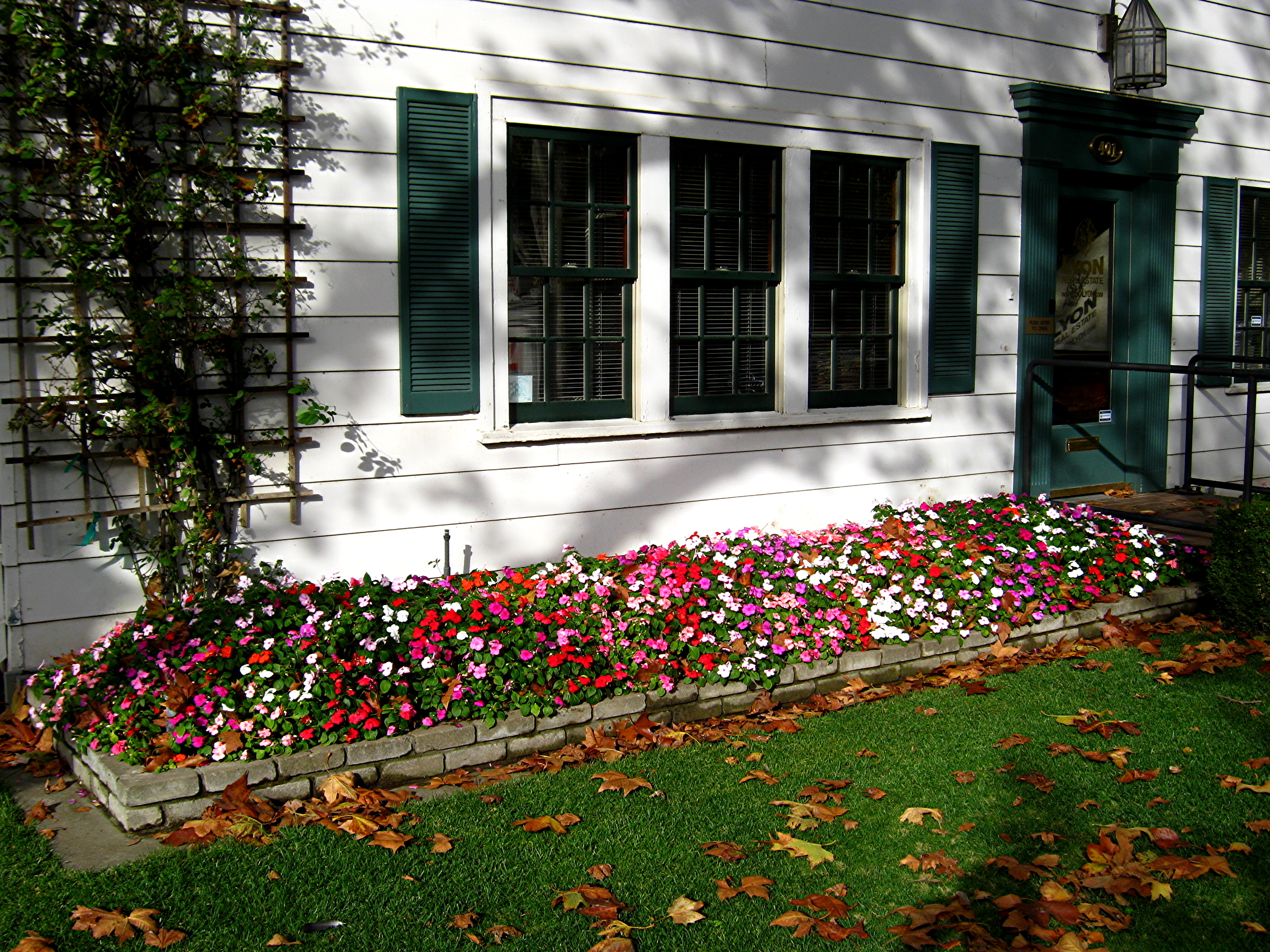
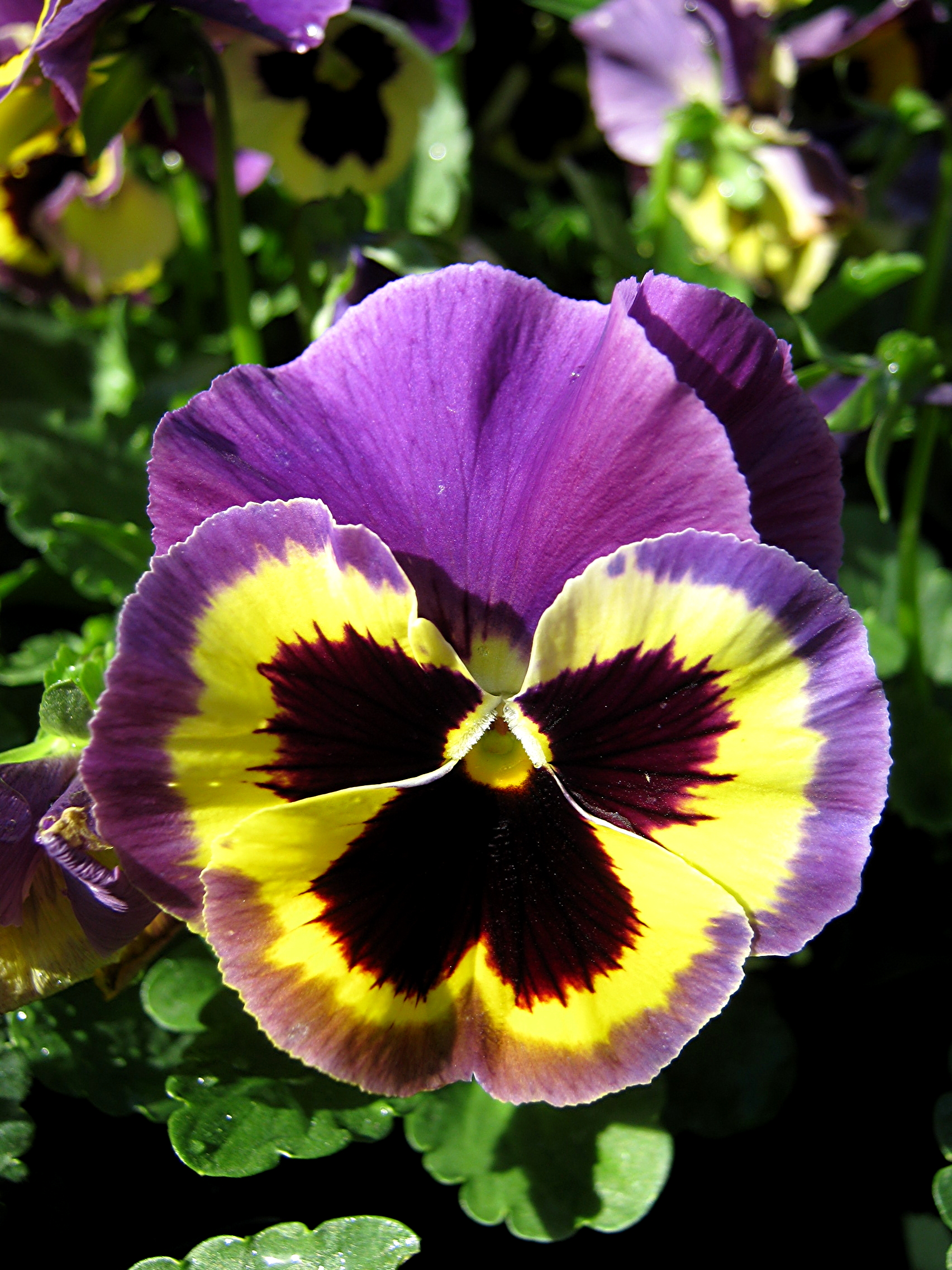
You've probably already figured out that your summer annuals won't be coming back. Impatiens, coleus, marigolds, and their ilk are dead. Don't rush to rip out begonias, as they often do resprout in spring from the base. Winter annuals are impervious to the cold. Pansies and violas, snapdragons, stock, ornamental cabbage and kale, and paludosum daisy may bend over with frost, but will perk right back up when the sun is upon them. Winter-flowering perennials such as cyclamen are also unaffected. Likewise in your vegetable garden: the salad greens, broccoli, cabbages, onions, and others are all perfectly hardy.
[Science quiz! Why do some plants survive cold and other not? Different chemicals in the leaves and stems. Plants that evolved in colder regions make natural anti-freeze.]
Some common questions:
Should I keep the plants covered?
Only if the material you used allows light to penetrate. Covering a plant with a sheet or blanket has two drawbacks. Each point of contact with the leaves and stems is likely to result in damage as the cold transfers through the cloth. And the exclusion of light for more than a day or so will cause the plant to start dropping leaves.
Should I sprinkle the foliage to protect it?
This common agricultural practice is not practical for homeowners. You need continuously freezing layers of ice forming on the foliage through the freezing period (early morning before dawn). Sprinkling the leaves once doesn't make any difference.
Should I pick all the citrus fruit?
Only if you want a bunch of under-ripe fruit. Citrus don't ripen any further once picked, and most varieties aren't ready yet. Your Satsuma mandarins are ripe, but that also happens to be one of the hardiest citrus varieties. Lemons, navel oranges, and others are still tart. I'd be surprised if a couple of cold mornings have damaged the crop. Stripping the tree was appropriate in 1990 and 1998, when we had epic freeze events. A hard frost of a couple day's duration? I prefer to leave them on the tree.
Do I need to protect my rose bushes?
No. Roses are hardy here.
On a more cheerful note, how about some color in the garden in mid-winter?

Cyclamen
We are fortunate to live in a gardening climate where we can have color year-around. The afore-mentioned winter annuals can be planted even in the coldest weather, and will continue to bloom into spring or even early summer. Pansies and violas are most popular due to the color range and profusion of bloom over a long period.
There are a few perennials that bloom mid-winter. Examples include bergenia, gazania, hellebores, and red-hot-poker (Kniphofia hybrids). Take a quick walk through the Ruth Storer garden at the west end of the UC Davis Arboretum to get some ideas; it is an all-season resource. On a recent visit the Kniphofia variety called Christmas Cheer was in full bloom.
Certain shrubs give us reliable winter flowers. Examples include the golden bush daisy (Euryops), laurustinus (Viburnum tinus), Oregon grape (Mahonia), rosemary, and the extra-fragrant sweet Victorian box (Sarcococca ruscifolia). Some winter-bloomers with special requirements include camellias and winter daphne. Well worth the effort, but ask before you buy.
We also enjoy the colorful foliage of a number of evergreen shrubs. Cold weather leads to interesting chemical changes within the leaves of certain plants, leading to bright pigments that are less obvious or missing in warm weather. Just part of the background shrubbery much of the year, these stand out in cold months. Examples include the common heavenly bamboo (Nandina domestica) and the purple hopseed bush (Dodonea viscosa purpurea).
One deciduous shrub with late-season color is Japanese barberry (Berberis thunbergii), whose leaves turn bright red in fall and then hang through December. It grows to five feet tall or so. A dwarf cultivar called Crimson Pygmy only grows to 2 to 3 feet tall and wide.
Colorful winter fruit is a bonus of citrus, and the hardiest one is also the most ornamental: the kumquat. Not everyone likes to eat the tart/sweet fruit. The peel is sweet and edible, the flesh is tart. So to eat a kumquat, you pop it in your mouth whole and chew it up. But even if you don't favor the flavor, you can appreciate the abundant bright golden fruit out in the yard. Kumquats are cold-hardy well into the teens, have fragrant flowers in the summer, and the plant has dense foliage and grows upright.
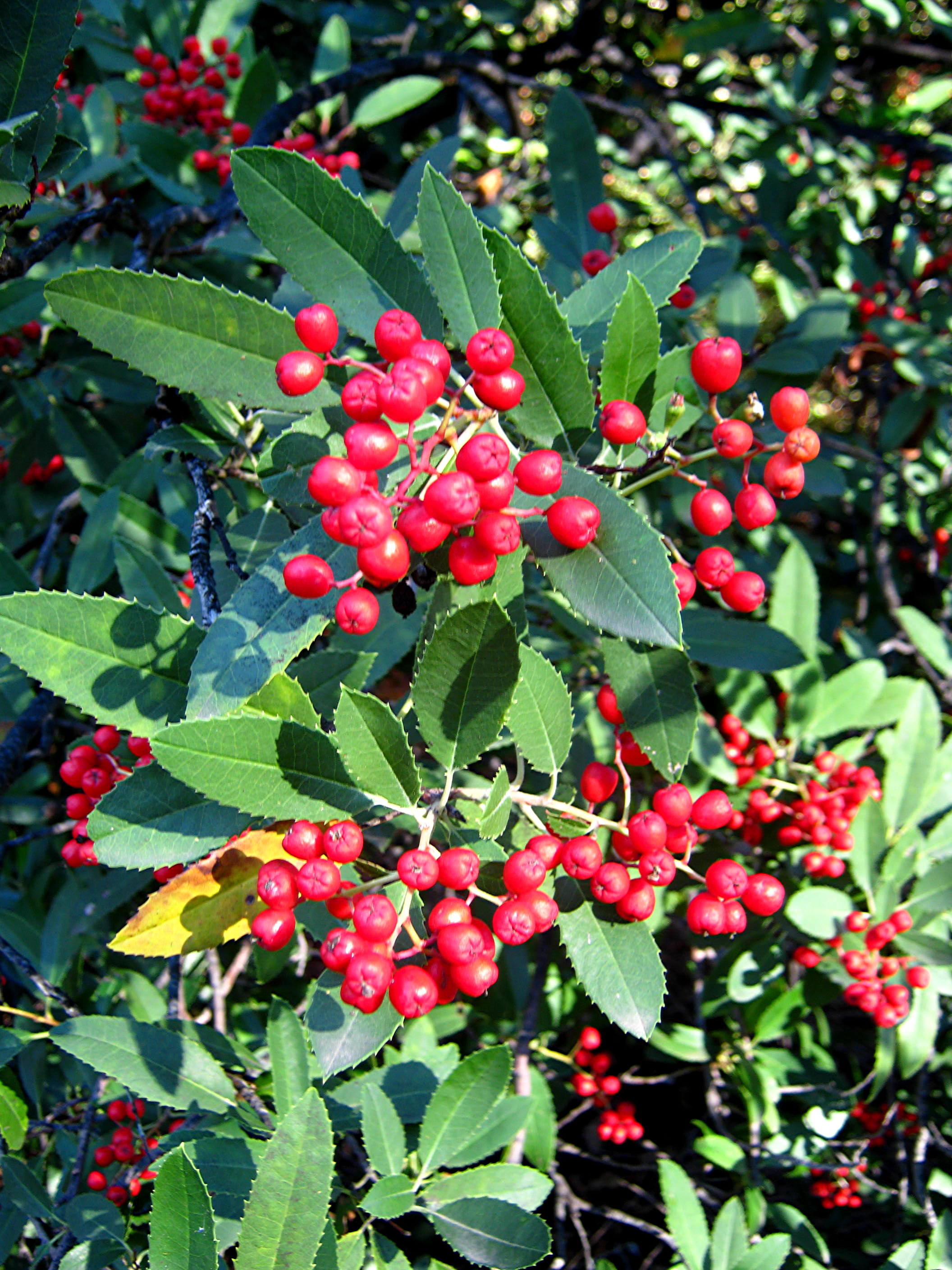
Many ornamental shrubs have colorful winter fruit, including natives such as Toyon (Heteromeles arbutifolia) and Coffeeberry (Rhamnus californica). There are great examples in the Arboretum near the road which goes to Mrak Hall. The non-native heavenly bamboo, mentioned above, also bears red winter fruit with the colorful leaves.
Is it ok to plant these selections now? Sure, if your soil is workable. Digging in muddy soil is bad for the soil structure. But one silver lining to our dry season is that soil can still be turned and proper planting holes can be dug. If not, just hold the plants in the pot until spring. Don't forget to water them if we don't get rain!
For statewide weather data, go to the UC Davis IPM web site and look for the "Weather, models, and degree days" link here. I use the Davis.A station.




Saturday, November 5, 2011
Easy Steps to Water Conservation
Easy Water Conservation.
Water rates are in the news, and we are getting more interest in lower-water landscaping. It is estimated that 80% of residential water use is outside, with a very large percentage of that due to the lawn.
There are a number of easy ways to reduce your landscape water use.
First is to water correctly.
Water deeply, and as infrequently as possible for the types of plants you have chosen. For example, nothing needs water more often than twice a week during the summer here. Established shrubs and trees can often be watered once a week or less, if they get a thorough watering each time.
Most people could easily reduce their water use by 20% or more just by watering more deeply but less often.
Second is to zone your plants by water need.
You may wish to have a tropical oasis or fern grotto, so put those plants together in one area. You might want a lawn area. Your shrubs and trees don't need to be watered as often as those other types of plants.
Third is to reduce lawn area if possible.
Your lawn, properly watered, uses about 1000 gallons per 1000 square feet each week. And many people apply much more water than needed. Some turf species are more tolerant of infrequent watering, but in nearly any case the lawn is the highest water user in the landscape.
"Form follows function," Louis Sullivan said. Let your landscape form follow the actual use patterns of your family. Lawns are for kids and dogs, and are usually unneeded in front. Put lawn where you will use it, not just where you'll look at it.
Fourth is to choose plants that use less water.
For this article I'll focus on ground covering plants that can replace your lawn and use less water. First is the botanical name, then the common name if there is one. Landscape designers can choose from among Mediterranean plants, natives of South Africa and Australia, California natives, and more.
Herbaceous (soft) ground covers
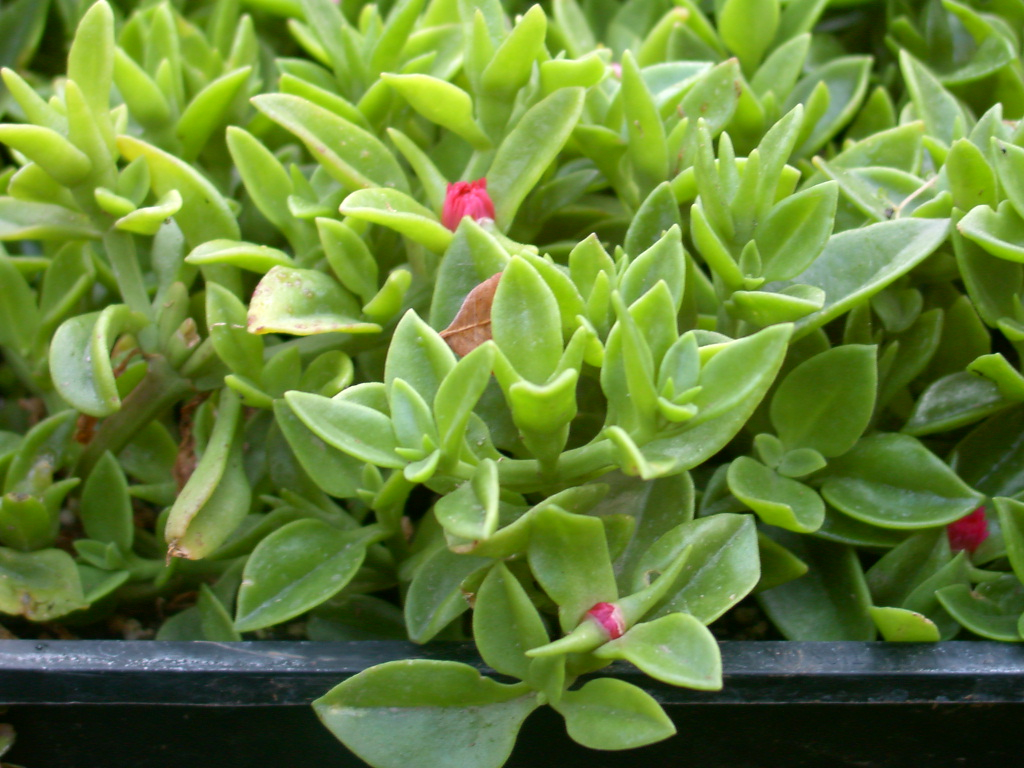
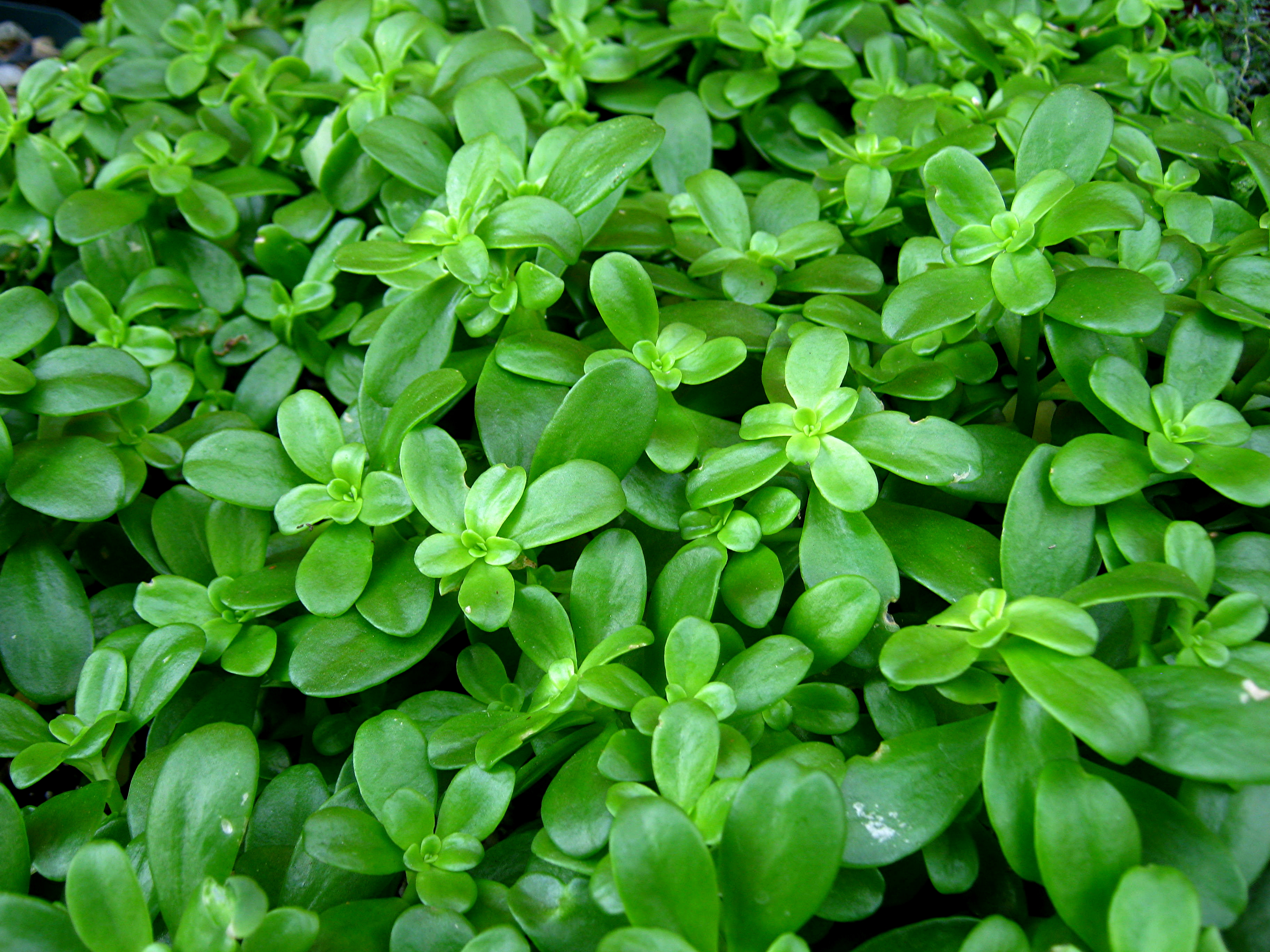
* Aptenia cordifolia
Red apples
Popular succulent with red flowers. Rampant! Blooms freely, smothers weeds. Bees love it. Frost turns leaves to mush, but it quickly resprouts in spring.
* Dymondia margaretae
Very tough, low-growing ground cover for dry areas. Little yellow flowers. Some die-out if overwatered. May be damaged in cold winters, but recovers. Excellent between step stones.
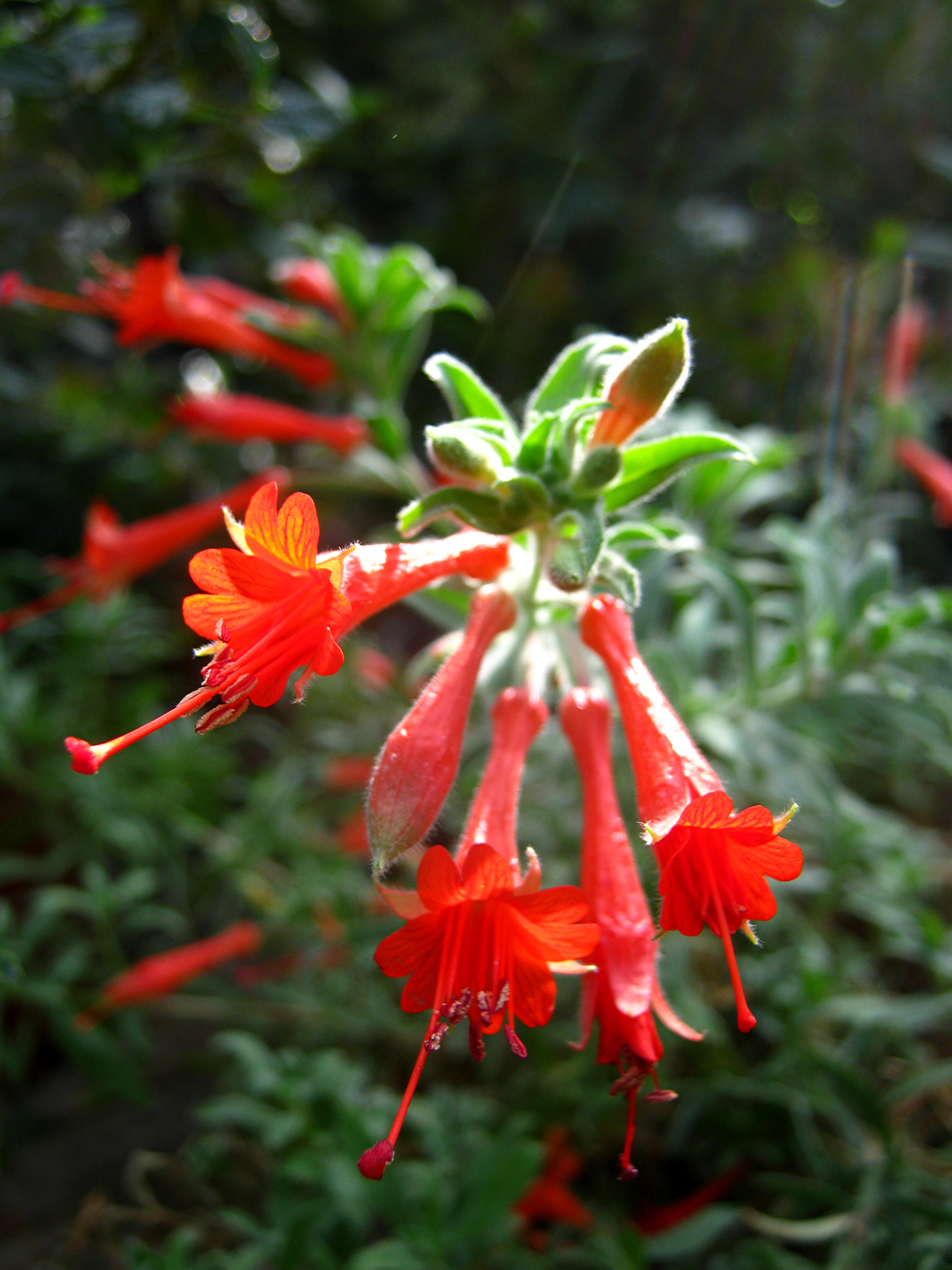
* Epilobium species (formerly Zauschneria)
California fuchsia
Several species and varieties, ranging from 6" to 2'+. Bright orange-red flowers in late summer through fall attract hummingbirds. Tolerate drought or infrequent watering. Will grow in very light shade or full sun. Cut back when they look rough in the winter.
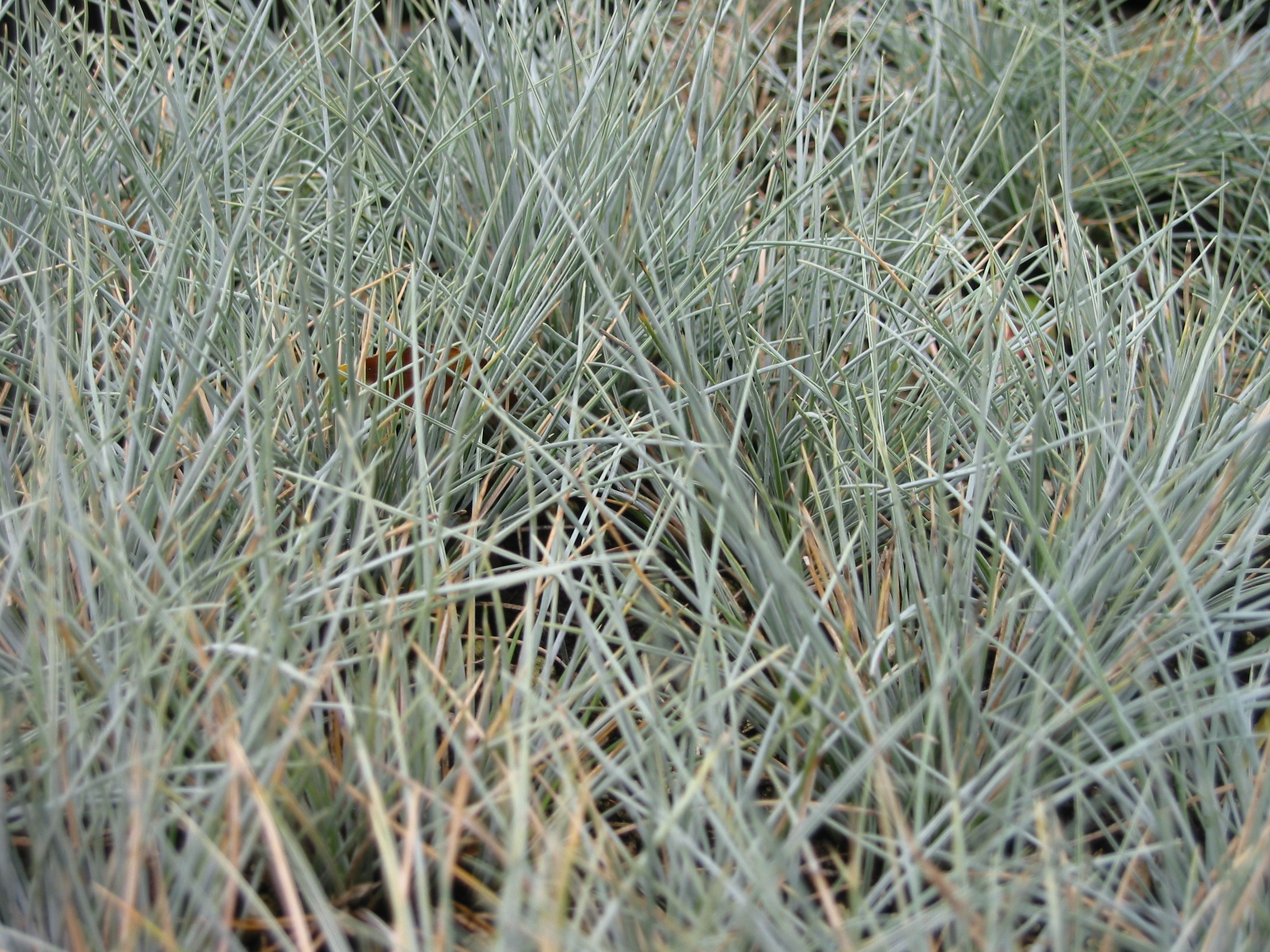
* Festuca ovina glauca
Blue or Grey fescue
Little tufts of silver grass foliage to about a foot tall. Single plants make a clump. Planted on 6 to 12 inch centers, makes an informal grey meadow.
* Gazania hybrids
G. leucoleana forms spread, have silver foliage, yellow or orange flowers. Clumping types have showier flowers, but don't cover ground as thoroughly--better in perennial borders.
* Lantana sellowiana
Trailing Lantana
Lavender flowers all summer and fall; there is a less-common white form. Grows to a foot tall, with each plant spreading 6 - 10'. Very tolerant of heat and drought.
Cut back in spring to remove frost damage. Also sold as L. montevidensis.
* Rosmarinus officinalis
Rosemary
There are selected forms with spreading habit, and others that are upright. They vary in height (1 - 2 foot +), depth of blue flower color. All can be used in cooking.
* Sedum confusum
Golden sedum
Dense, slow-growing succulent with shiny yellow-green leaves and showy yellow flowers. Great for edging; mix with grasses, use in pots, around stepstones. Takes sun or moderate shade, drought or average watering.
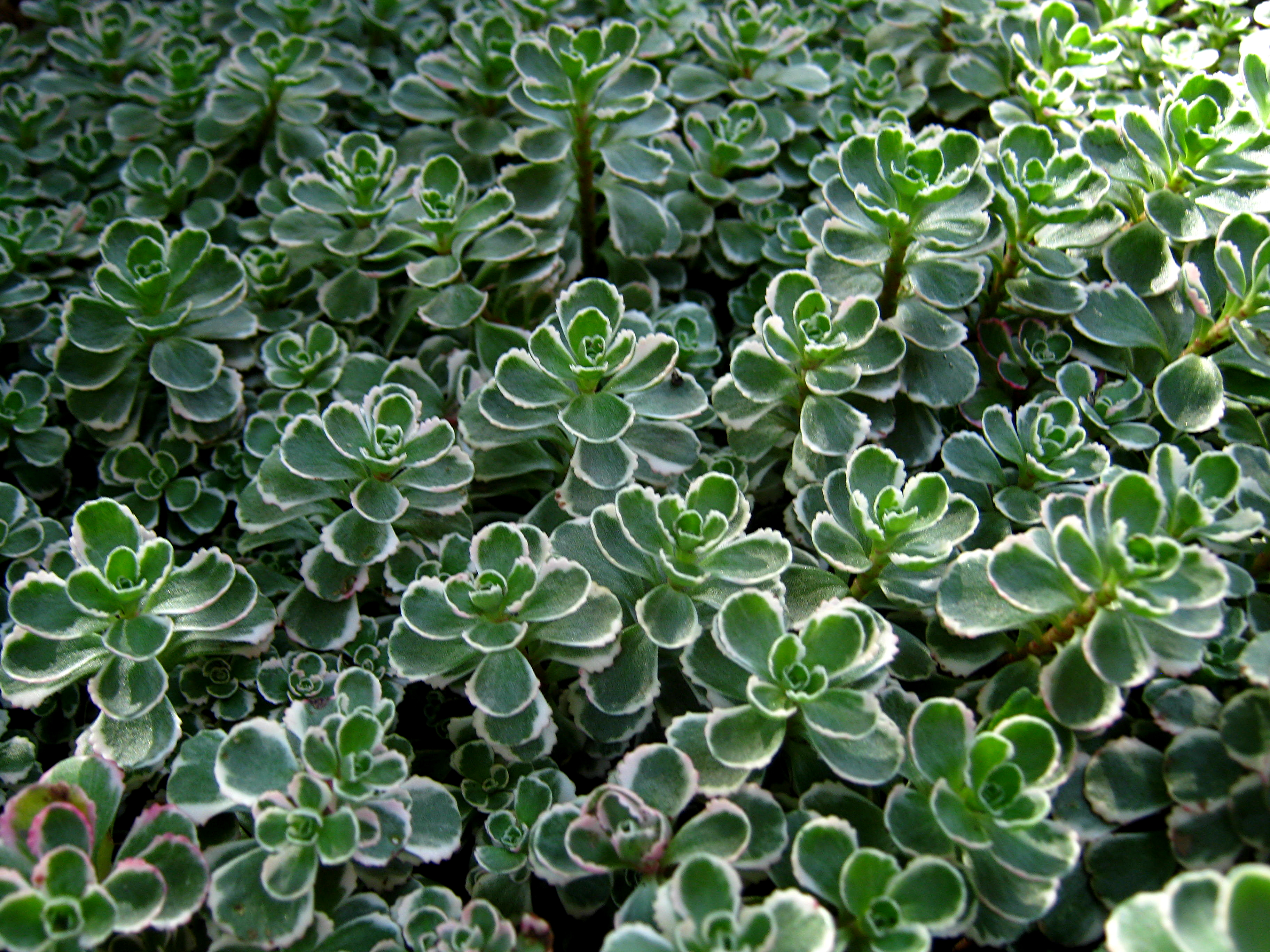
* Sedum spurium
Dragon's Blood sedum
Very low succulent grown for attractive reddish-bronze leaves. Tolerates sun or some shade; average watering or drought. Color intensifies in winter. 'Tricolor' has leaves that are white, pink, and green.
* Zoysia tenuifolia
Korean grass
Very dense, interestingly lumpy grass ground cover with needle-fine leaves. Dormant (brown) in winter. Very tough.
Vines that are planted as ground covers.
These are especially drought tolerant.
* Sollya heterophylla (fusiformis)
Australian bluebell creeper
Small, with dense, tiny, shiny leaves. Can be used as a ground cover. Grows slowly to about 6' tall when supported; 1 - 2' as a ground cover. Nodding blue flowers in summer; 'Alba' has white flowers. 'Boddy's Choice' is a very slow-growing type grown as a shrub or ground cover. Quite shade or sun tolerant, will grow under Eucalyptus trees.
* Trachelospermum asiaticum
Asian jasmine
Nearly always grown as a ground cover. Hardly ever flowers; grown for shiny leaves and exceptional durability. Can be tied up as a vine, but doesn't twine.
* Trachelospermum jasminoides
Star jasmine
Super fragrant flowers in May and June. Tolerates heat, cold, sun, shade, poor soil, drought or watering.
Shrubby ground covers
There are many woody plants that spread across the ground, making a shrubby ground cover. These tend to be two to three feet high.
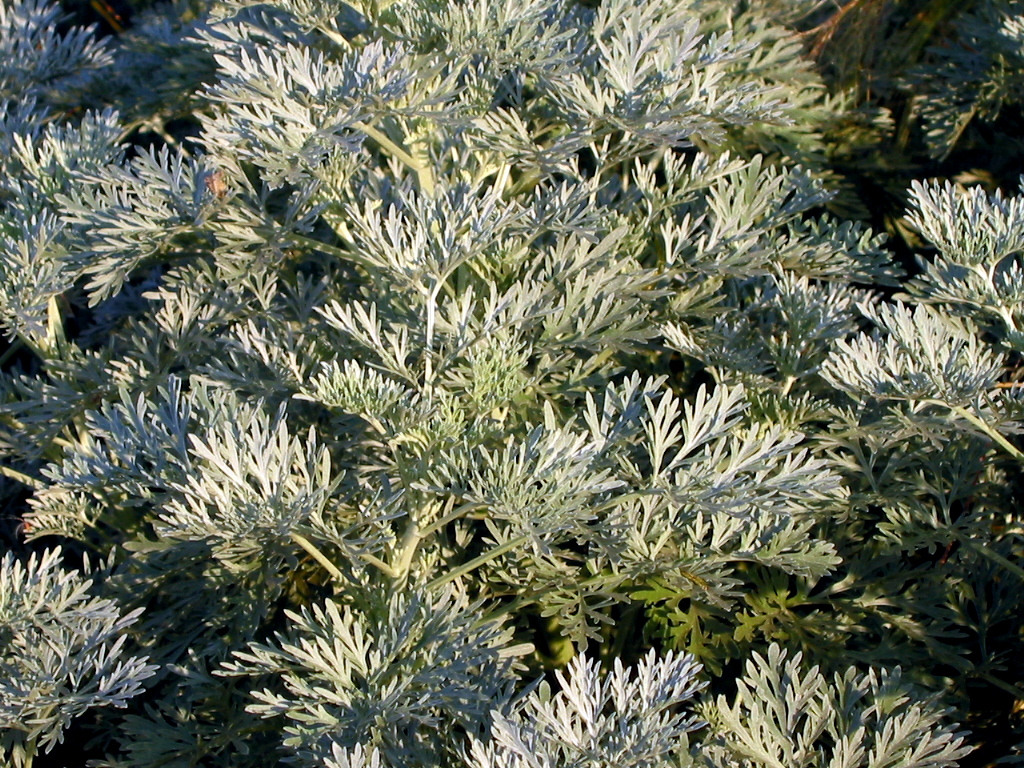
* Artemisia 'Powis Castle'
Vigorous spreader with silver, ferny foliage. Extremely tolerant of heat, drought; ok in partial shade. Leaves have a strong medicinal scent. Completely shades out weeds. Can cover quite an area!
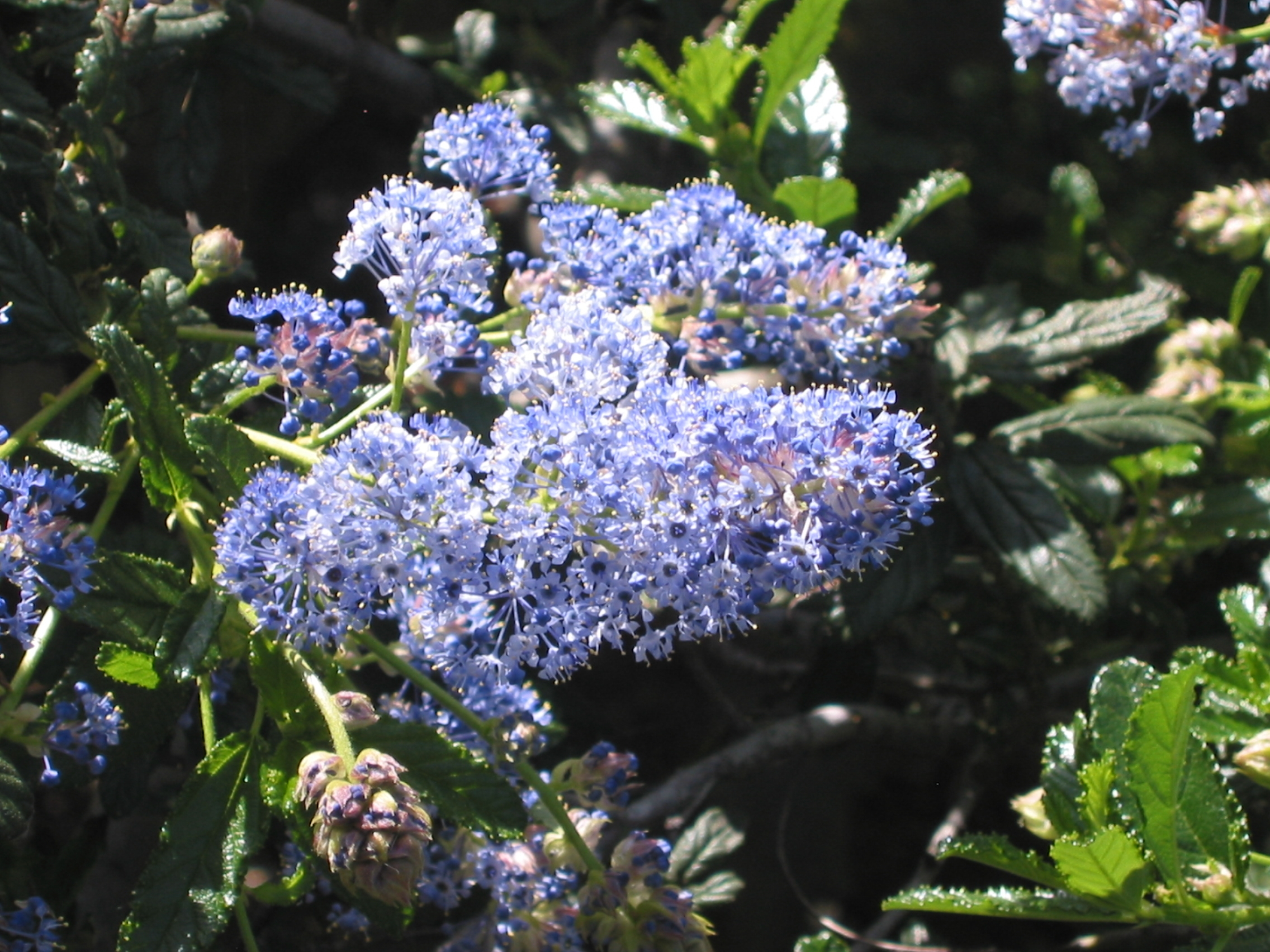
* Ceanothus species
Wild lilac
Several low spreading varieties are used as ground covers. Attractive shiny leaves; pretty blue flowers in spring. Ground cover forms range from a few inches to a few feet tall, spreading several feet. Don't plant where they'll have to be pruned. Water deeply and very infrequently in summer. California native.
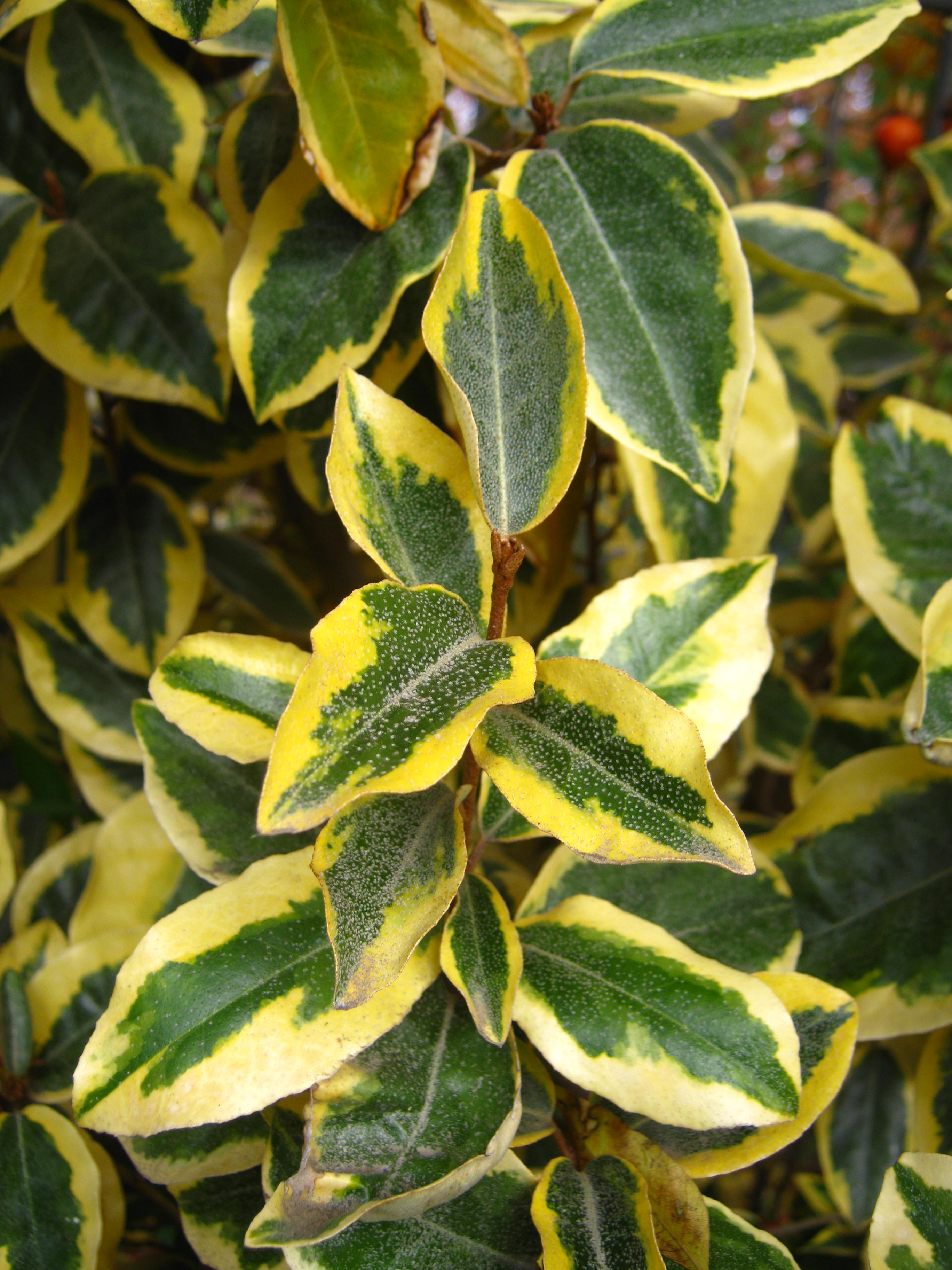
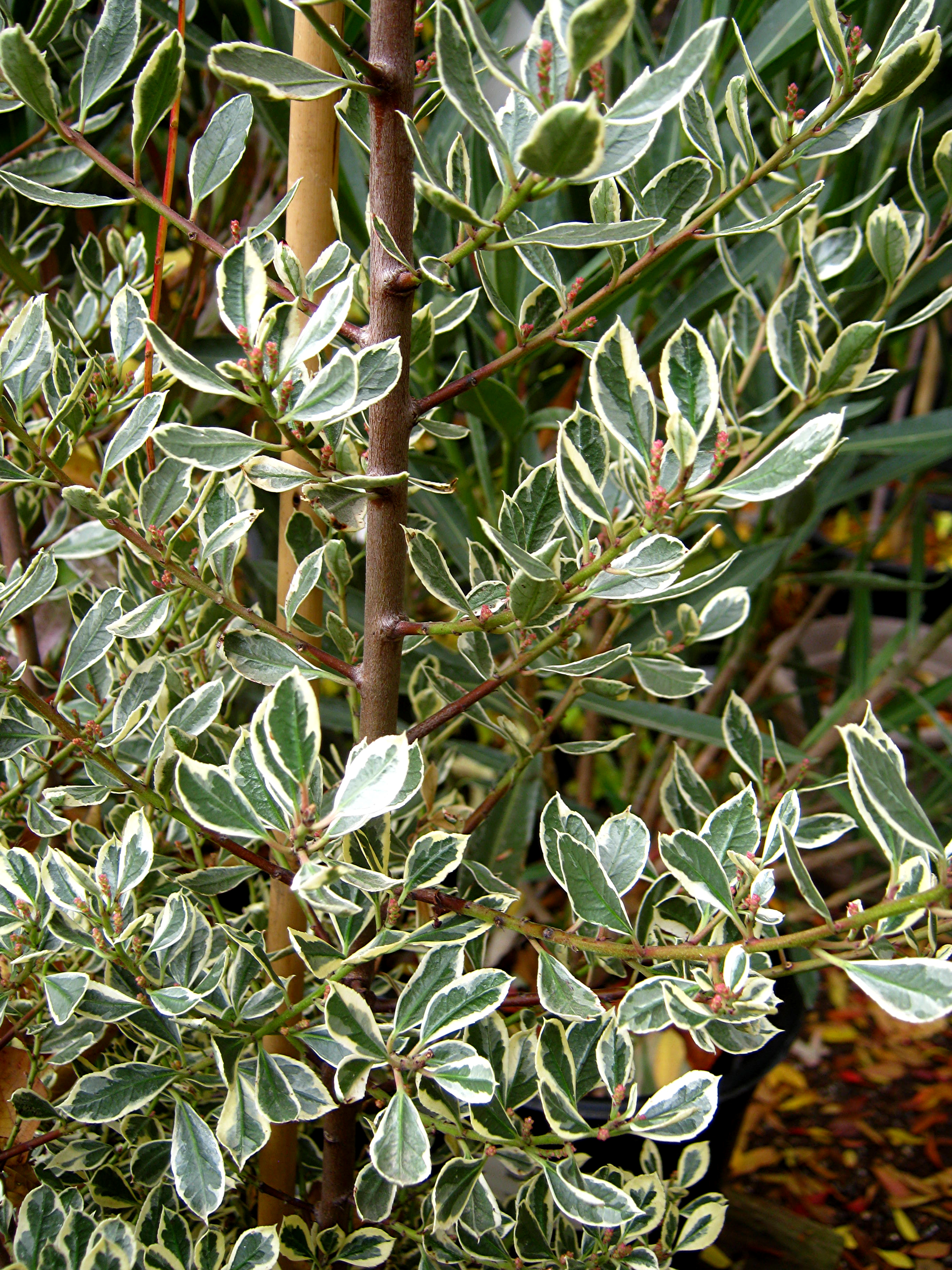
* Euonymus fortunei 'Emerald Gaiety'
Variegated Wintercreeper
Low grower creeps along the ground, or can be clipped as a shrub. Very tough, tolerant of shade or sun. Flowers aren't noticeable. White portions turn pretty pink color in winter.
* Mahonia repens
Creeping mahonia
Shiny leaves, yellow flowers, shade tolerant. Slow to get going, but persistent and tough.
* Ribes viburnifolium
Catalina perfume, Evergreen currant
Will grow in considerable shade. Spreads steadily to make an attractive ground cover. Fragrant foliage. Very small light pink flowers in winter attract hummingbirds; red berries attract songbirds. California native.
How to do it.
You will need to kill out your grass somehow first. You can spray with an herbicide, or cover the area with black plastic for several weeks. Get your turf species identified since some grasses can be persistent and troublesome, especially bermudagrass. The plants listed don't need any special soil preparation. Rototilling will make planting easier. But you can just dig individual holes for the small plants.
Watering of the new plantings can be done with your lawn sprinklers, but you will water far less often. Or you can convert your system to drip irrigation. You may want to ask a landscape contractor for help if you do that.
Unplanted areas can be covered with a thick mulch to retain moisture and prevent weeds. Any bark or compost product can be used. Local rock yards can deliver bulk quantities at a reasonable price.
You need to do a little math to order the right amount of mulch. For two inches of mulch on 100 square feet, you need 16.7 cubic feet (100 divided by 6 = 16.67 cubic feet). There are 27 cubic feet in a cubic yard.
Green is good, but green lawns are high water users. So reducing your water consumption often begins right in the front yard, by choosing water-thrifty plants.
Some choices:


Subscribe to:
Posts (Atom)


