Wednesday, November 24, 2010

Frost Warning? Freeze Warning?

Written for the Davis Enterprise, November 24, 2010

Click on any image for a larger version


"He comes, - he comes, - the Frost Spirit comes!

On the rushing Northern blast ...
" John Greenleaf Whittier

This week marked the first National Weather Service frost warning of the season. Our main frost season typically runs from Thanksgiving through Valentine's Day. There have been frosts after Feb. 14, and occasionally before the last week of November, but those have been infrequent and of little consequence.

What weather conditions lead to a frost warning?


The poem was a bit of hyperbole on Whittier's part: frost doesn't "rush" in, it forms under still, clear skies. But he had a point. Frost can occur after a cold air mass, usually a storm, moves through the region. Cloud cover during the day gives way to clear skies in the early evening. As heat is lost to the sky, the surfaces cool rapidly. When the air temperature gets to the dew point, fog forms. When surface temperatures drop below freezing, frost forms. [Note that the air temperature you measure or see online may still be above freezing; it is the surface temperature that matters.]

When the surface reaches 32 degrees, the layer of water vapor molecules in contact with that surface freezes, and then the layer above that, and so on. Frost doesn't fall from the air, it freezes directly on a surface. Some surfaces cool faster than others. The metal on your car may show frost by midnight; bare soil by dawn, while grass might not even reach freezing that same morning. It all has to do with how efficiently the particular surface conducts heat.

What would prevent the frost?


"The Frost performs its secret ministry,

Unhelped by any wind."
- Coleridge


Clouds and fog prevent frost by trapping the outbound heat. Light winds mix the warmer air from above back down to ground level. This is the principle behind the giant fans you see on the edges of vineyards in Napa Valley.

What's the potential for harm in the garden?


Leaves lose heat to the sky! Damage to a plant depends on the structure and contents of those leaves. Soft, succulent plants such as Impatiens turn to mush as the cells rupture. Hardy plants contain sugars and other chemicals that act as natural antifreeze.

A frost is not a freeze.


First, don't panic. If a plant is considered hardy here, damage will be cosmetic. The leaves may look ugly, but the plant will survive. It is a freeze that we are concerned about: a period of colder temperatures when a very cold air mass moves over the region.

Our biggest risk is mid-December to mid-January. Temperatures below the mid-20's are unusual here and spell trouble for many plants. On December 23 1990 we reached 16 degrees. The morning of January 14 2007 got to 20 degrees.

Freeze damage is a matter of how cold we get, for how long. That morning in 1990 was the start of a ten-day episode, with each successive day causing further tissue damage to leaves, shoots, and eventually the woody parts of plants.

Which plants are we going to lose on a frosty night?
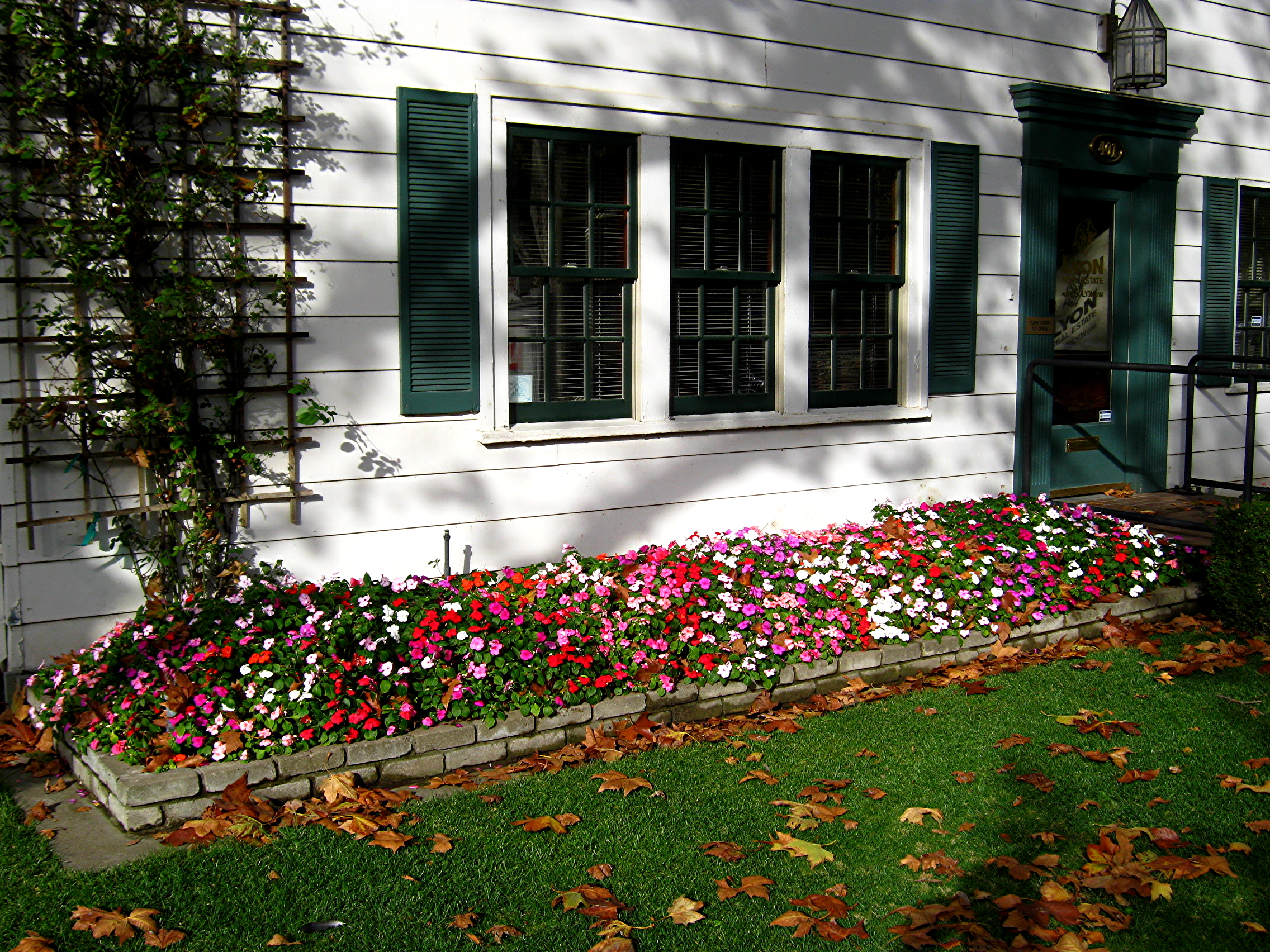


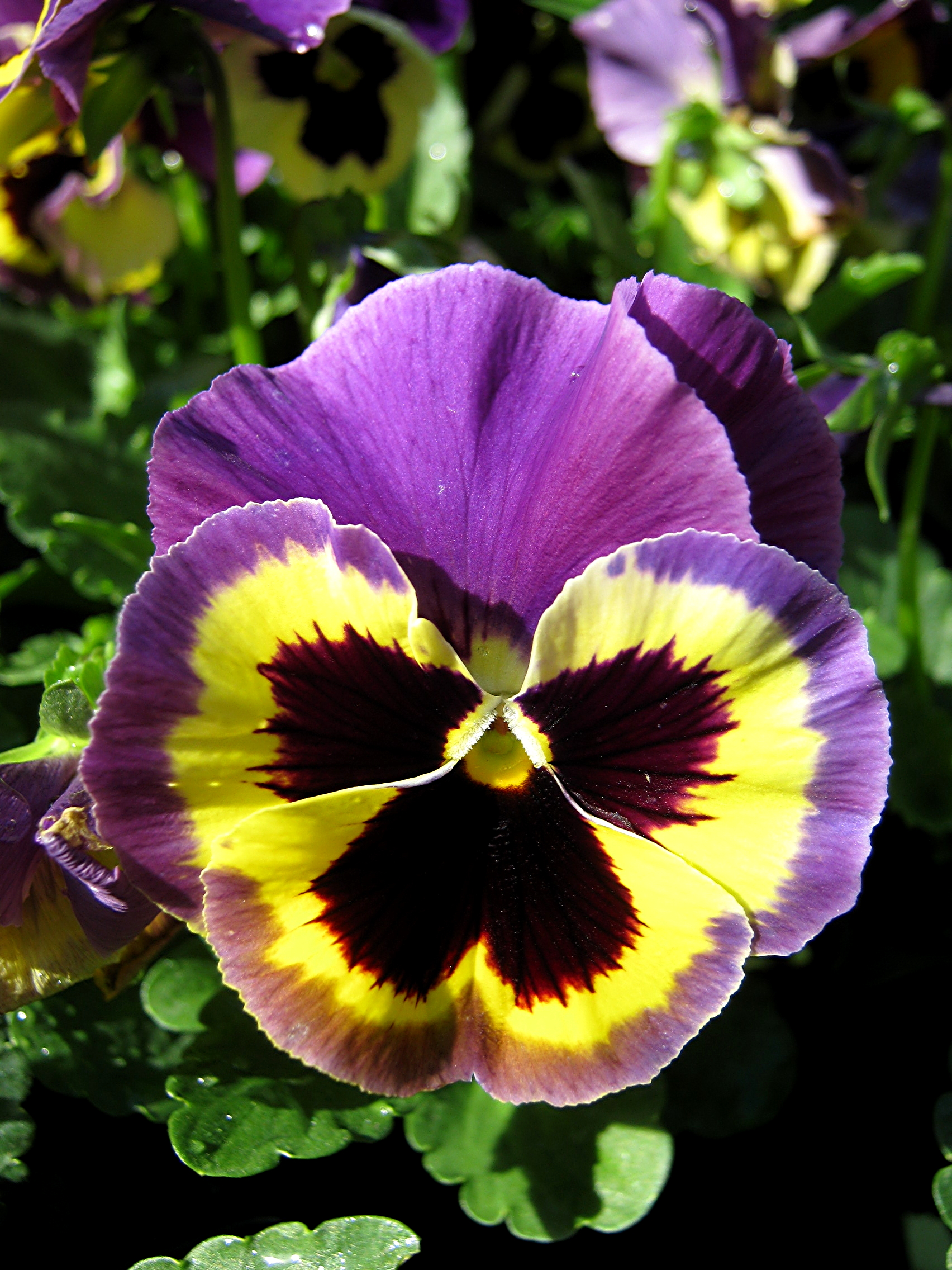
Summer annual flowers, such as this showy planting of Impatiens in front of Lyon Real Estate office on 2nd Street, will likely be toast after a night or two of light frost. But there are plenty of winter annual flowers we can plant in their place. Pansies [shown at right] and violas, snapdragons , cyclamen and primroses all give winter and spring color without any concern about cold weather.


Pansy 'Delta Premium' -- no need for protection!


Which plants should we protect from frost?


Some succulents such as jade plant, some aloes, and kalanchoes.
Tender subtropicals such as hibiscus and mandevilla.
Semi-tender subtropicals such as bougainvillea, Guatemalan avocado, Mexican lime, young lemon and citron trees.

Which plants should we protect from a freeze?


Older lemons, other young citrus trees, Mexican avocado, geranium (Pelargonium). Blossoms of Lilac vine (Hardenbergia), which bloom in late winter, can be saved by covering the plants.
As temperatures drop further we may get concerned about some of the hardier citrus. Tangeloes, grapefruit, navel and Valencia oranges can be damaged in the mid-20's.

There are many subtropical plants I don't worry about. Brugmansia, lantana, and passionflower may defoliate, or be partially killed, but will recover. Once you get used to the winter appearance of these semi-tender plants, you'll worry less. Just think of them as deciduous. Leave them alone: wait until new growth begins in spring before you cut off the frost-burnt parts.
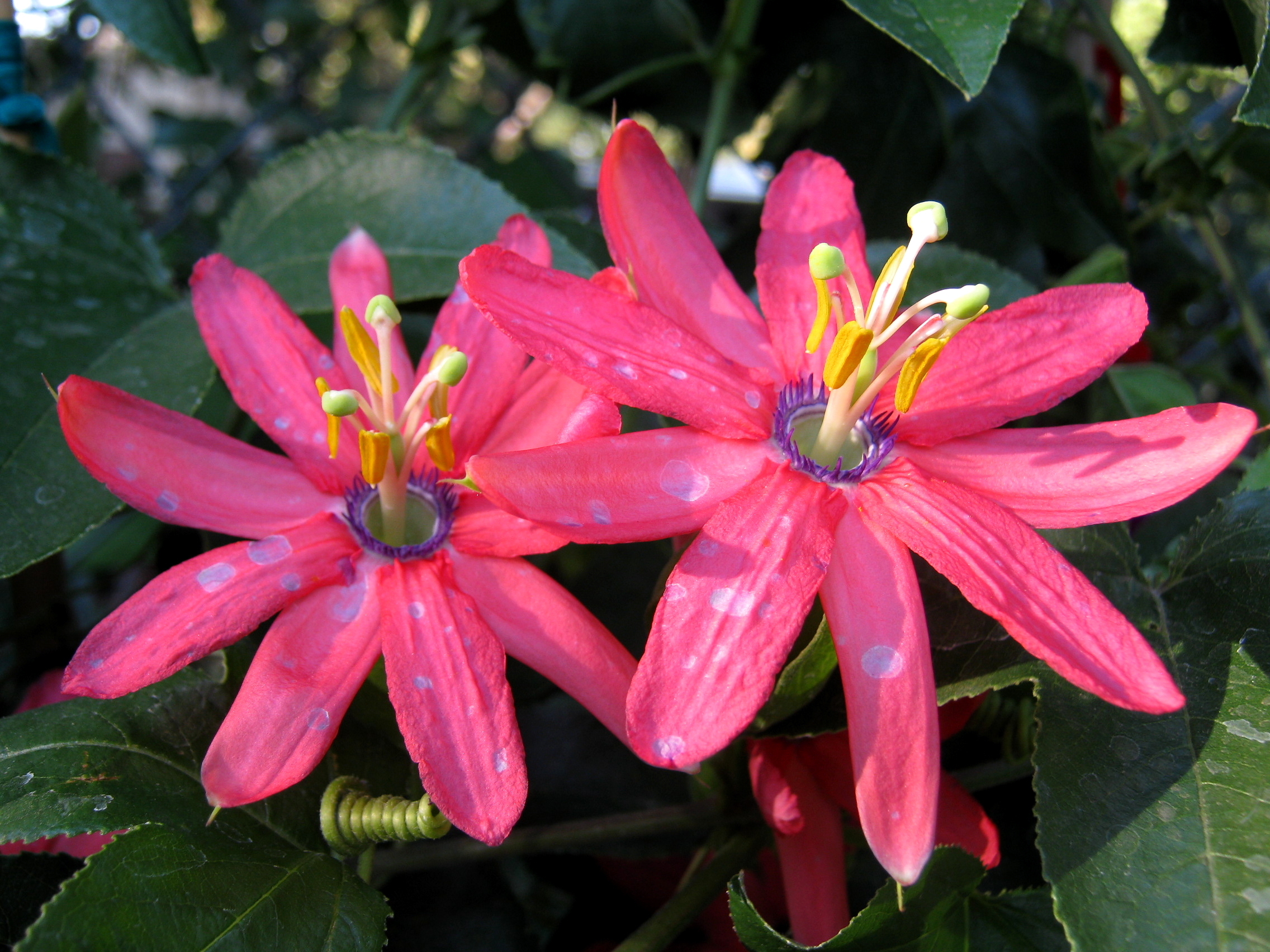


Passiflora 'Coral Glow'


We grow many subtropical plants in Northern California. Some are badly harmed by freezing weather, while others (such as the Coral Glow Passionflower shown here) re-sprout readily in spring. Temperatures in the upper 20's will damage the leaves and cause some die-back, but the plants will recover. Lower temperatures may completely kill the tops. Damage can be reduced by taking simple measures to trap or provide heat to the plant.


Some citrus are much hardier than lemons and limes. My mandarins and kumquats have been through major freezes with minimal damage. Fruit of Satsuma mandarins may be harmed at very low temperatures, so you might harvest the fruit if extreme cold is predicted. But citrus fruit won't ever get any sweeter once you pick it, so stripping the tree is a last resort.

There are two main ways to protect plants:


Trap heat.


A plant under an overhang is safe, as the building will keep the heat from escaping to the sky. Frost blankets, which are made of light fabric that allows light in, act to create a mini-greenhouse. Anchored with metal pins, these are the simplest way to provide protection.


Using frost blanket to protect fruit on a mature lemon tree.

Provide heat.


Old-fashioned holiday lights generate enough heat to keep the plant warm. Even a 40-watt bulb on a shop light fixture, attached at the base of the tree (grounded outdoor-rated only!) may be enough for a small tree. Combined with the frost blankets, you can get a few degrees of warmth, enough to keep the local temperature above freezing.


Finally, plants in containers may be damaged by desiccation (cold-induced drying) during freezing weather. Keep your outdoor containers watered during the winter! They won't need it very often: once every week to ten days should be fine if we don't have rain.

Monday, November 8, 2010

Fall Color in the Sacramento Valley!

Why do leaves turn color in the fall?

This is right up there with 'how do they grow seedless watermelons?' among the most-asked questions directed at plant professionals.

The answer is simple! The days get shorter, the nights get colder, and Jack Frost magically paints the leaves in your yard!
Well, actually, the answer is more complicated, involving daylength (actually nightlength), temperature, nutrients, and genetics.

Trees that have adapted to cold winter climates go through several steps as winter approaches. The first part of the process is a reaction to longer nights. The plant forms a layer at the base of the leaves that blocks the movement of carbohydrates (sugars, starches) out of the leaves, and blocks the movement of minerals into the leaves. That 'abscission' layer eventually gets brittle and breaks, so the leaf falls.


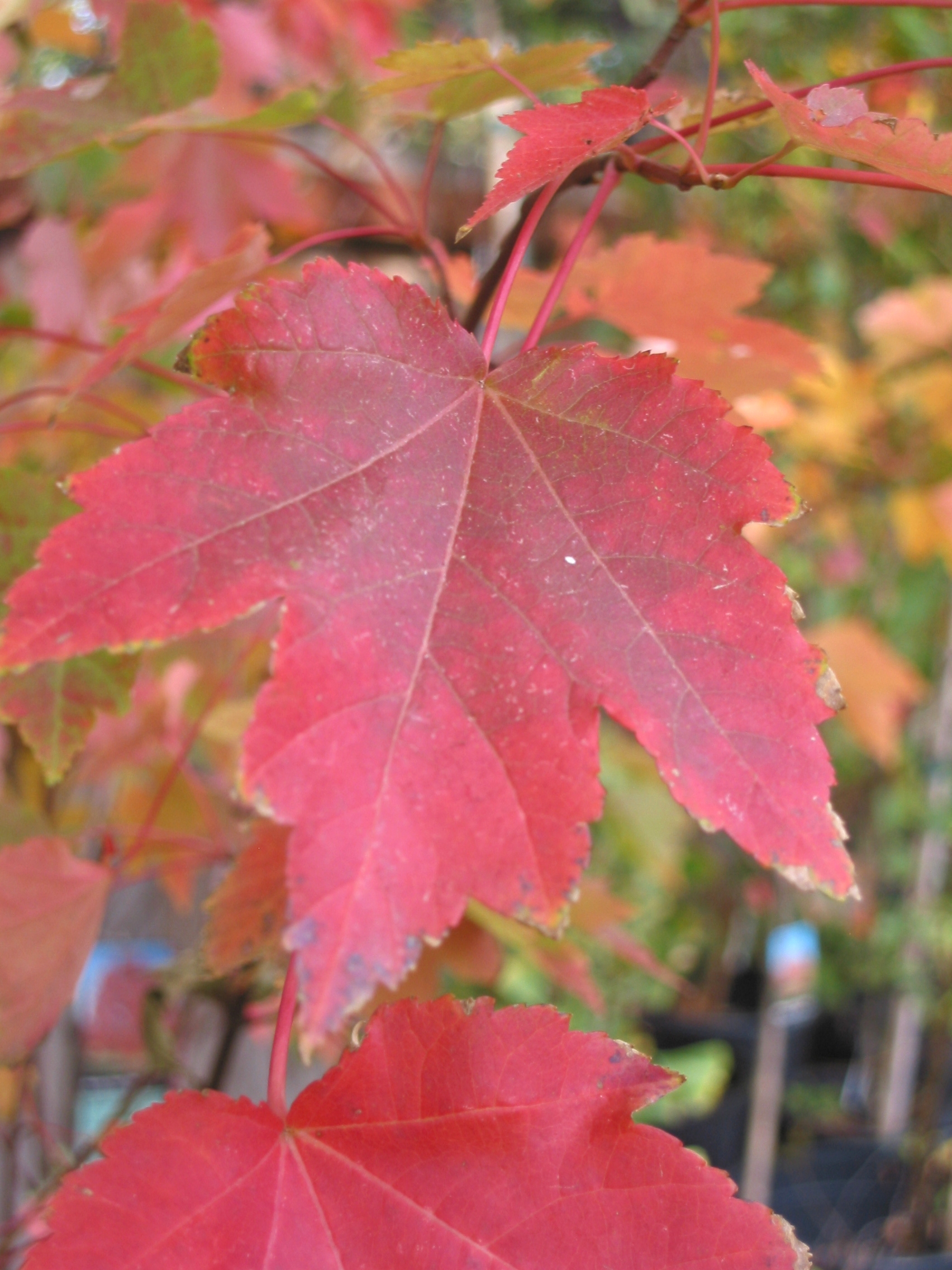
October Glory maple


But before that happens, the plant produces less and less chlorophyll because it has less stuff to make it from. That is the pigment which makes leaves green. It is also the most fragile pigment, breaking down in sunlight very quickly. Usually the plant is replenishing it very quickly. But as it breaks down and becomes less abundant, the less common pigments of yellow and orange become visible. So these are the first fall colors that we see. Those colors were already there; we're just seeing them now because the green is gone. This first reaction mostly follows the calendar, although severely drought-stressed plants will begin to go dormant earlier than normal.

Some minerals are mobile within the plant, moving from one place to another as needed. The plant moves phosphorus out of the leaf and into the stem where it is stored during cold weather. The absence of phosphorus changes the chemical reaction in the leaves, and the remaining trapped carbohydrates are now made into certain other pigments, notably the ones that are red and purple. So these are the more spectacular colors that we see next. They weren't there before; the tree is making them now out of what's left in the leaf.


Chinese pistache leaves


Some trees make more of these pigments than others do, so it varies between species. There are also genetic differences of seedlings within a species. Variation in temperature from year to year, and the nutrient status of the specimen, also affects fall color. Within those species that have the pigments to begin with, sunny clear days and cool nights encourage the production of more red and purple pigments. A tree with adequate nutrition will have more basic material to work with to create pigment. Trees that are overwatered have damaged root hairs, so they've been unable to take up nutrients readily during the summer.
Click here for more of this article, and pictures

Thursday, October 28, 2010

20 Easy Fragrant Plants

Plant people get excited about strange things. A breeder developing a yellow Salvia. A single-flowered variant of Lady Banks rose. A white daylily. These are the things that get plant collectors all a-twitter. Or a plant re-surfacing after many years.


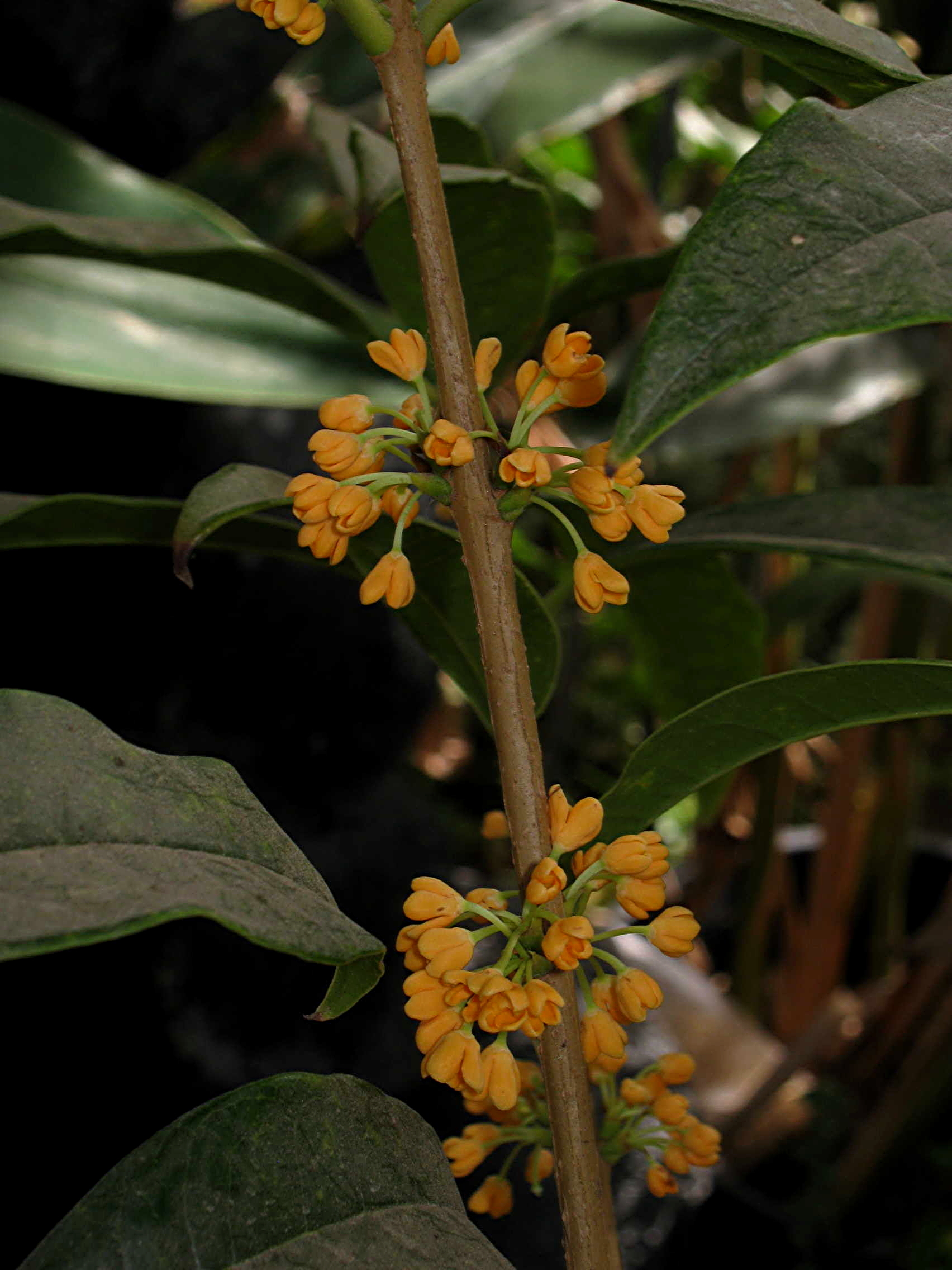
Osmanthus fragrans 'Aurantiacus'

When I first moved to Davis to attend UC Davis I lived in the Primero dormitories located along Russell Boulevard. As I walked by the Student Health Center on my way to class, I noticed a powerfully fragrant shrub blooming in spring and fall. The flowers were nondescript and the foliage was a drab green-olive color, so one hardly noticed the plant itself. The fragrance resembled peaches and apricots, with sharp sweet notes, like a fine liqueur. Osmanthus fragrans: commonly called sweet olive. There was also a plant located near the Memorial Union building before it was remodeled. The former had white flowers; the latter had orange ones and bloomed more heavily in the fall.

Alas, Primero dorms are gone, though not lamented: they had no A/C and had antiquated heaters; gone also are both of those shrubs. In my mind's eye I can still see each one, more than 35 years later. As a nascent student of horticulture, anything with an aroma like that would distract me as I crossed campus. My bike got totaled, and then stolen, within a month of my arrival here, so I gave up on bicycles. I was a pedestrian on campus for all of my student years, which enabled me to see the plants close up that 99% of the students whizzed past.

Recently the orange variety came through my store for the first time I can remember. Osmanthus fragrans 'Aurantiacus'is the official name. "Fragrans" is self-explanatory, and "Aurantiacus" is Latin for orange. This Osmanthus species is native to Asia; flowers are used in tea, jam, and liquor and various Asian dishes.

The flowers of 'Aurantiacus' are pumpkin-orange, appear mostly in autumn, and each flower is only about one-quarter inch. Not spectacular, but it would be difficult to overstate the powerful fragrance of these tiny flowers. Everyone who walked by the evergreen shrub raved about the scent. As with many fragrant flowers, the volatile oils evaporate and drift several feet from the plant.

Common O. fragrans is readily available, but 'Aurantiacus' is hard to propagate and very rare in the trade. I don't know how this grower produced it, and as soon as they released their small crop it was gone. Both grow with an open habit, at a moderate pace of 2 to 3 feet a year, ultimately becoming ten to fifteen feet tall with about half that spread. They tolerate sun, but look best with protection from the hottest sun of the afternoon, and will also grow and bloom in bright shade.

Osmanthus is just one of many easy landscape shrubs providing rich fragrance without special attention. In fact, along with certain perennials and annuals, it is possible to plant a garden of easy plants for fragrance year-around. Here are some choices, sorted by season of bloom.


Fall-blooming


1. Brugmansia
Common name: Angel's trumpet.
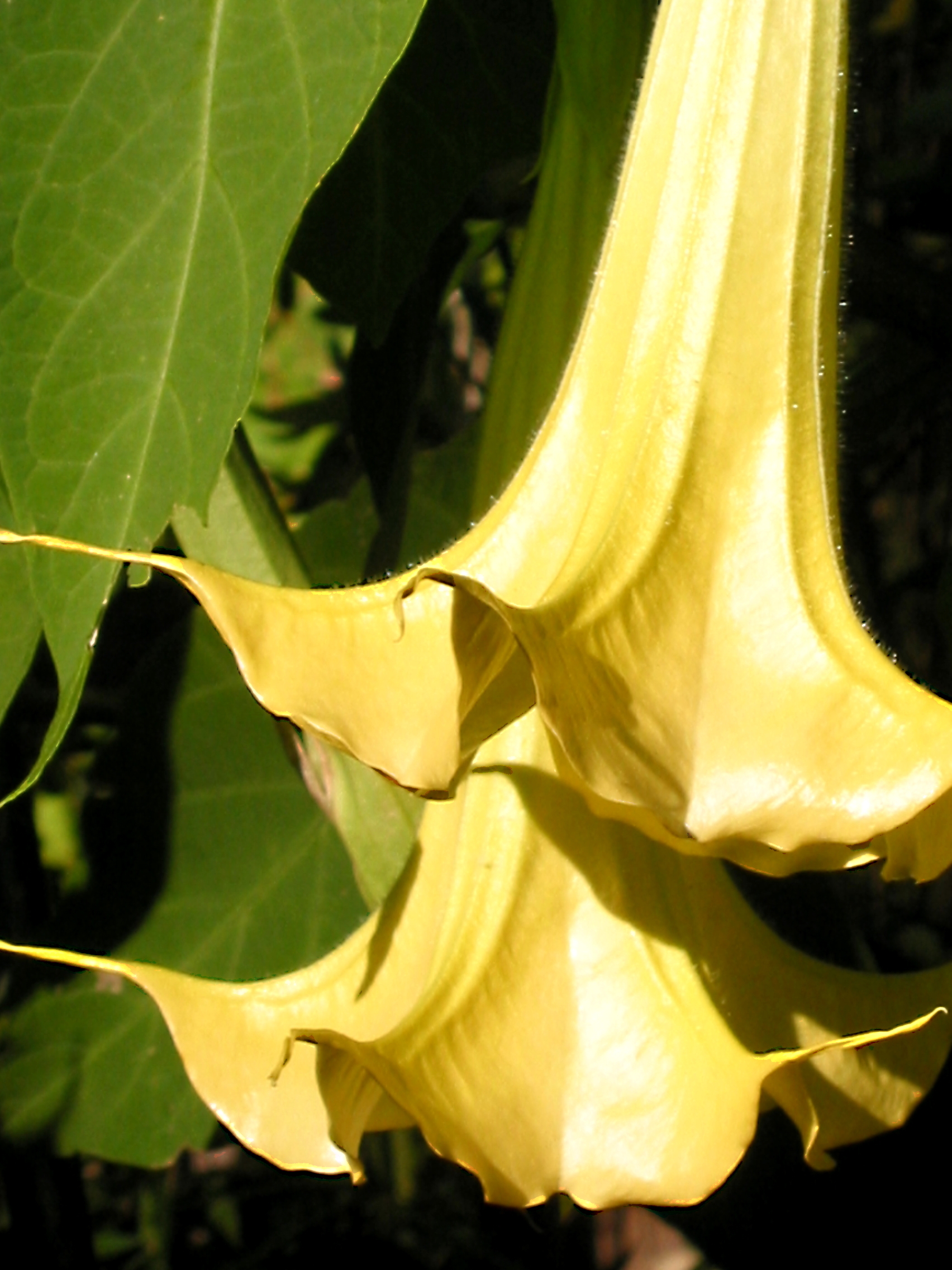
A big shrub with bold leaves, growing to 10 feet +. Hardy subtropical. Tops are damaged in winter, sometimes killed to the ground, but it always resprouts. Appearance is best if it is sheltered from hot sun and wind, and frost protection prolongs the late fall bloom. Blossoms are intoxicatingly fragrant, but only at night. All parts are poisonous.

2. Osmanthus fragrans 'Aurantiacus'
Common name: Orange tea olive.
Hardy evergreen shrub best in partial sun or shade. Full morning sun is ok. Drought tolerant.

Winter-blooming


3. Sarcococca ruscifolia
Common name: Victorian box.
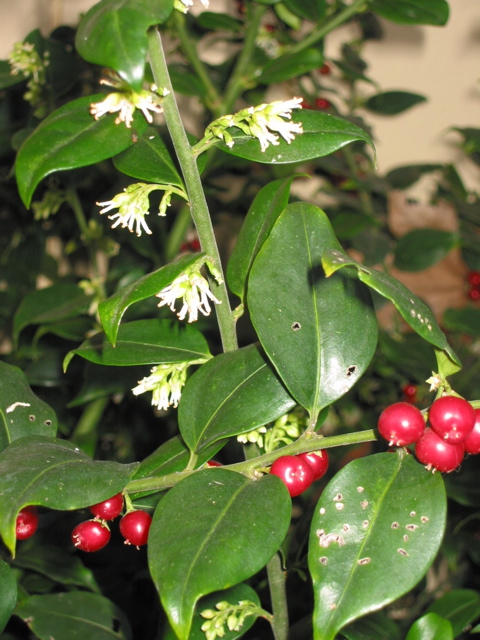
Slow growing evergreen shrub to 3 to 4' tall and wide, easily clipped as a hedge. Little white flowers in January smell like gardenias! Very shade tolerant, burns in any direct sun. Drought tolerant.


4. Wisteria species: W. sinensis, floribunda, and venusta.
Common name: Wisteria.
Very vigorous deciduous vine with purple or white flowers in late winter.
Blooms best in full sun and under dry conditions.


Spring-blooming


5. Citrus
Evergreens grown as shrubs or trees. April blossoms are intensely fragrant. Meyer lemon flowers and fruits year around. Kumquats bloom in summer. Hardiness varies: mandarins are hardiest; limes are tender.

6. Jasminum polyanthum
Common name: Winter jasmine.
Very vigorous evergreen vine that can take over part of your yard. Pink buds open to pungent white blossoms in Feb. - April, depending on weather.

7. Lathyrus odorata
Common name: Sweet pea.
Annual vine that we plant from seed in fall for winter and spring bloom.

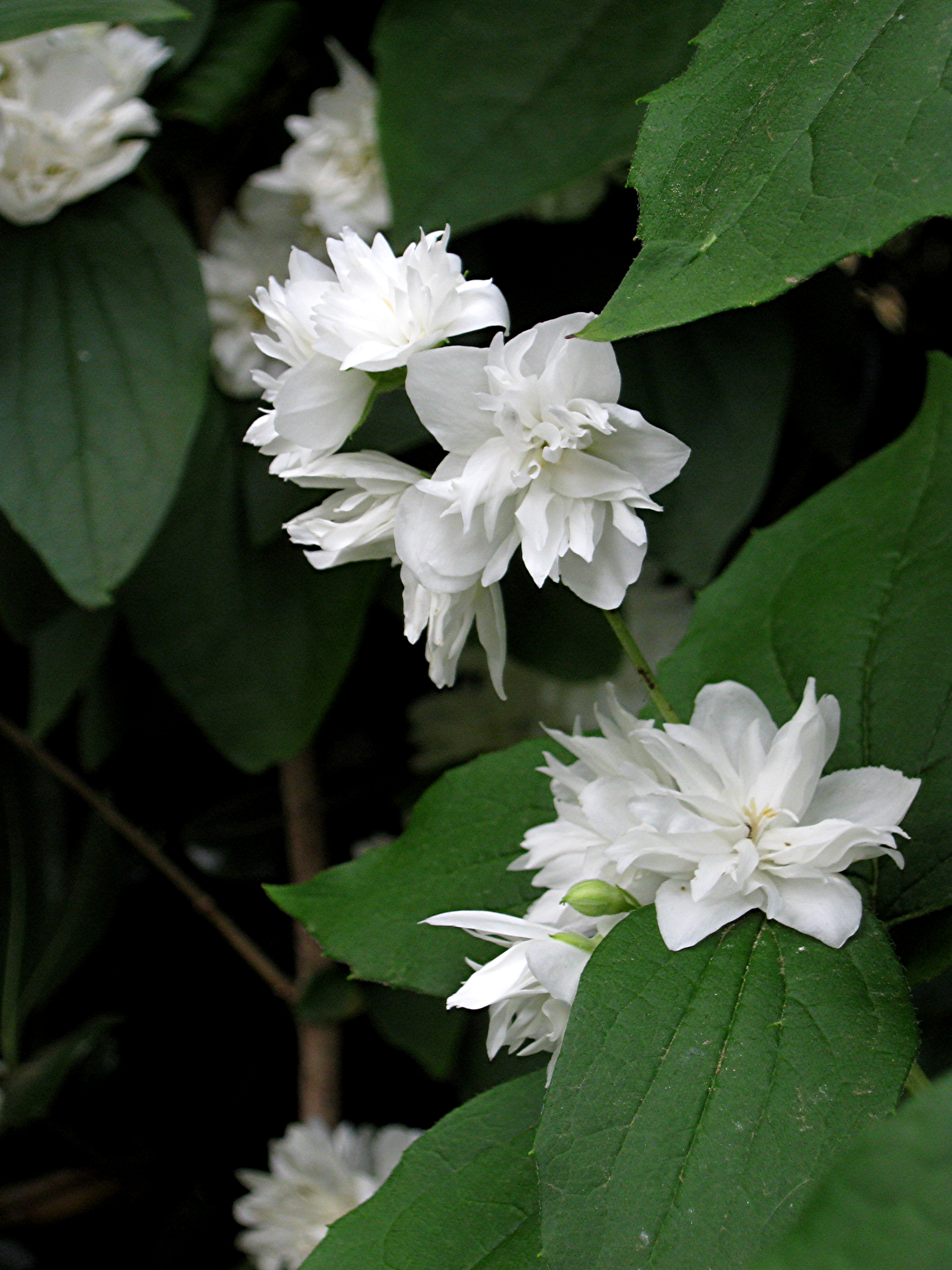
8. Philadelphus
Common name: Mock orange.
Deciduous shrub grows pretty fast to 8 feet tall, 5 to 6 feet wide. There are dwarf varieties. Open, somewhat rangy habit. Lemon-scented blossoms in May. This is what east-coasters call Mock orange.

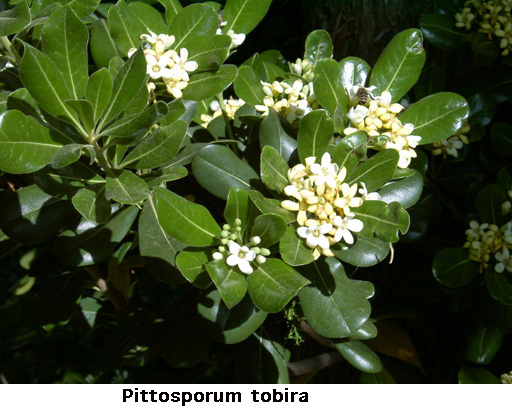
9. Pittosporum tobira
Common name: Mock orange.
Common evergreen grows 2 to 3 feet a year to 10 feet or more; readily pruned to any height. Lemon-scented blossoms in April and early May. This is what Californians call Mock orange.

10. Rosa banksia
Common name: Lady banks rose.
Gigantic evergreen, thornless climbing rose. Very tough. Blooms for a couple of weeks in early spring before the other roses begin. The yellow and single white forms smell like cotton candy. Best in full sun. Very drought tolerant.

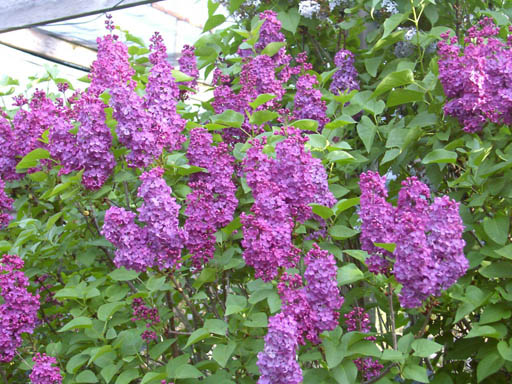
11. Syringa vulgaris
Common name: Lilac
The familiar hardy deciduous shrub from colder climates grows fine here and blooms freely in full sun or light shade. Very drought tolerant.

12. Osmanthus fragrans
Common name: Sweet olive.
The white form blooms most in the spring.

Spring and Summer blooming


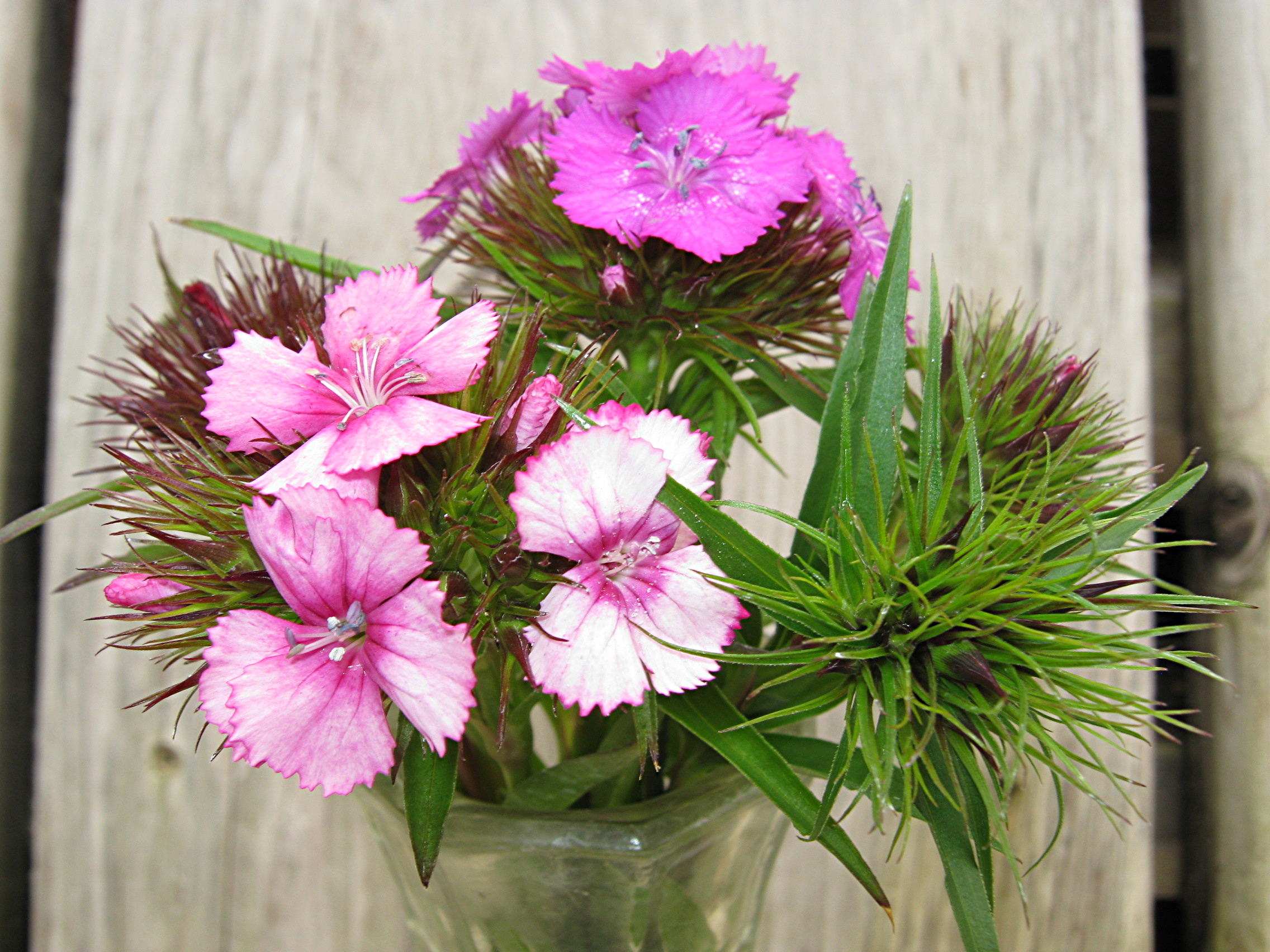
13. Dianthus
Common name: Pinks, carnations.
Hardy perennials that can last for years. The grey-leaved forms are tougher garden plants than the green-leaved ones (which are usually sold as annuals, though they will live two to three years). Many Dianthus have strongly spice-scented blooms.

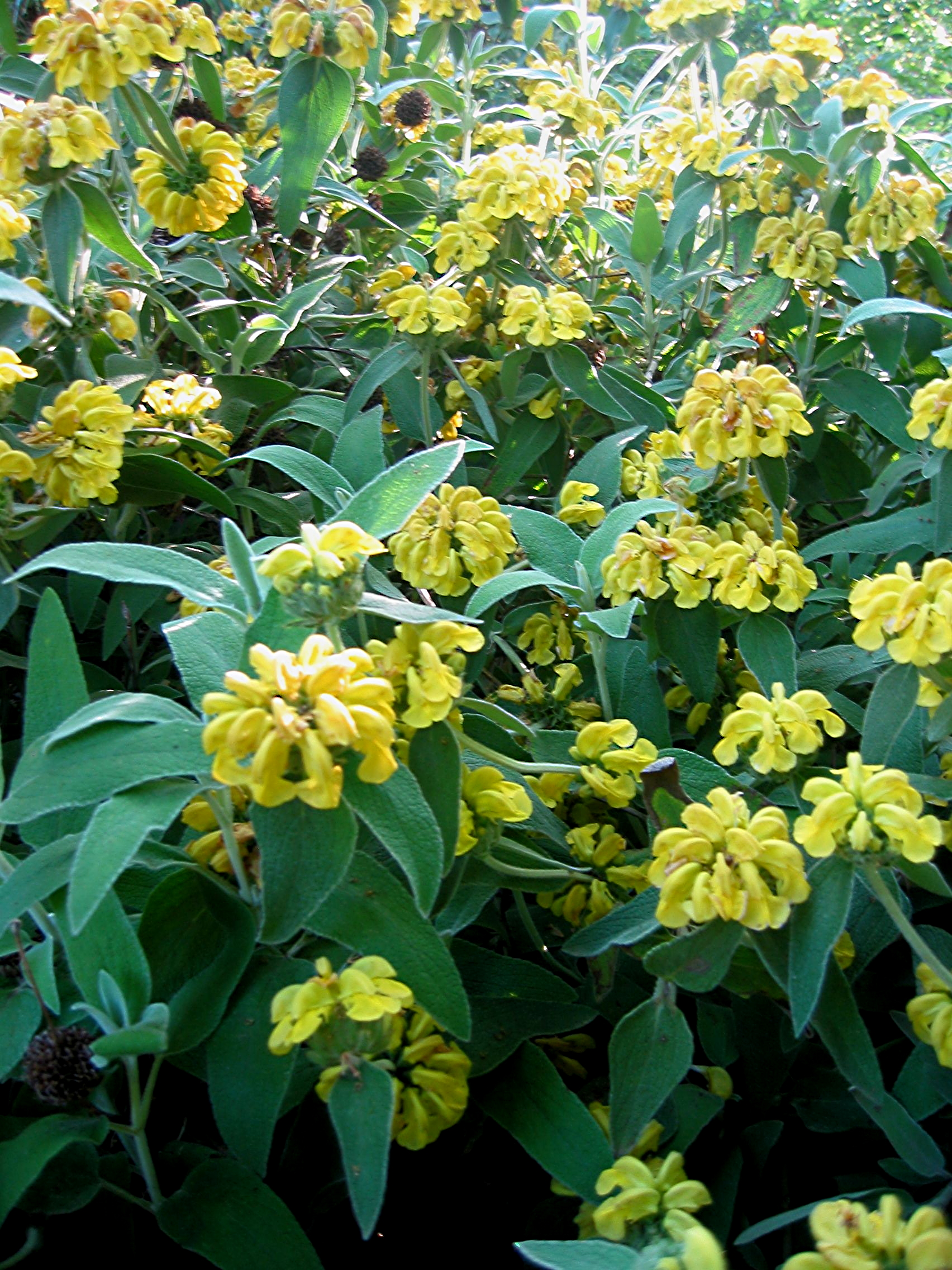
14. Phlomis fruticosa
Common name: Jerusalem sage.
Tough shrub with fuzzy grey-green leaves, grows to 4 to 5 feet tall and 6 feet or more across. Blooms in waves in spring and summer. The strange-shaped whorls of bright yellow flowers smell just like carnations! Tolerate extreme sun, heat, and drought.

Spring, summer, and fall blooming


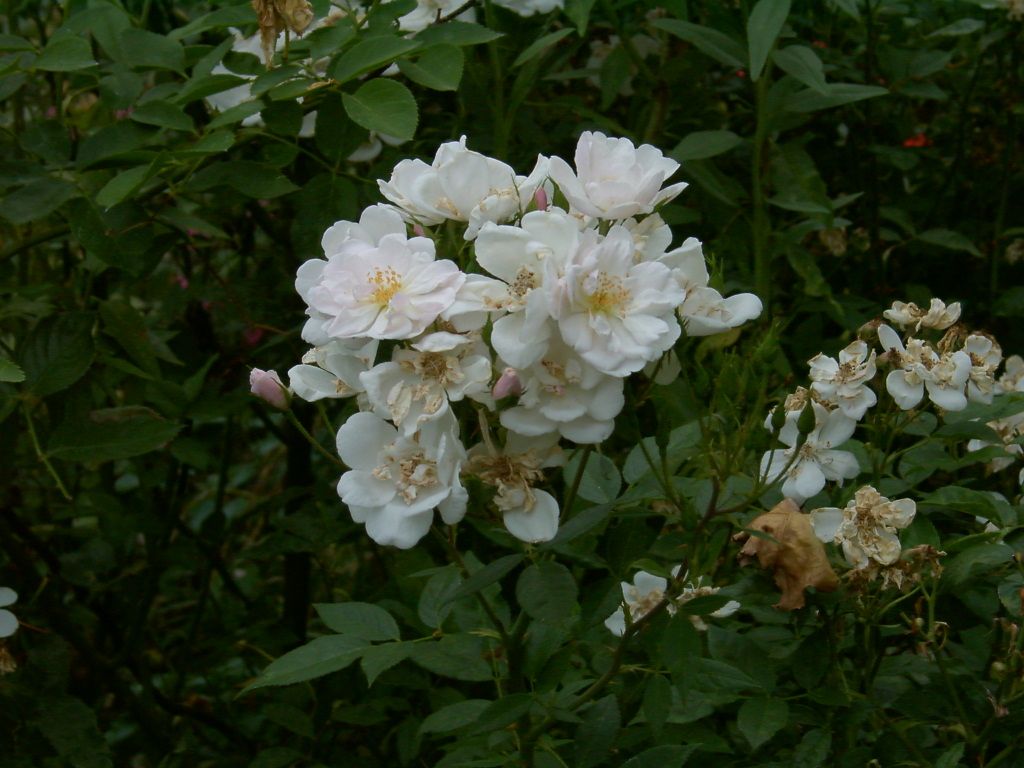
15. Rosa hybrids
Common name: Rose
Obviously roses belong on any list of fragrant shrubs. Look for varieties noted for their scent, as many hybrids have light or no fragrance. Roses like full sun and lot of water.

Summer blooming


16. Fortunella margarita
Common name: Kumquat.
This evergreen citrus, which grows as a large shrub or small tree, is the hardiest of all. The summer flowers are smaller than other types, but very fragrant. The fruit is a nice ornamental and edible bonus, hanging on the tree year around.

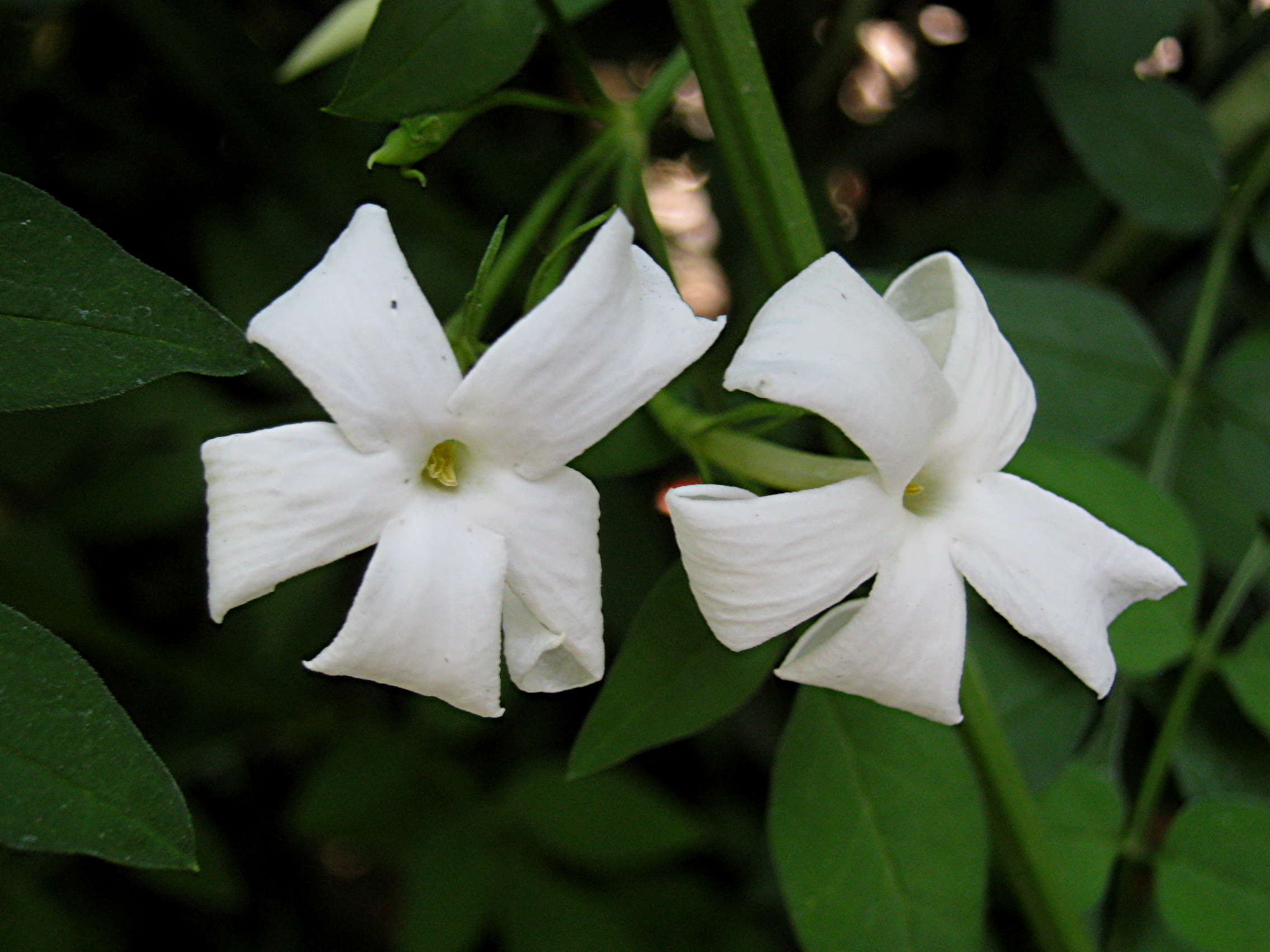
17. Jasminum officinale
Common name: Poet's jasmine.
Hardy evergreen vine that blooms in the summer. Much less invasive than the spring-blooming jasmine, the bloom is less abundant but lasts longer.

18. Trachelospermum jasminoides
Common name: Star jasmine.
This evergreen vine hardly needs introduction. The fragrance is too powerful for some people Very drought tolerant and grows in anything from full sun to full shade (though bloom is limited in shade). Very drought tolerant.

Fragrant foliage


19. Aloysia triphylla
Common name: Lemon verbena.
Open, airy shrub with yellow-green foliage that is packed with citronella aromatics. It gets 6 feet or more tall and broad. Either prune it to enhance the open form, or cut it back hard every couple of springs. A hardy subtropical, it often loses leaves and might even die back during freezing weather, but always resprouts.

Blooms year-around


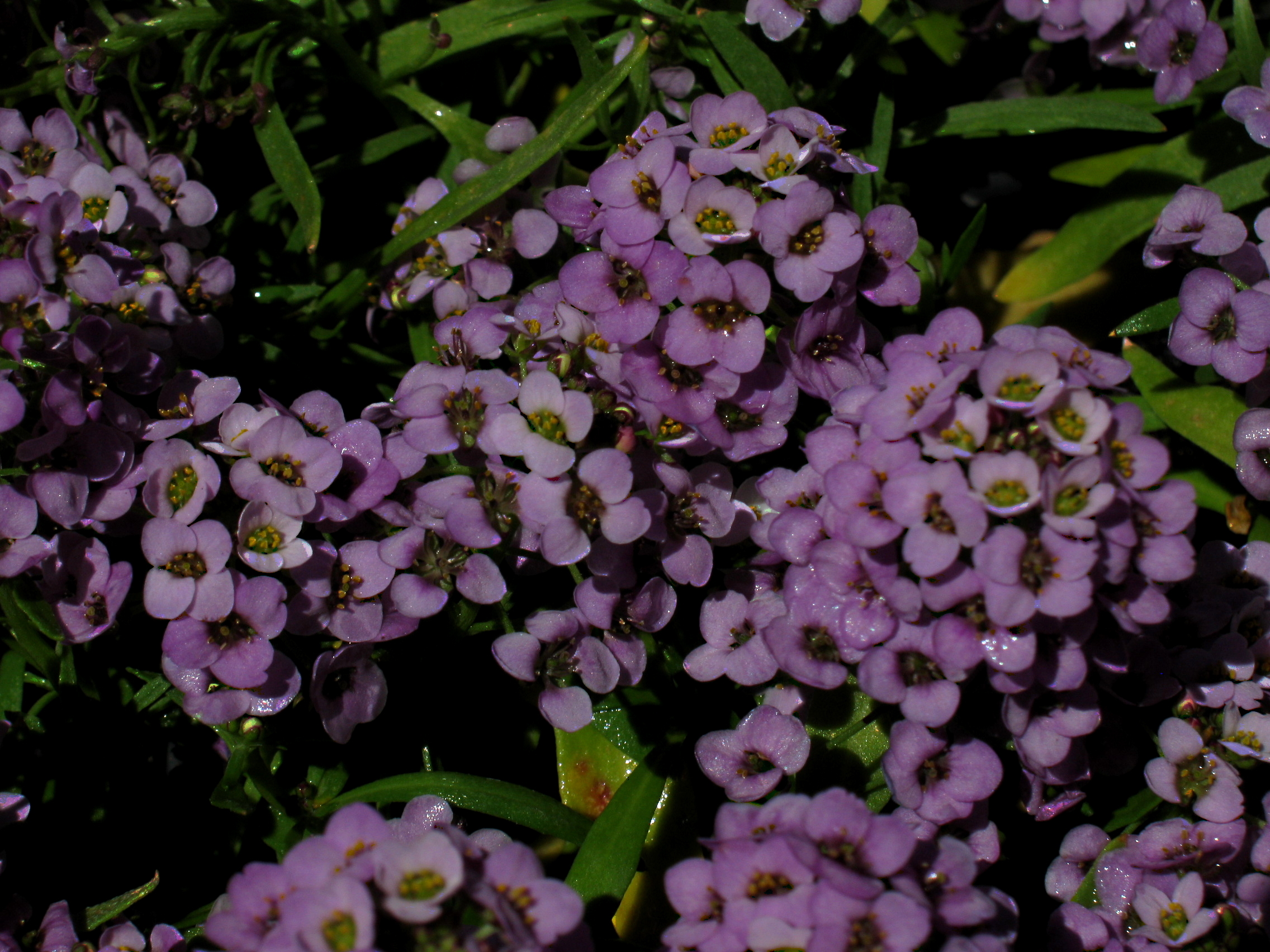
20. Lobularia maritima
Common name: Sweet alyssum.
Easy-to-grow annual flower that reseeds all over your yard. The honey-scented blooms can be present all year around once you have an established population. Pink and purple forms will reseed lighter, eventually white. Best in full sun or very light shade. Very drought tolerant.

Also-rans ("why didn't you mention....?"):


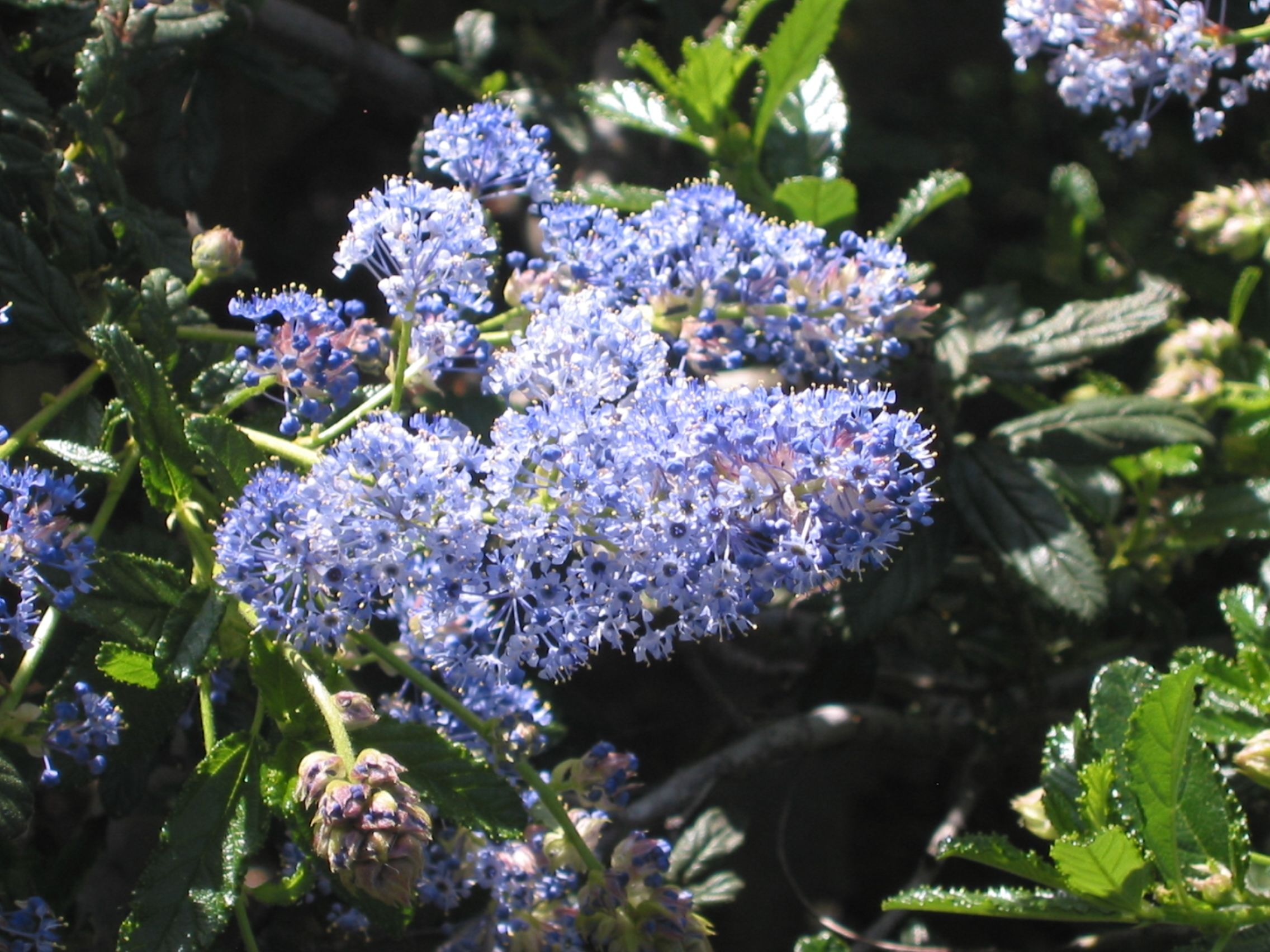
Ceanothus species and hybrids: Mountain lilac.
Fast-growing shrubs and ground covers are very drought tolerant but also easy to kill by watering too often. Blue, purple, or white blossoms in spring smell like honey.

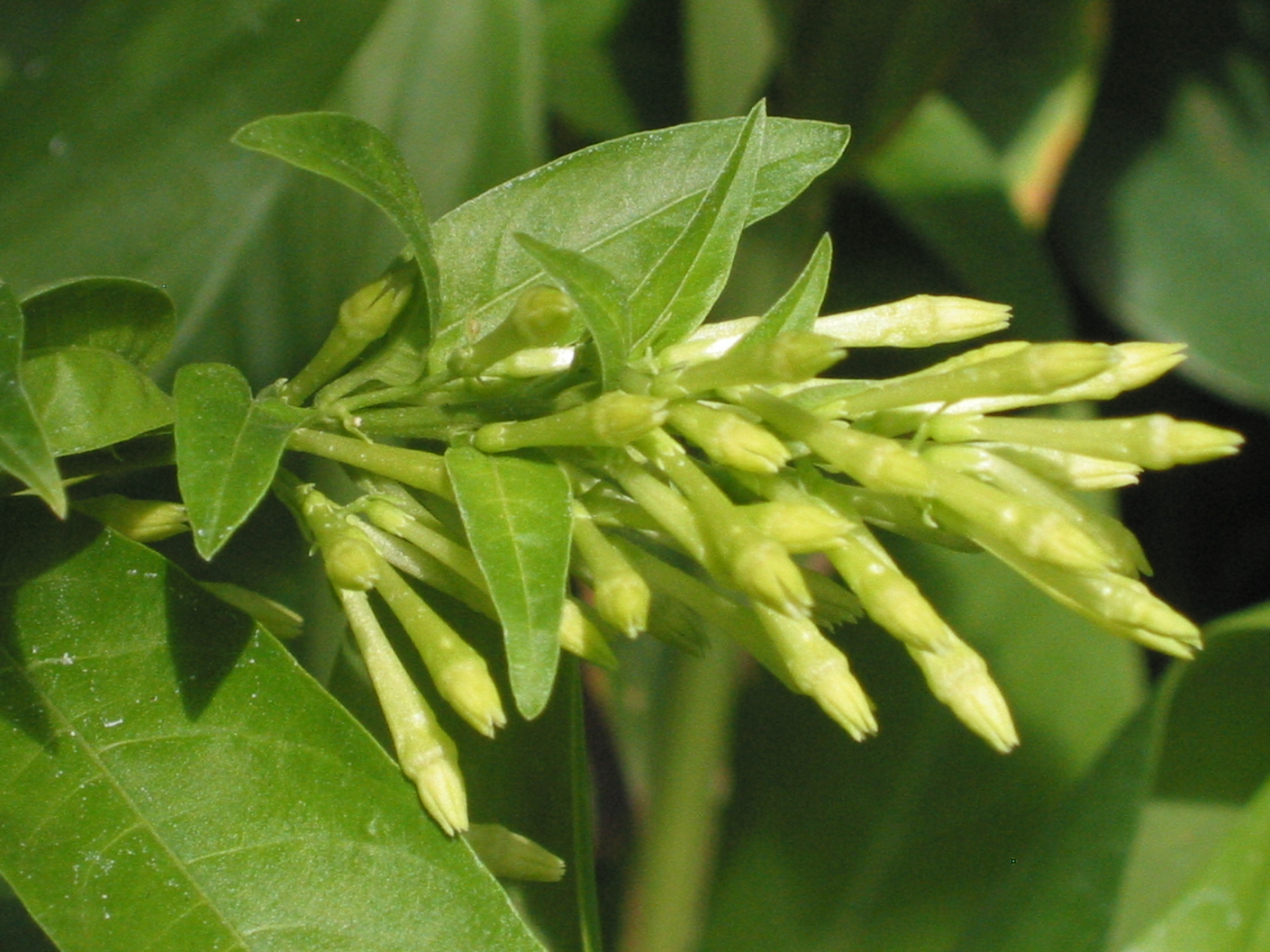
Cestrum nocturnum: Night-blooming Jessamine.
Dies back to the ground most years, but usually resprouts. Powerful fragrance at night only. Poisonous.

Daphne odora: Winter Daphne.
Spicy lemon-scented blooms in winter. So, so, so easy to kill. Poisonous.

Elaeagnus species.
Cousins of Russian olive, several species of Elaeagnus have sweet-scented clusters of flowers. Very tough, informal shrubs for rural areas or large hedges; in small yards they'll need a lot of pruning. E. ebbingei 'Gilt Edge' has strongly variegated leaves and a manageable upright habit. The fruit are edible (I'm told) and popular with songbirds. Very drought tolerant.

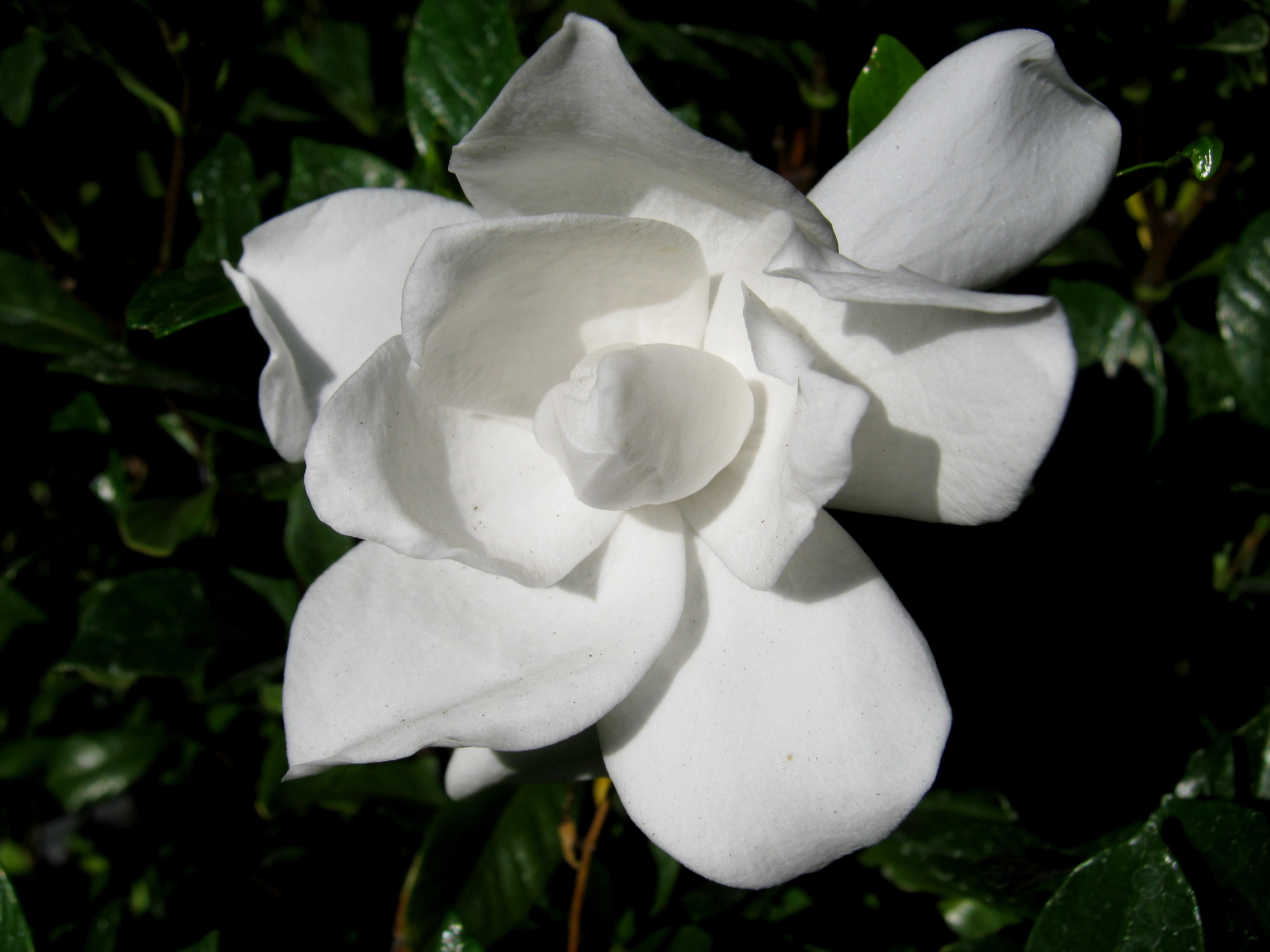
Gardenia jasminoides.
Not happy about our alkaline water, so it gets anemic without special fertilizer. Blooms best where it gets morning sun, afternoon shade.

Jasminum sambac: Arabian jasmine.
The wonderful Pikake of Hawai'i. Tender even to a light frost, it must be indoors in winter here.

Lonicera species: honeysuckles.
I hesitate to recommend the most fragrant (and most common) species, L. japonica, because it is very invasive.


Here is a substitute, although it is rare:
Lonicera hildebrandtiana
Common name: Giant Burmese honeysuckle.
Fast-growing evergreen subtropical vine with large, shiny leaves, it is just hardy here, showing damage after severe frost but usually recovering. Giant blooms have exceptional fragrance. Difficult to propagate, it is usually grafted onto L. japonica, so watch carefully for any root suckers and remove them immediately.

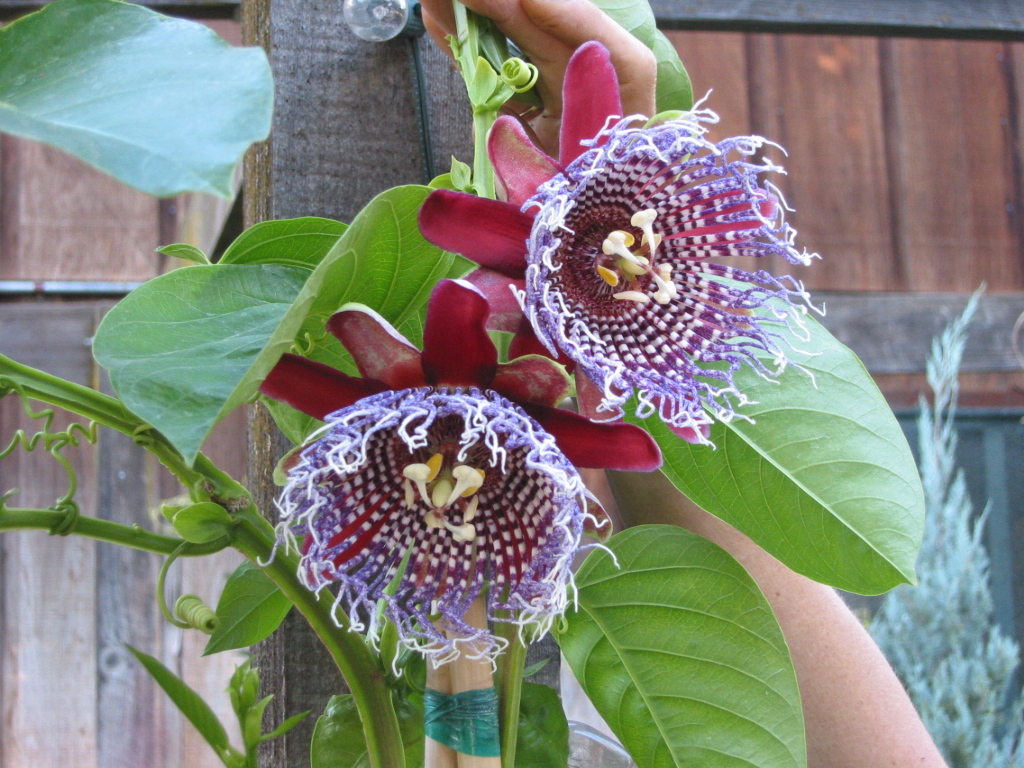
Passiflora species and hybrids
Passion flowers and passionfruit. Many hybrids have spicy-scented flowers. Variable hardiness, and some are rampant. Choose accordingly.

Scented geraniums (Pelargonium species).
Easy to grow, somewhat frost tender. Expect to replace them every year or so.


A gallery of fragrant plants

click to enlarge


Brugmansia
Angel's Trumpet ('Charles Grimaldi' shown here)


Osmanthus fragrans 'Aurantiacus'
Orange tea olive


Sarcococca ruscifolia Sweet Victorian box


Wisteria species 'Cooke's Purple' shown here


Philadelphus Mock orange


Pittosporum tobira Mock orange


Syringa vulgaris Common lilac


Dianthus barbatus Sweet william


Phlomis fruticosa Jerusalem sage


Rosa moschata 'Nastarana'


Jasminum officinale Poet's jasmine


Lobularia maritima Sweet alyssum -- 'Easter Bonnet' shown here


Ceanothus Wild lilac


Cestrum nocturnum NIght-blooming jessamine


Gardenia jasminoides 'August Beauty' shown here


Passiflora Passion flower -- 'Purple Tiger' shown here

Friday, October 1, 2010

Sir, can you get me a pawpaw?

Do you really want a pawpaw?
Asimina species

Why aren't these common in the nursery trade?
1. You need two trees of different varieties to cross-pollenize.
2. Crushed leaves smell like diesel fuel. Mmmm.
3. Pollinated by carrion flies and beetles, the flowers smell like rotting meat. This alluring idea comes from a web site: “I have hung chicken bones to attract carrion flies to the flowers, and others have used this practice to improve pollination.” Or this from Wikipedia: “Growers of pawpaws sometimes place rotting fruit or roadkill meat near the trees at bloom time to increase the number of pollinators.”
Charming.
4. The fruit flavor is low-acid, often described as like bananas or custard. It ripens quickly, with a soft texture. Each fruit has numerous large seeds, so it is mainly eaten as pulp. If they are pollinated and pollenized correctly, yields are high. Imagine large amounts of custard-like fruit with very short shelf life all ripening at once.
5. The trees are tap-rooted and the roots are fragile, so they aren’t common in the nursery trade; trees with those characteristics have notoriously high failure rates.
So no, I probably can't get you a pawpaw. Perhaps the great folks at ForestFarm in Oregon can help you out:
http://www.forestfarm.com/product.php?id=635

Friday, September 24, 2010

Vintage Gardens: A Garden For Beneficial Insects in the Wine Country

Wine & Roses? How about Wine and Yarrow?


On a recent hot summer day, I escorted my daughter and a friend through Napa Valley so they could go wine tasting. Many of the wineries feature colorful garden beds to lure passing motorists, and it always interests me to see what the latest trends are in this fashionable district where cost, it seems, is no object in beautifying the grounds.
Zinnias are in. Beds that used to be planted in marigolds and petunias are now being filled with these colorful, gaudy flowers. Zinnias and asters were popular many years ago, before marigolds supplanted them in the 1960's and 70's. Petunias added a range of colors not found in other flowers, including vivid purples and true blue. But marigolds get spider mites and petunias get caterpillars. Zinnias don't get either of those.


Bed of zinnias in August at Turnbull Wine Cellars
Ok, you might not get this excited about a bed of zinnias. But the range of colors and abundance of bloom makes them ideal for eye-catching annual borders. Resistance to spider mites and caterpillars make zinnias a suitable replacement for marigolds and petunias in the summer border. While you are at Turnbull, check out the amazing collection of vintage photographs!


Zinnia flower at Mumm Napa, champagne vintners, Rutherford. (Click on any image for a larger version).

The recent popularity of succulents and ornamental grasses has led to a very different look in formerly formal garden beds. The grasses can look a little rangy without some grooming. Succulents such as Echeveria (Hen-and-chicks) and Sedum (Stonecrop) provide colorful foliage with compact, tidy growth habits. With the drought tolerance of both groups of plants, this is a positive trend.
One of the more interesting planting ideas I saw was at the upscale delicatessen in St. Helena, Dean & Deluca. Around the blazing hot walls they had placed two-foot long, one-foot wide aluminum irrigation troughs such as you would find at feed stores. These were planted with clipped boxwood hedges and assorted succulents. The mix of formal and southwestern plants in a rural "planter" was eye-catching, and the plants were thriving in the brilliant sun with apparently little care. Irrigation troughs provide considerable soil volume to retain moisture. You can find these at Higby's Country Feed store outside of Dixon on Currey Road.
Napa Valley has changed over the three-plus decades that I've been visiting. Disappearing are the Redleaf plums and roses that used to be planted along the edges of vineyards. Now you see olive trees in every niche along the roadsides. Aesthetically pleasing as this is (northern Italians must feel right at home), I can only imagine what it is like during allergy season: both grapes and olives are wind-pollinated.
A lot of the wineries seem more focused on their tasting rooms than on their wine. One that we stopped at, briefly as it turned out, seemed more concerned with the faux-Italian marble exterior and flooring, the fancy fountains, and the ornate formal driveway. My young visitors didn't even bother with the wine tasting there ("what is this, Disney does wine country?!?"). I was perplexed by the butchery of the old olives in the parking lot. Venerable trees had been stubbed off. Bah.


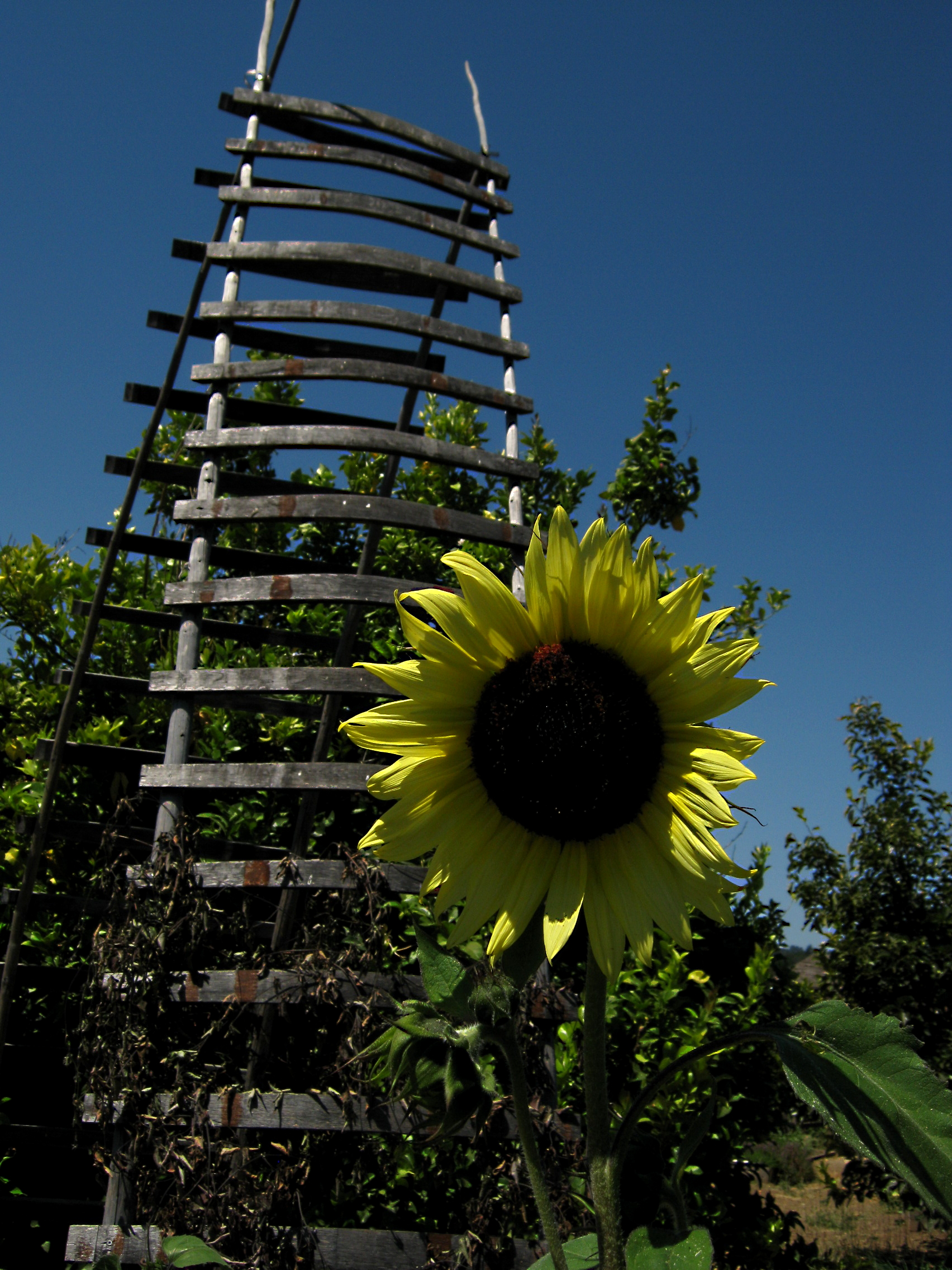
Sunflowers up the hill at Benziger
But another big change that is occurring gradually in the Napa Valley is the transition to safer, environmentally-sensitive ways of growing grapes. For many years grapes have been a heavily sprayed crop, treated with pesticides and grown in clean rows of bare dirt. The costs, tangible and otherwise, of these old techniques are becoming apparent to a new generation of viticulturists and vintners.
So we were delighted when we got off the main road a bit and found the Benziger Family Winery. The grapes are grown organically. The soils and vines are managed sustainably. The vineyard has certifications for sustainable practices and organic production. The vineyards are Demeter-certified biodynamic. "Instead of bagged fertilizer, weed killer and pesticides we rely on composting, natural predator-prey relationships, cover crops, and the animals that live on our estate, to keep our vineyard healthy and balanced."
There are lovely gardens around the tasting room, of course. Sheep and goats graze through the vines (carefully). Horses draw plows. Owl and bat boxes abound, up on high poles. A large, rather scummy pond attracts birds and dragonflies. And most important from a gardener's standpoint, they have two display gardens devoted to attracting and retaining beneficial insects, including pollinators and pest-eaters.


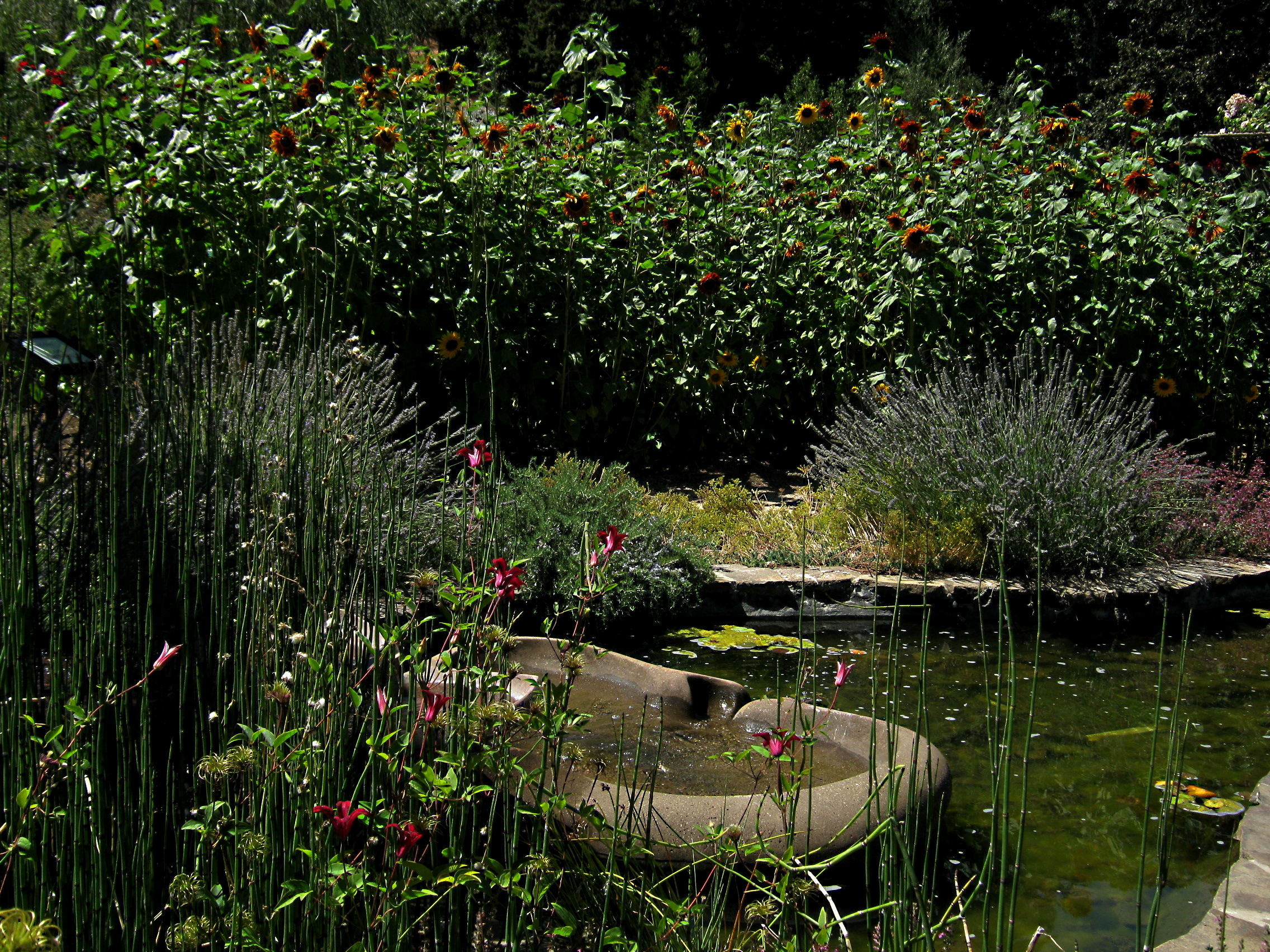
Garden at Benziger Family Winery
This tranquil sitting area was buzzing with activity! I counted five different types of bees on nearby flowers. Syrphid flies and tiny beneficial wasps abounded. Dragonflies circled the water and perched on the horsetails. The key is the mix of water, shade, and sun, with a diversity of plants chosen to provide habitat, resting sites, and food for beneficial insects and birds.

So as the young ladies enjoyed the cool comfort of the tasting room, I wandered the grounds. Since the temperature at that moment was 104F, I had the place pretty much to myself. When Noel Coward said "Mad dogs and Englishmen go out in the midday sun," he might have added gardeners who spot distant flowers.

The purpose of the gardens was to provide for birds, bees, and beneficial insects. When you do that, you want to provide:
o cover for birds and lizards
o moving water to draw dragonflies, and upright-growing plants for them to perch on.
o still water with basking rocks for smaller insects to drink
o tubular blossoms for hummingbirds and butterflies
o tiny flowers in clusters for small beneficial insects to feed on pollen and nectar
o cool shade for toads and people
o tall trees or poles for birds, as well as the aforementioned bat and owl boxes.


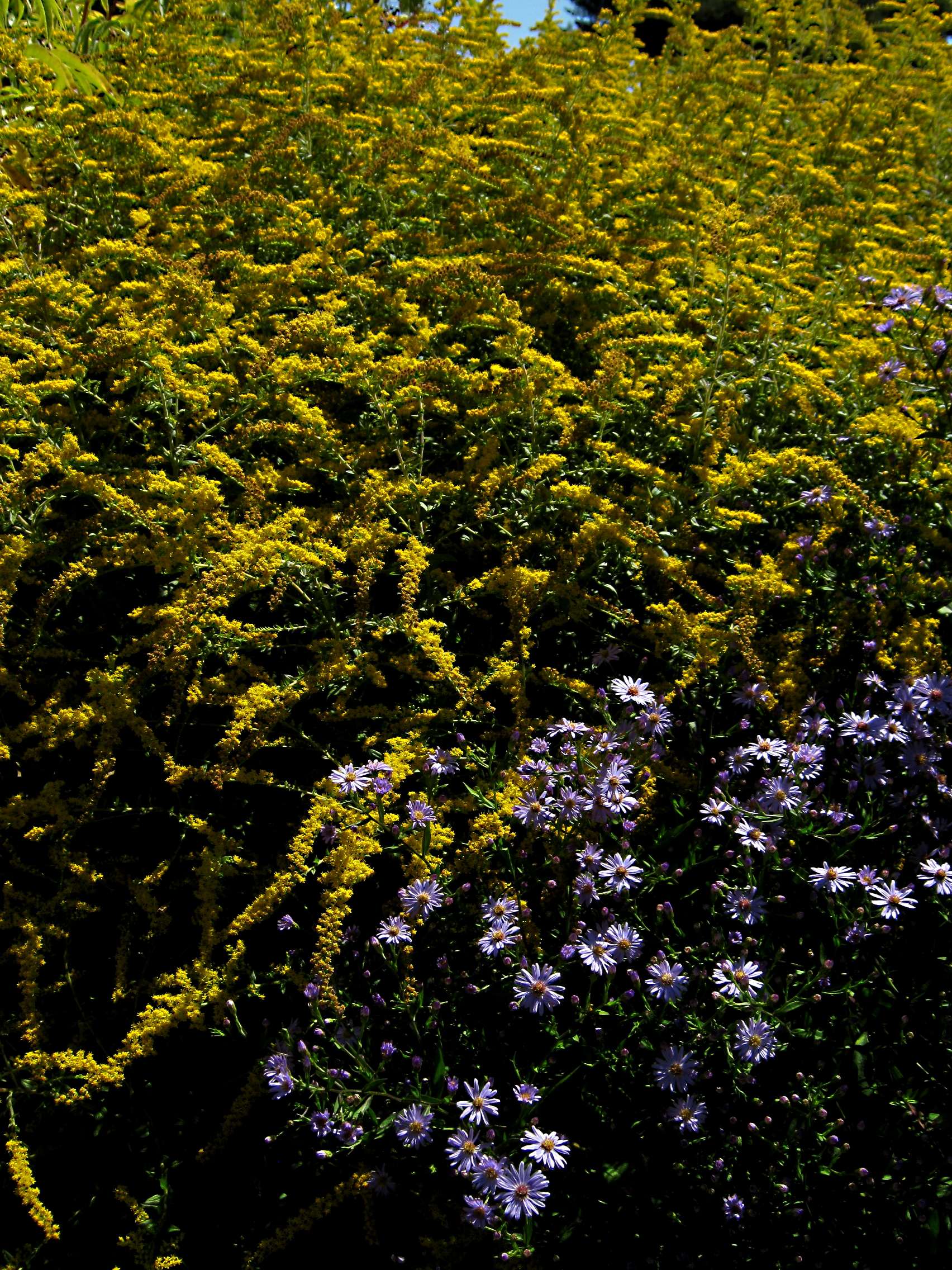
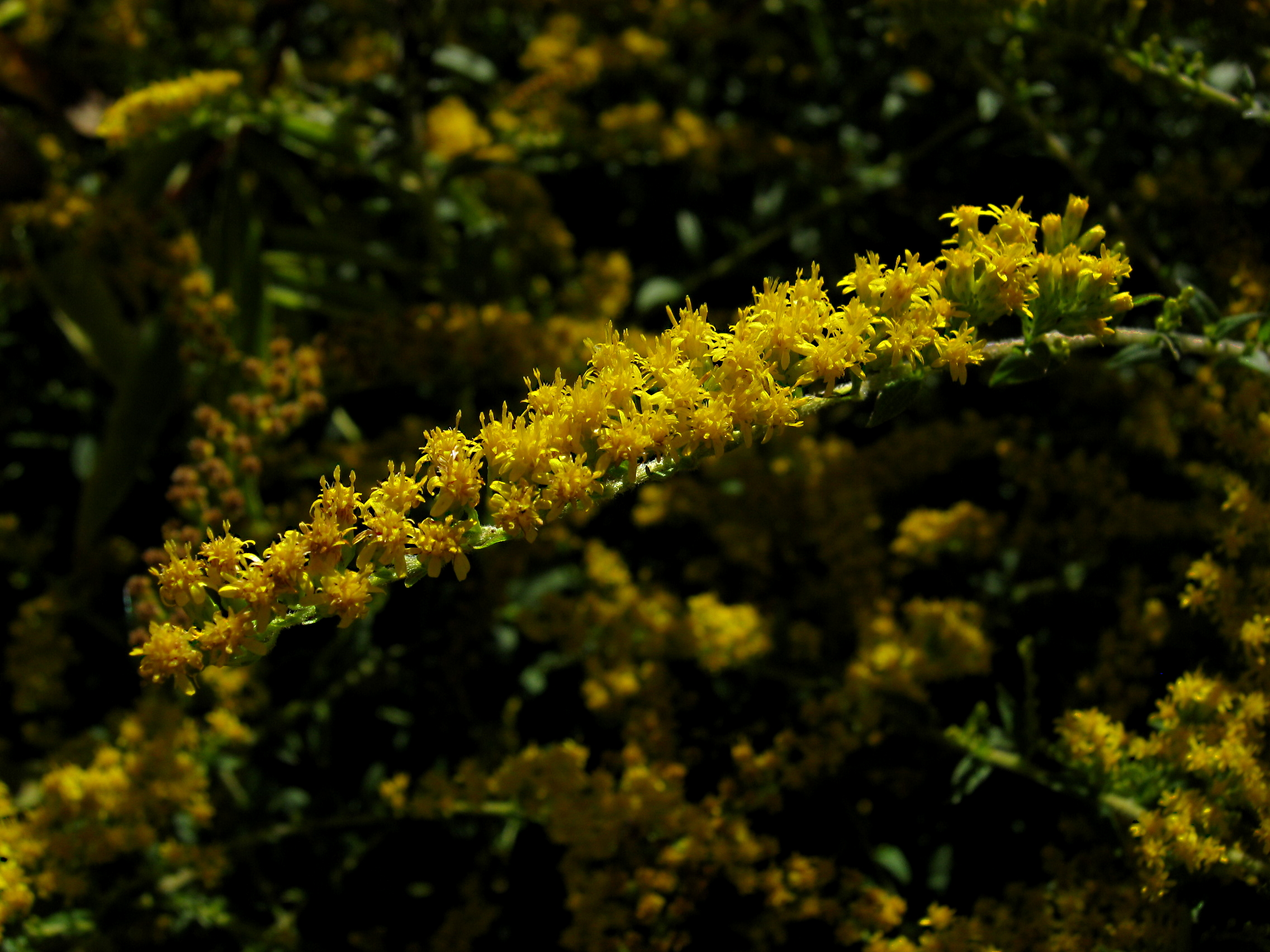
Solidago (goldenrod) with Aster

The closest display garden featured a small pond with a recirculating fountain whose water splashed down a course of shallow bowls. Nearby horsetail (Equisetum) provided natural perching points for dragonflies, which are voracious entomophagous beneficials: they eat whiteflies. A large bed of ornamental sunflowers provided dramatic color and was very active with bees and syrphid flies (aka hoverflies; their larvae eat aphids). The combination that gained the most attention was toward the back of the bed: dark purple asters next to bright goldenrod (Solidago). Each goldenrod plant was swarming with hundreds of bees of varying species, hoverflies, and tiny parasitoid wasps that were feeding on the pollen or nectar.

Other plants in the garden include lavender, mallow, Russian sage, and tansy. Except for the annual sunflowers, all of the plants I've mentioned are perennials, easy to grow, and drought tolerant. None require special soil or attention. This is a garden where you mix plants with differing foliage textures and bloom seasons, groom them occasionally, and sometimes pop in a new one when something gets overgrown or untidy. All could get by with as little as a deep soaking once a month.
There are lots of other plants that attract beneficial insects. Many California natives, herbs, and flowering annuals make the list.
Here are just a few that you can plant now to make your garden friendlier.
Perennials and annuals:
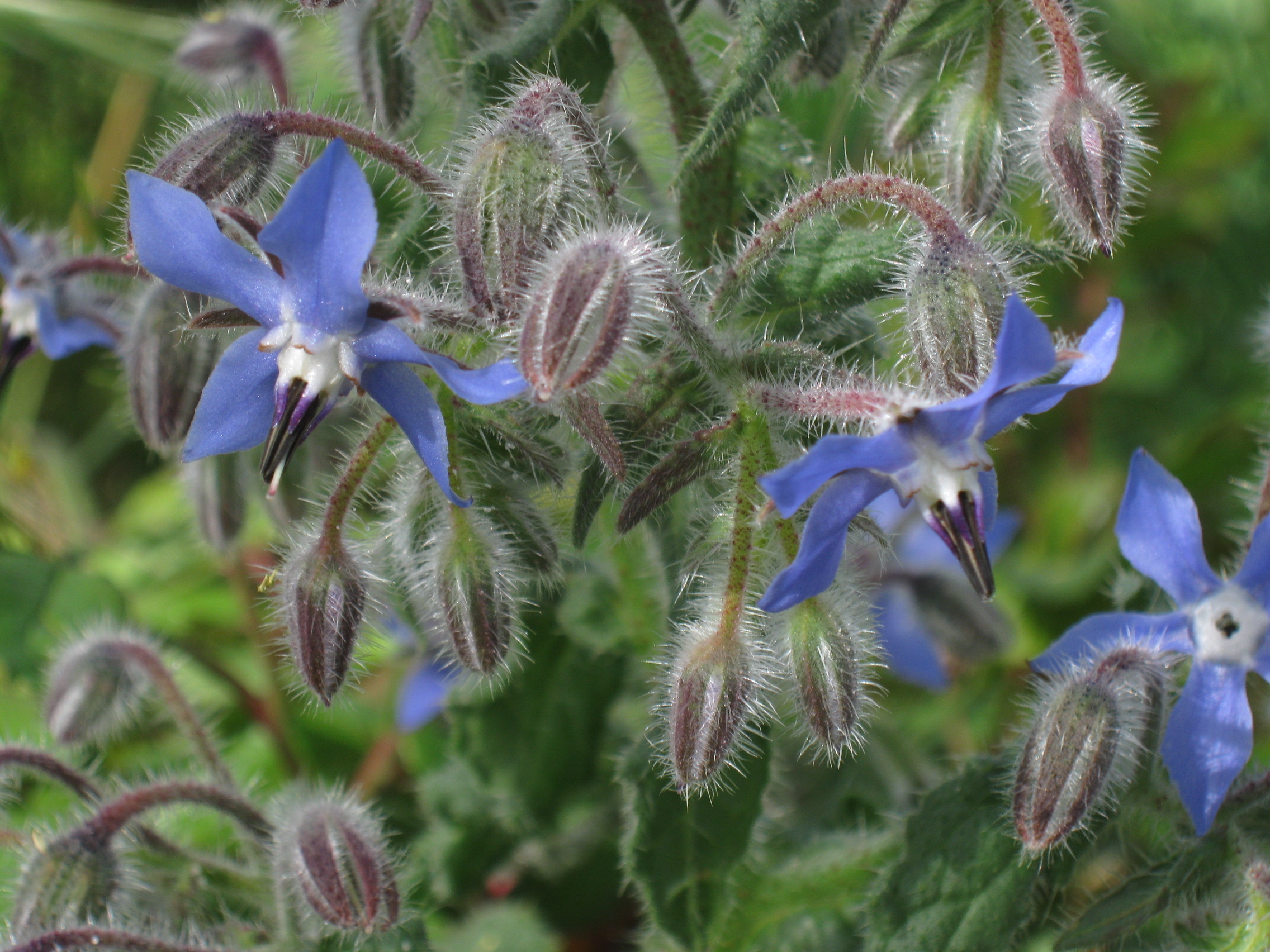
Borage (Borago officinalis),
Daisies of all types,
Sweet alyssum (Lobularia maritima),
True alyssum (Alyssum saxatile),
Yarrow (Achillea species).
Shrubs: California lilac (Ceanothus), Buckwheat (Eriogonum).
Herbs: fennel, cilantro, mint, mustard, rosemary.
Cover crops (plant from seed to build soil in your vegetable garden): soybeans (plant in summer), clover and vetch (plant in winter).

For more information about Benziger Family Winery grape-growing and wines, visit their web site at http://www.benziger.com/.

Some plants for beneficials

click to enlarge


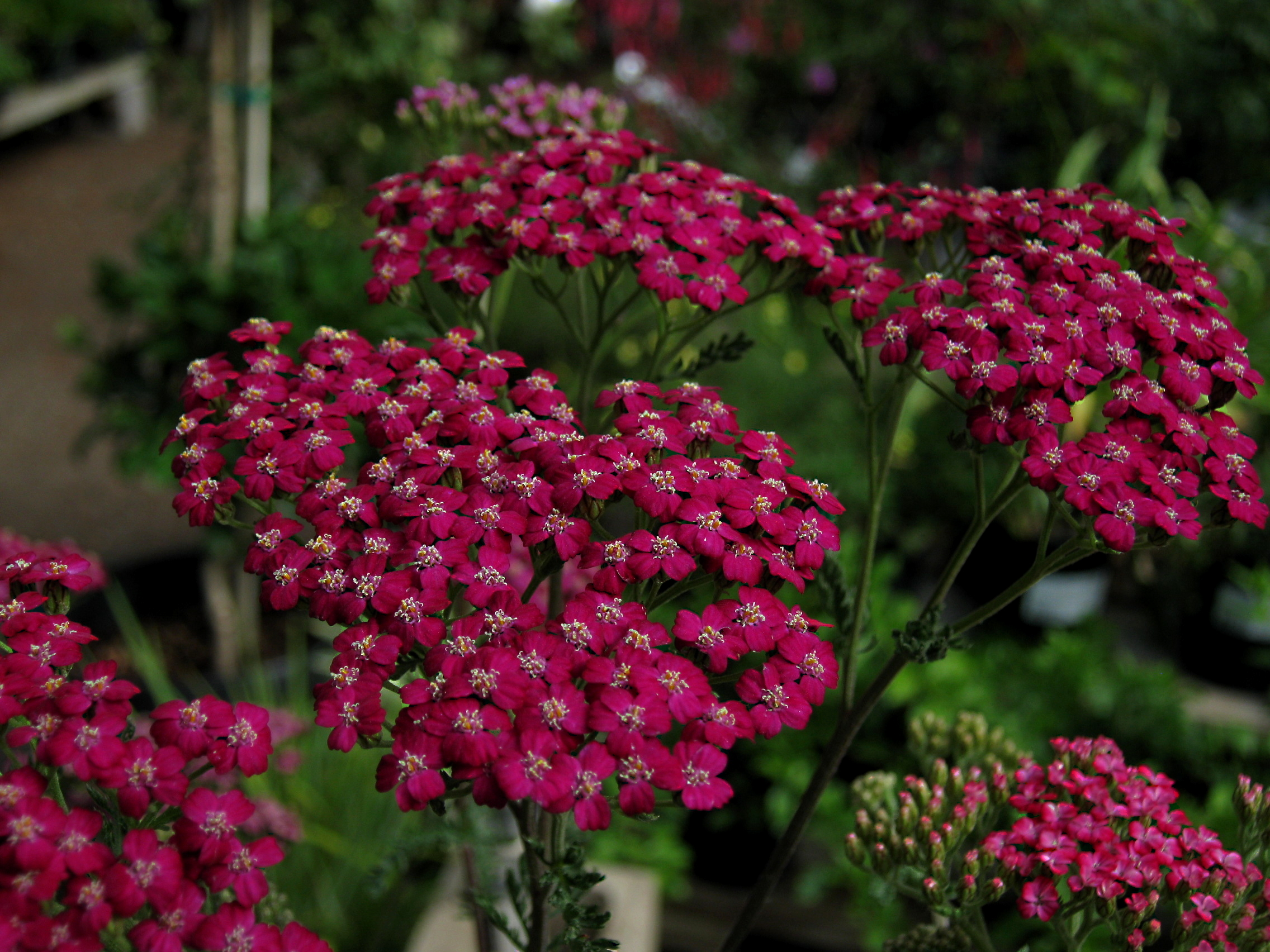
Achillea Red Beauty -- Yarrow


Borago officinalis -- Borage


Solidago -- Goldenrod, closeup of flowers


Written for the Davis Enterprise, September 23, 2010


© 2010 Don Shor, Redwood Barn Nursery, Inc., 1607 Fifth Street, Davis, Ca 95616

www.redwoodbarn.com

Feel free to copy and distribute this article with attribution to this author.


Click here for Don's other Davis Enterprise articles

Tuesday, September 7, 2010

Cool Season Vegetables!

Food we plant in Fall

We have two complete seasons for vegetable gardening in the Sacramento Valley! September thru November are ideal for planting many leafy greens and root crops for winter and spring harvest.


Bean

    Broad or Fava -- Grown as cover crop and for edible seeds (snap/green beans and drying beans are Grown in the summer).
    Great for the soil! Deep roots break up clay, suppress weeds, and add nitrogen. Fragrant flowers. Some people eat the beans; some people are very allergic to them. Plant as late as December.

Beets

    Grown for roots and greens. Suggested varieties: Detroit Dark Red, Early Wonder, Chioggia, Lutz's Greenleaf; Cylindra (elongated)
    Beets are easy, very sweet, and store nicely in the garden. Best results when planted early in the fall, but can be planted as late as November, or in February.

Broccoli

    Grown for immature flower heads. One of the easiest winter vegetables. Sept. plantings may give heads by early December. Later plantings 'head up' in February.
    Romanesco is the pale green Italian heirloom. Broccoli raab is a related species grown for greens and immature flower heads. Sprouting broccoli is another variety grown just for the small immature flower heads.

Brussels Sprouts

    Grown for lateral buds on flower stems. Tricky; needs a long season. After July may be too late! Aphids are a hassle to manage. Many people don't like the flavor due to a genetic characteristic which makes them sensitive to bitter compounds in the sprouts; other people don't even taste that.

Cabbage

    Grown for leaves.
    Suggested varieties: Green Acre, Savoy
    Short season types are easier here. Plant in Sept.or early Oct. to give the heads time to form, harvest in February. Chinese cabbage is a different species, takes more space but cultivation is the same.

Carrots

    Grown for roots.
    suggested varieties: Little Finger, Danvers Half-long, Chantenay; Orbit (round)
    Shorter, stouter types best unless soil is very loose. Very slow to germinate; pour boiling water over seed in a bowl, then sow it the next day. Or plant with radish seeds; by the time you're harvesting the radishes, the carrots are beginning to sprout.

Cauliflower

    Grown for immature flower heads.
    Suggested varieties: Early Snowball
    More vulnerable to weather and pest problems than other winter veg's. Slugs and aphids are a real nuisance, getting up in the flowerhead as it develops.

Celeriac

    Grown for enlarged stems.
    Weird thickened stem that you steam or boil. Plant early in fall to give it time to develop. Maybe buy one in the store first to see if you like 'em?

Celery

    Grown for leaf stems.
    Not difficult, but strong-flavored in the home garden since we don't blanch the heads.

Celtuce

    Grown for enlarged stems.
    Almost as weird as celeriac. Plant early in the fall to give it time to develop.

Chard, Swiss

    Grown for leaves and leaf stems.
    Suggested varieties: Bright Lights, Rhubarb (red)
    Pretty, easy, produces nearly year round. Cut back in spring when weather gets warm to keep fresh foliage sprouting. If you just let aphids go on them in summer, beneficial insects are attracted and help control aphids elsewhere in the garden.

Chicory, Belgian endive

    Grown for roots, leaves.
    Suggested varieties: Magdeburg
    Roots of this type are roasted and added to coffee (mostly in Louisiana).Witloof chicory is Grown for the edible leaves, which are an acquired taste; this one is grown in darkness in the last stages to produce the fancy blanched Belgian endive. A wild relative grows as a weed in this area, with pretty blue flowers and seeds which spread dandelion-like on the wind.

Cilantro, coriander, Chinese parsley

    Grown for leaves, used as herb.
    Tricky. Needs cool but not freezing weather; goes to flower right away in spring and summer (seed is coriander). Best planted in fall. Tastes like soap to many of us, due to a genetic quirk.

Collards

    Grown for leaves.
    Basically an open leaf-type of cabbage. Easy to grow; plant anytime late summer through winter, then harvest leaves from fall through spring.

Corn Salad

    Grown for salad greens.
    One of those trendy greens people put in salads. Also very ornamental for planting in mixed winter color bowls with pansies, kale.

Cresses

    Grown for leaves.
    True watercress grows on the edges of streams in fresh, clean water and prefers consistently cool conditions. The other cresses are Grown as substitutes. Garden cress is faster, easier than Upland cress. Very fast, grows best in cool weather. Plant from seed in fall, harvest during fall and winter. Used in salads and sandwiches.

Endive, Curly; Escarole

    Grown for salad or cooked greens.
    These are Grown for leafy greens,similar to lettuce. It's tricky to blanch them--you have to tie the outer leaves around the interior and if the weather is wet the head will rot. But the leaves can be used in soup,much like chard. Belgian endive is a kind of chicory grown for the leaves.

Fennel, Florence

    Grown for fleshy stems.
    Slice thin in salads, or saute them. Easy to grow and will reseed. Leaves are a food source for swallowtail caterpillars in spring. Flowers draw beneficial insects.

Garlic

    Grown for bulbs, used for seasoning.
    Plant disease-free bulbs in fall. Push over foliage, start watering less often in late spring. Harvest early summer.

Kale

    Grown for leafy greens.
    suggested varieties: Russian Red
    Very productive, easy, and really good for you. Too bad it tastes boring. Flavor is sweeter after we've had some frost. Plant anytime in fall or winter. Chinese kale is a similar leafy vegetable, also very easy to grow. Ornamental kale is also edible, though fibrous.

Kohlrabi

    Grown for enlarged stems.
    Weird cabbage relative with bulb-like stem, available in green or purple. Sept. plantings may yield in Nov.; later plantings in Feb. My dad loves this! The name means 'cabbage-turnip' in German.

Leeks

    Grown for stems and leaves, used for seasoning like onion.
    Very easy. Can be perennial if you cut carefully, leaving 1/2 above the ground, so that it resprouts. Reseeds if allowed to flower.

Lettuce

    Grown for leafy greens.
    Suggested varieties: Bibb, Black-seeded Simpson, Lollo Rossa, Prizehead, Romaine, Tom Thumb (cute!)
    Plant all fall and winter; great in pots. Leaf types most successful here; tight head types (Iceberg) will rot in overcast weather.

Mustard greens

    Grown for leafy greens.
    Very easy to grow. Allow them to reseed around your veg garden and orchard, as the flower draw beneficial insects. Chinese mustard and Cabbage mustard are similar and also easy to grow. Mizuna is Japanese mustard, a fast-growing mustard with sweet, spicy flavor.

Onions

    Grown for bulbs (and leaves) used as seasoning.
    Suggested varieties: Stockton yellow, Stockton red, Early California red, Fresno White, Red Torpedo, Walla Walla, among many others. We can grow most varieties of onions here.
    Plant from bare-rooted seedlings (easiest) in Nov. - Dec., or from seed in early fall. Plants grown from bulbs usually try to flower, leading to hollow bulbs. Like nitrogen fertilizer in winter. Harvest May - June.

Onions, bunching

    Grown for leaves used as seasoning.
    suggested varieties: Welsh, Spanish
    Easy to grow; multiply but don't form bulbs. Japanese bunching onions are a type of multiplier onion like shallots, forming bulbs and increasing freely, but mostly grown for the leaves.

Oyster plant, Salsify

    Grown for roots, eaten cooked.
    How did someone figure out this was edible? White salsify and black salsify (scorzonera) form tap roots with mild oyster-like flavor.

Pak-choi

    Asian vegetable, Grown for cooked greens.
    Very easy; harvest in just a few weeks from seed planted in early fall, or in spring from seed planted in late fall.

Parsley Root

    Grown for roots, eaten cooked, and leaves.
    Another weird one: this is a parsley that is Grown for the root, which looks like a white fleshy carrot. The leaves are edible, too.

Parsnips

    Grown for roots, eaten cooked.
    Plant in early fall to give the roots time to develop. Not very popular, but interesting sweet/nutty flavor. I sneak them into winter stews.

Peas: Edible-pod, Sugar, Snow

    Grown for green seed pods.
    Suggested varieties: Oregon Sugar Pod II, Dwarf Grey Sugar
    Timing is key for all peas! Sept. to mid - Oct. is best. Pre-germinate seed indoors if planting in late Oct.or Nov. Feb. may work unless it gets hot early. Snow peas are the flat ones used in stir-fry. Edible-pod (sugar) peas are eaten whole, shell and all, or can be shelled.

Peas: Shelling

    Grown for edible seeds, eaten green.
    Suggested varieties: Novella II, Maestro, Tall Telephone
    The old-fashioned shelling peas..Most peas need some light support. Novella is unique: leaves have all been replaced by tendrils, making a wiry mound that resembles a tumbleweed. Very productive.

Potatoes

    Grown for roots, eaten cooked.
    Suggested varieties: Yukon Gold, Yellow Finn, Red La Soda, White, lots of others.
    Easy, fun. Usually spring planted, but early fall plantings can be successful. HomeGrown potatoes are sweeter than store-bought! Plant in loose soil or raised beds, or stacked tires filled with soil. Water regularly until they flower, then gradually less as the plants decline. You can start poking around for potatoes anytime. Each start produces a couple of dozen potatoes of varying sizes.

Radicchio

    Grown for salad greens.
    Suggested varieties: Giulio
    Spicy, peppery flavor is not for everyone (bleccchh!). Easy to grow in cool weather, from seed or starts. Very ornamental addition to winter color bowls.

Radishes

    Grown for roots, eaten raw.
    Suggested varieties: Champion, Plum Purple, Sparkler
    Easy, quick--ready in as little as a month from seed. Pepperiness (from mustard oil) increases in warmer weather. Daikon radish is a very large variety Grown for use in Asian cooking. It is also very easy, but takes several weeks to develop. Plant Daikon in fall for best results.

Rutabagas

    Grown for large root, eaten cooked or sometimes raw.
    Need a long season; planting after July may be too late. My kids loved these sliced raw when they were young. For some reason, college students think this name is very funny. It is from the Swedish rotabagge; Scots call them 'neeps' or just turnips, and carve them into jack-o'-lanterns. They call the other turnips 'white turnips'. Americans call them 'yellow turnips' and call the other turnips 'turnips'.

Spinach

    Grown for leafy greens.
    Suggested varieties: Bloomsdale, Olympia, Tyee
    True spinach is Grown in fall or early spring. Very easy, just plant seed or sprouts and harvest the outer leaves any time. New Zealand and Malabar spinaches are warm season plants grown as substitutes.

Turnips

    Grown for roots, eaten cooked or occasionally raw.
    Regular turnips take 10 - 12 weeks to form, so they need to be planted by early September for your Thanksgiving dinner! Shogoin is an Asian turnip that is very fast, easy, with a kind of peppery flavor and nice texture.

Click here for a planting chart!


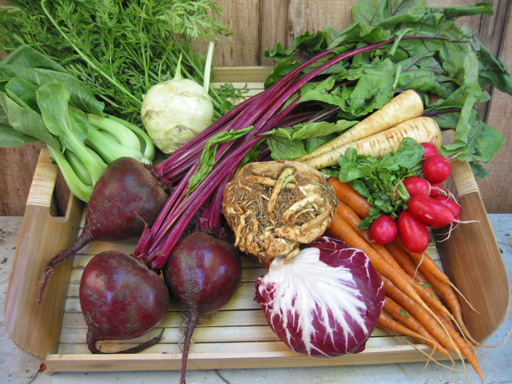
A harvest of winter vegetables! All can be planted in fall for cool season harvest Clockwise from bottom left: beets, baby pak choi, kohlrabi, parsnips, radishes, carrots, radicchio. Center: celeriac.


Click here for more information about cool season vegetables.
See also Winter vegetables


Top of Page
Redwood Barn Nursery Home Page


© 2008 Don Shor, Redwood Barn Nursery, Inc., 1607 Fifth Street, Davis, Ca 95616
www.redwoodbarn.com
Feel free to copy and distribute this article with attribution to this author.
Click here for Don's other Davis Enterprise articles

Thursday, August 26, 2010

Some like it hot(ter)


    Item: Sacramento's tomato season shaping up as short, sweet
    By Debbie Arrington, Sacramento Bee, Aug. 11, 2010
    From home gardener to commercial growers, tomato season has been especially challenging this year. "It's August but feels like May," said Suzanne Peabody Ashworth, who grows more than 60 varieties at her Del Rio Botanical farm in West Sacramento.
    "This has got to be the latest tomato season I've ever seen. I can't remember a summer quite so cool."

    Item: Temperatures continue well below average in Southern California
    By Hector Gonzalez, Staff Writer, Whittier Daily News, 08/09/2010
    It hasn't been the coolest summer on record, but it's been close, forecasters say. The average temperature in July was 79 degrees, five degrees below normal, and the first eight days of this month also have been five to six degrees below normal, weather experts said.
    "The fruits and vegetables, the tomatoes and a lot of the citrus and things like raspberries are not ripening up because it's not getting hot long enough," [said an expert from the LA county arboretum], adding that some fruit could taste less sweet because "less sun means less sugar content."

    Why aren't my vegetables producing?!
    The most common question we're getting these days has to do with poor fruit production on beans, melons, squash, and tomatoes, among others.


    Tomato inflorescence
    What's going on? This bloom cluster on a Roma tomato illustrates the problem. Tomato flowers open gradually along the cluster toward the end. The first, oldest flower set fruit. Temperatures when the next two flowers opened were very cool at night, with one night dropping to 48 degrees! Those blossoms have not set, and will fall off. The bloom currently open will probably set. So this cluster is setting fruit on about 50% of the flowers.
    This may not be the coolest year on record here, but every month of 2010 has been substantially below average. The Delta breeze has been the dominant regional climate effect. We've been having Bay Area weather: as I drive in to Davis from Dixon each morning, I can see the layer of fog sitting nearly on Fairfield to the west every morning. When was the last north wind?!?

    After a very late start getting vegetables planted due to persistent rain and chilly weather, growth and fruit set has been very slow. Most tomato plants are setting pretty well, but fruit has been ripening 4 to 6 weeks behind schedule. While we still have plenty of time for fruit to ripen, but yields will be substantially lower than usual. Get out grandma's old green tomato recipes!

    In an average summer, gardeners are concerned about the effect high temperatures have on fruit set of vegetables. Anytime the daytime high is above 85 - 90 degrees, flowers fail to pollinate and drop off. Ordinarily enough of our days top out below 90 that we get adequate fruit set, and the warm days encourage fruit development and ripening. Usually harvest begins in July and continues through October.

    This year? In the first 75 days since June 1, 60 had below average high temperatures, by an average of more than 7 degrees. Only 10 days have been above average, and we've only had 3 days at or above 100 degrees this summer! High temperatures haven't been the problem this summer.

    A less common problem for us, usually, is the effect of cool nights. Temperatures below the mid-50's reduce fruit set, but that is usually rare in the Sacramento Valley. Not this year! In those 75 days, 58 nights were below average. 30 have been 52 degrees or colder. More than half our nights have been unsuitably cold for fruit to set. Add poor pollination to the mix, and you have a recipe for poor yields in Davis gardens this year.

    If my tomato plants are any indication, there will be a reasonable crop in September and October. But yields appear to be 20 - 50% lower than normal, varying by variety. Fruit tree varieties are ripening behind the ripening charts by as much as 3 to 4 weeks. I am getting some comments that fruit "isn't as sweet as usual."While that would make sense due to less heat input, it is also very subjective and not provable one way or another.

    Some other problems from our odd summer weather.

    While gardeners have been enjoying the cooler gardening conditions, it has increased other problems.

    Fireblight! This bacterial disease attacks and kills the blossoms and tender growth of certain members of the apple branch of the rose family, and it's been especially bad this year.

    Specific host plants include apples and pears, including ornamental pears; hawthorn (the tree Crataegus, not the India hawthornRaphiolepis), and pyracantha. Contrary to what you may read on internet sources, fireblight does not attack rose bushes.
    The most common symptoms are blighting and death of blossoms of fruiting apples and pears, and rapid dieback of young shoots. Fireblight has a narrow temperature range of about 55 to 80 degrees, which coincides with the bloom period of those fruit trees (March to April). Bees with dirty feet spread the bacteria from bloom to bloom. Once we get above 80 degrees consistently, the bacteria stops spreading.


    Fireblight on an apple tree
    Fireblight is caused by a bacterium called Erwinia amylovora. It attacks specific members of the pome group of the rose family, particularly apples and pears, infecting through the blossoms or the young tender growth. The disease kills the flowering wood and spreads rapidly down the stem. The common name refers to the fact that it blackens the wood as it kills the shoots and branches, so the plant looks as though it has been burned. Prune it out!
    Temperatures during bloom were actually lower than ideal for fireblight. But fireblight can also attack soft tender growth and cause rapid dieback. Cool conditions in the suitable infection range continued here through April and May. While our usual infection period is just a couple of weeks, we had continued infection this year for nearly two months. Resistant varieties that get infected will show some flagging (dieback of short shoots) before the progress of the disease stops. Susceptible varieties may lose entire branches or even be killed. Prune out fireblight as soon as you see it!

    When you choose a variety of pear, it is worth considering fireblight resistance. Bartlett, the most popular commercial pear, is very susceptible; Moonglow is resistant. We get fireblight every year, and it is hard to prevent. Copper sprays during the bloom period may be helpful. It is important to prune out dead infected portions now, as those are sources of reinfection next season. They're easy to spot. Just prune down below the blackened portion into healthy wood. Dispose of the prunings in the trash rather than the compost pile. Contrary to popular literature, it is not necessary to clean your pruners with bleach as you cut.

    Powdery mildew, particularly on sycamores and plane trees.

    Sycamore and plane trees (Platanus species and hybrids) are among the most common species in downtown Davis and other neighborhoods, and for good reason: they grow fast and provide quick shade, with very few pest problems. But anthracnose blight attacks the leaves in spring, causing them to drop, and then powdery mildew causes leaves in early summer to curl. The leaves are disfigured and covered with white powdery strands and spores (hence the name).


    Powdery mildew on a plane tree
    We always get some mildew in early summer, but periods of hot weather usually stop the continued spread. Not this year! Mildew doesn't really harm a healthy, vigorous sycamore tree, and there is no practical treatment for a large plant. Powdery mildew is host-specific: the type you get on your sycamore tree is different from the type you get on your rose bushes. So you needn't worry about cross-infection in your garden. If you are selecting a Platanus, look for hybrids that are resistant. Bloodgood is resistant to anthracnose, but not to mildew. Columbia variety, becoming more common in the trade, is resistant to both anthracnose and mildew.


    Disease resistant Platanusvarieties

    The best way to deal with disease problems is to prevent them in the first place. Sycamore leaves attacked by powdery mildew (photo, left) are curled and distorted and covered with white powdery material; leaves attacked by anthracnose blight fall off after spring rains. Two varieties ofPlatanus (above) have good disease resistance. The Roberts variety of California sycamore (P. racemosa, above left) resists anthracnose. Columbia variety of plane tree (P. x acerifolia, above right) resists both anthracnose and powdery mildew.
    On the plus side, we're seeing fewer problems with crown rot on woody plants. Caused by Phytophthora, this disease attacks shrubs and trees when they are over-watered during very hot weather. Native plants and other species from regions with Mediterranean rainfall patterns are especially prone to it. Phytophthora requires very high moisture and high soil temperatures and is especially encouraged by daily watering at or near the crown of the plant. This year's cooler soil temperatures are probably reducing the problem.

    The flip side of that is that we are seeing a lot of nutritional deficiencies in plants indirectly caused by watering too often. Water use by plants is lower than usual this season. When you damage the fine root hairs with constant moisture, their ability to take up trace elements such as iron, magnesium, and zinc is reduced. Symptoms of these deficiencies include yellowing of the leaves while the veins remain green (iron), blotchy yellowing (magnesium), and leaves that are simply smaller than usual (zinc). We're getting a lot of calls about citrus trees with these deficiencies, which are pretty easy to correct by applying specialty fertilizers. But if you are watering daily, that is part of the problem. Watering slowly, deeply, and infrequently will reduce damage to the roots.

    As they say, there is no such thing as a normal year; just average (or not). Below average temperatures = below average yields, plus a few other problems. But the gardeners themselves seem to prefer these milder conditions.


    Written for the Davis Enterprise, August 26, 2010