
I am sorry to report that Sacramento-area nurseryman and garden media personality Dan Pratt died December 25 at the age of 78. Pratt succumbed to injuries from a fall, after a series of illnesses over the last several months.
Employed by Capital Nursery for 24 years, he was heard locally on KFBK (originally KGNR) radio with his Garden Doctor program, which ran for 19 years: first from 9 to 11 a.m. on Saturdays, and then from 8 to 10 on Sunday mornings. For more than 20 years he wrote a weekly column about garden pests for the Sacramento Bee (What’s Bugging You?) and made frequent appearances on local television. His annual garden calendar was sold at garden centers throughout Northern California.
Pratt gave many talks over the years to garden clubs around the Sacramento Valley. He was active in the local chapter of the California Association of Nurseries and Garden Centers, serving as president twice and on the board of directors for several years. Dan led garden tours of Britain and other regions. After his retirement he moved back to his family’s property in Napa.
He leaves a son and daughter and longtime girlfriend. A private burial service has been held.
That all sounds very dry. I considered Dan a friend for over 25 years, having met him when I first got involved in our local chapter of the nursery association. He was always full of ideas, present at nearly every nursery event we worked on, and enthusiastically promoted gardening and the nursery industry. Dan introduced me to radio work and graciously allowed me to host his show when he traveled. After retirement, he and Jo stopped by my shop any time they were passing by Davis, to swap stories and tell jokes. He liked good food, cruises, and terrible puns.
Dan Pratt was a great friend of gardens, gardeners, and garden centers everywhere.
Addendum: from the Sacramento Bee Jan 7 2011
Wednesday, January 5, 2011

Friday, December 24, 2010
Mandarins!
Satsumas and other mandarins
Written for the Davis Enterprise, December 23, 2010
Click on any image for a larger version
We get questions, this one from Davis Enterprise columnist Dan Kennedy:
Please tell me about satsumas and the other types of mandarins: what they are, which are best here, why a frost improves the flavor, and how to grow them.
Dan's recent column [Satsumas, the sweetest citrus, Dec. 8 2010, Davis Enterprise, available to subscribers at their web site] focused on the buying and eating part, and touched on how to grow them. But questions about citrus always seem to beget more questions, as they are a complex group of fruit trees.
Mandarin oranges are a sign of the holiday season in California. In my Southern California childhood it was a Dancy tangerine that filled the toe of the Christmas stocking. We'd spit the seeds at each other out on the dichondra lawn as we waited for the grownups to waken. Dancy is a rich-flavored, juicy, seedy, easy-to-peel type of mandarin orange (tangerine and mandarin are interchangeable terms) that ripens in time to market for the holidays.
What exactly are these Satsuma mandarins we grow?
Satsuma is a generic term for a number of different varieties of (mostly) seedless, easy-to-peel mandarin oranges. The UC Riverside Citrus Variety Collection site lists over a hundred different clonal lines called mandarins, representing a couple of dozen species, numerous hybrids, and many bud sports. Of those, over three dozen from various sources are called Satsumas. Owari Satsuma is the best known, and the classic reference The Citrus Industry (1967) describes Owari as "of ancient and unknown Japanese origin presumably from the old province of Owari, whence the name."
Most common in California is a variant called Frost Owari. H. B. Frost was a researcher at the UC Riverside Citrus Station in the early 1900's. The name has nothing to do with cold-hardiness. (There is also a Frost Lisbon lemon and a Frost Marsh grapefruit, named in honor of Frost's work at developing nucellar seedling clones. That's a whole 'nother column.)
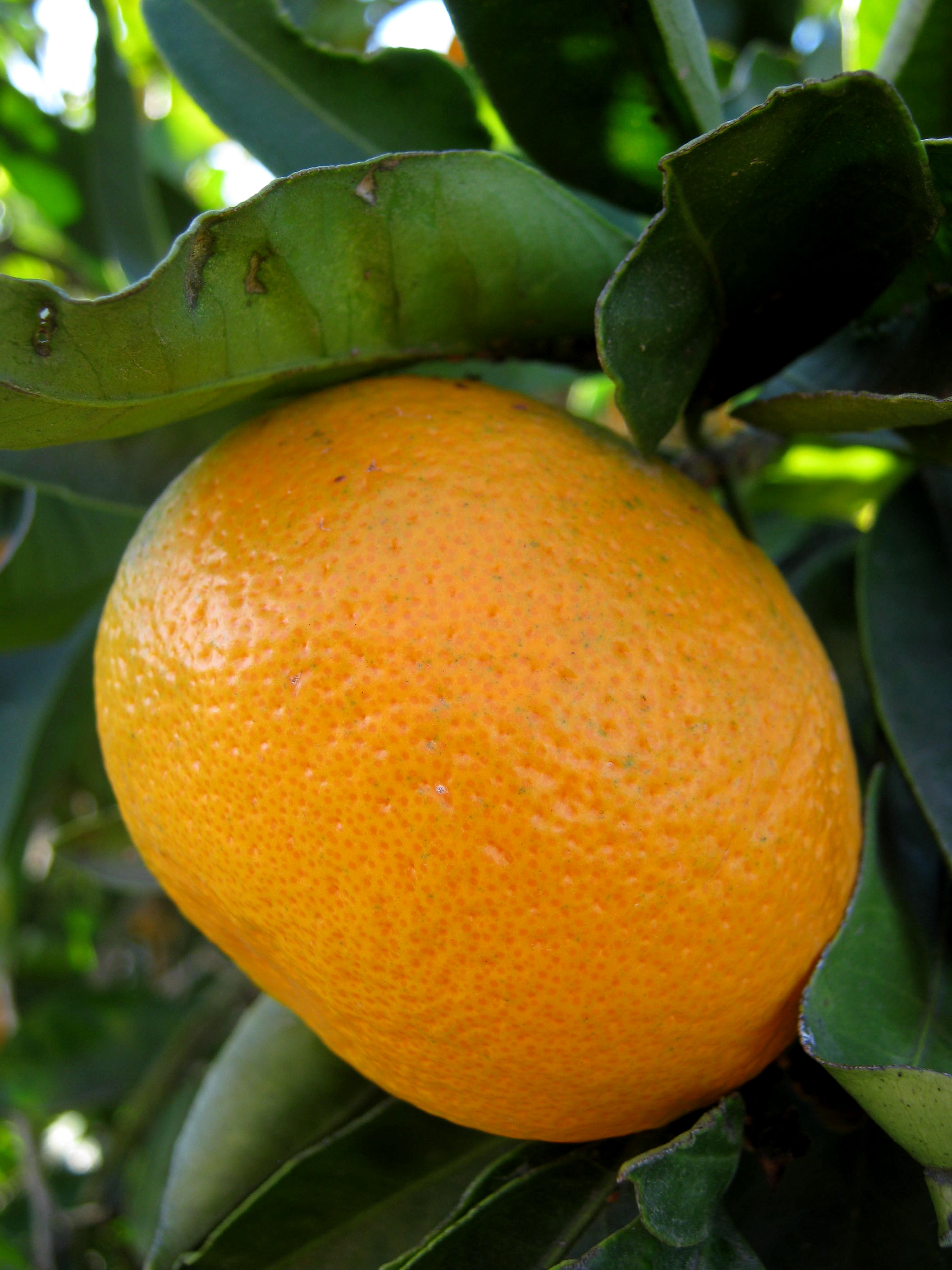
'Owari Satsuma' mandarin
Satsuma, a name we apply to popular mandarin and plum varieties, is just a region of Japan. Be careful what you ask for if you're visiting: they don't call them "satsumas" there, but they do apparently use the term for a type of sweet potato! From a blog: "The area of Satsuma is not famous for tangerines and so it's very strange for us Japanese that Satsuma indicates tangerines in English."
What is a bud sport?
It is a naturally occurring mutation on a branch that differs sufficiently to be noticed and propagated as a separate variety. They occur in many plant, including roses and fruit trees and especially citrus. Bud sports may differ in size, color of the flesh or peel, how early they ripen, variegation of the foliage, etc.. For example, I sometimes get Dobashi Beni Satsuma trees from one grower, "reported to be a limb sport of Owari in the orchard of K. Dobashi in 1940 [in Japan] … Distinctive only because of its deep orange-red color."
What are some other mandarins?
Clementine is another great-selling variety. It ripens later and has somewhat tighter skin. There are several clones of Clementine. In some cases, particularly some earlier-ripening clones, seed is produced when the flower is pollinated. Seeds in a mandarin reduce the market value, so growers want to isolate them from bees to try to keep them seedless. This has led to a dispute between beekeepers and Clementine growers, as the citrus growers want bee-free zones of two miles around their groves!
Cuties® is a marketing device for selling smaller Clementine and Murcott mandarins.
Similar-sounding Pixie is a new variety of mandarin that ripens later and holds up well after harvest, so it extends the mandarin season. There are others: Four Winds Growers in Winters lists 13 different varieties of mandarins for our region.
Why is the fruit sweeter after a frost?
It is the conversion of malic and citric acids to sugars that makes the fruit palatable, and this tends to occur with cold temperatures. Conversion of acids and starches to sugar creates a natural anti-freeze in fruit, leaves (kale leaves are sweeter after frost), stems (maple syrup!), and roots. Preferably not hard freezing temperatures for citrus, as that causes breakdown of the flesh into undesirable off-flavored components and releases bitter compounds from the membrane.
A freeze can do considerable damage to the crop from damage to the trees, but also by making the fruit unusable even for juice. If the growers move fast, they can harvest and process the fruit quickly before off-flavors develop. When a regional freeze threatens, you may see workers harvesting citrus in the middle of the night!
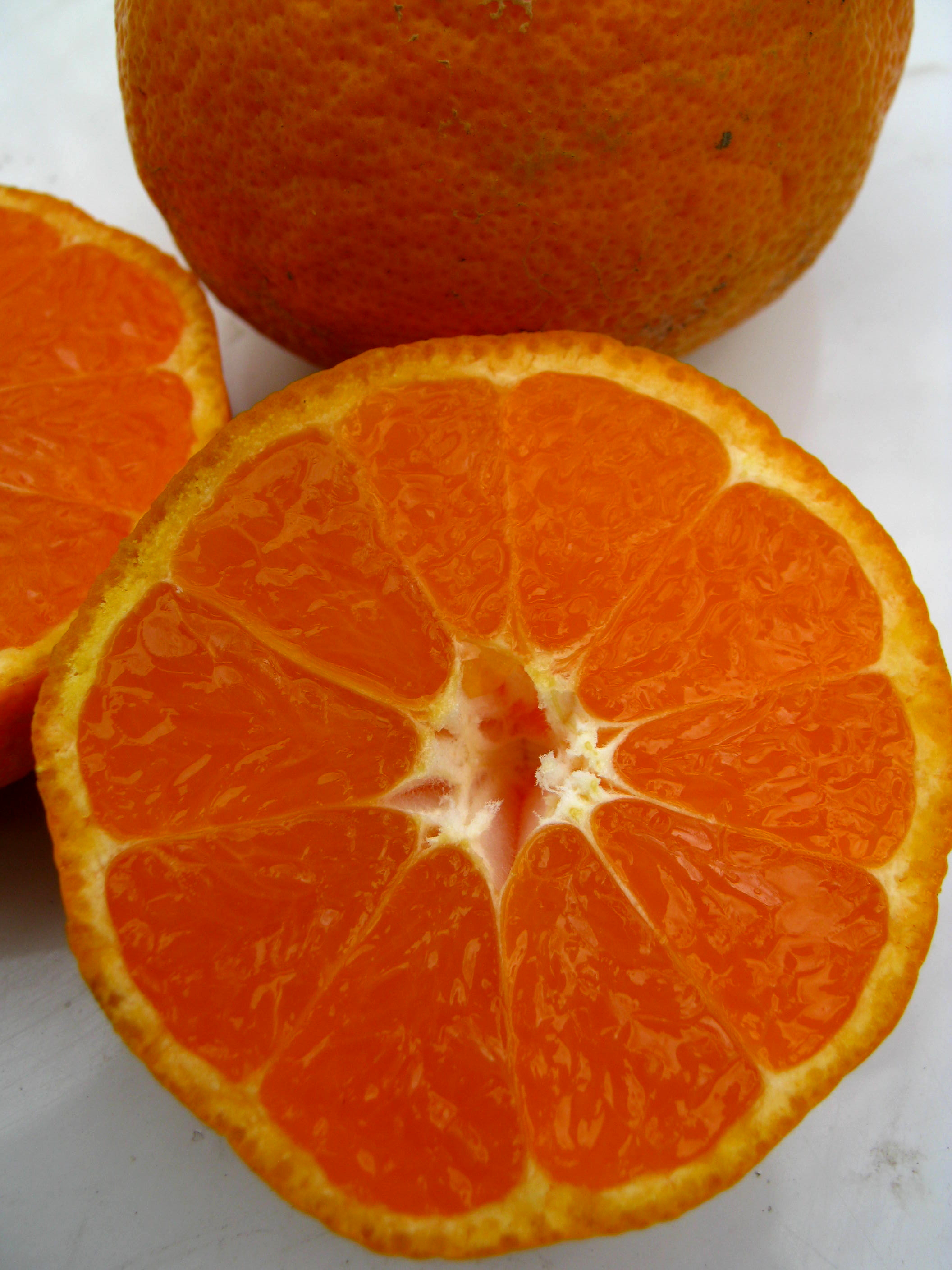
Which ones can we grow?
All mandarins grow readily here, and varieties can be selected for early or later ripening. For example, Owari + Clementine + Encore + Pixie provides fruit from November nearly into summer. The small trees can be planted quite close together to maximize fruit production in a small yard.
Mandarins are among the cold-hardiest citrus. Four Winds Growers recommends frost-protection at 28 degrees, but my Owari trees and fruit have tolerated temperatures into the low 20s without damage. Gold Nugget and Yosemite are new patented varieties that are even more tolerant of cold.
Growing tips!
These small, slow-growing plants can be trained as shrubs or small trees, and can be kept in large containers for many years.
As with all citrus:
- -- plant in a warm, sunny location: as they say at Four Winds Growers, "where the cat sleeps in the sun, citrus grows well;"
-- dig a wide hole, loosening the soil but not amending it;
-- plant "crowned up" -- i.e., with the tree set on a slight rise;
-- make a watering basin around the tree so you can soak it thoroughly and infrequently;
-- fertilize regularly: monthly (or at least seasonally). Adjust pH with soil sulphur, and correct micro-nutrient deficiencies as needed.
Expect fruit beginning in 3 - 4 years, with yields increasing each year thereafter.
More questions:
How long are they ripe, and how can you tell?
The skin loosens over time but is not a reliable indicator of sweetness. It does tell you that the fruit will soon be past its prime. Color of the peel is not a reliable indicator, either. Go by the calendar and sample the fruit, starting in late November. Satsuma mandarins have a narrow ripening range. Around here they are edible by Thanksgiving, though tart; great for the holidays and into January, and then they spoil quickly after rainy periods in January. By February they are puffy and poor quality. Rain is a big factor: the thin peel of satsumas is easily bruised (compared to, say, a navel orange) and rots quickly, damaging the fruit.

Why is the Owari Satsuma mandarin so popular? It's easy to peel and break into segments, seedless, sweet and juicy, and early ripening. Satsumas ripen November through January, marking the start of the citrus season. And it is one of the hardiest citrus for our area. Other mandarin varieties ripen January through spring, with some new types holding on the tree into the early summer.
Visit Redwood Barn Nursery's Home Page |
Tuesday, December 14, 2010
How many chilling hours do we get?

We get lots of questions about "chilling hours" -- the number of hours between 32F and 45F that deciduous fruit trees need in order to break dormancy and flower properly. You will often see the number of hours that a particular variety needs printed right on the label; e.g., Elberta Peach 800 hours. Gardeners in the Bay Area and Southern California may not get sufficient chilling for many varieties, and need to inquire locally about which are recommended for their area.
I've attached an image showing the 15-year trend in chilling for Davis, Ca. Note that the first year shown (1995-96) was unusually low. Chilling hours in the Davis area typically range from 800 - 1000, allowing us to grow nearly any fruit variety available.
For the chilling hours in your area, check this website which shows weather stations all over California:
http://fruitsandnuts.ucdavis.edu/chillcalc/index1.htm
Wednesday, November 24, 2010
Frost Warning? Freeze Warning?
Written for the Davis Enterprise, November 24, 2010
Click on any image for a larger version"He comes, - he comes, - the Frost Spirit comes!
On the rushing Northern blast ... " John Greenleaf Whittier
This week marked the first National Weather Service frost warning of the season. Our main frost season typically runs from Thanksgiving through Valentine's Day. There have been frosts after Feb. 14, and occasionally before the last week of November, but those have been infrequent and of little consequence.
What weather conditions lead to a frost warning?
The poem was a bit of hyperbole on Whittier's part: frost doesn't "rush" in, it forms under still, clear skies. But he had a point. Frost can occur after a cold air mass, usually a storm, moves through the region. Cloud cover during the day gives way to clear skies in the early evening. As heat is lost to the sky, the surfaces cool rapidly. When the air temperature gets to the dew point, fog forms. When surface temperatures drop below freezing, frost forms. [Note that the air temperature you measure or see online may still be above freezing; it is the surface temperature that matters.]
When the surface reaches 32 degrees, the layer of water vapor molecules in contact with that surface freezes, and then the layer above that, and so on. Frost doesn't fall from the air, it freezes directly on a surface. Some surfaces cool faster than others. The metal on your car may show frost by midnight; bare soil by dawn, while grass might not even reach freezing that same morning. It all has to do with how efficiently the particular surface conducts heat.
What would prevent the frost?
"The Frost performs its secret ministry,
Unhelped by any wind." - Coleridge
Unhelped by any wind." - Coleridge
Clouds and fog prevent frost by trapping the outbound heat. Light winds mix the warmer air from above back down to ground level. This is the principle behind the giant fans you see on the edges of vineyards in Napa Valley.
What's the potential for harm in the garden?
Leaves lose heat to the sky! Damage to a plant depends on the structure and contents of those leaves. Soft, succulent plants such as Impatiens turn to mush as the cells rupture. Hardy plants contain sugars and other chemicals that act as natural antifreeze.
A frost is not a freeze.
First, don't panic. If a plant is considered hardy here, damage will be cosmetic. The leaves may look ugly, but the plant will survive. It is a freeze that we are concerned about: a period of colder temperatures when a very cold air mass moves over the region.
Our biggest risk is mid-December to mid-January. Temperatures below the mid-20's are unusual here and spell trouble for many plants. On December 23 1990 we reached 16 degrees. The morning of January 14 2007 got to 20 degrees.
Freeze damage is a matter of how cold we get, for how long. That morning in 1990 was the start of a ten-day episode, with each successive day causing further tissue damage to leaves, shoots, and eventually the woody parts of plants.
Which plants are we going to lose on a frosty night?
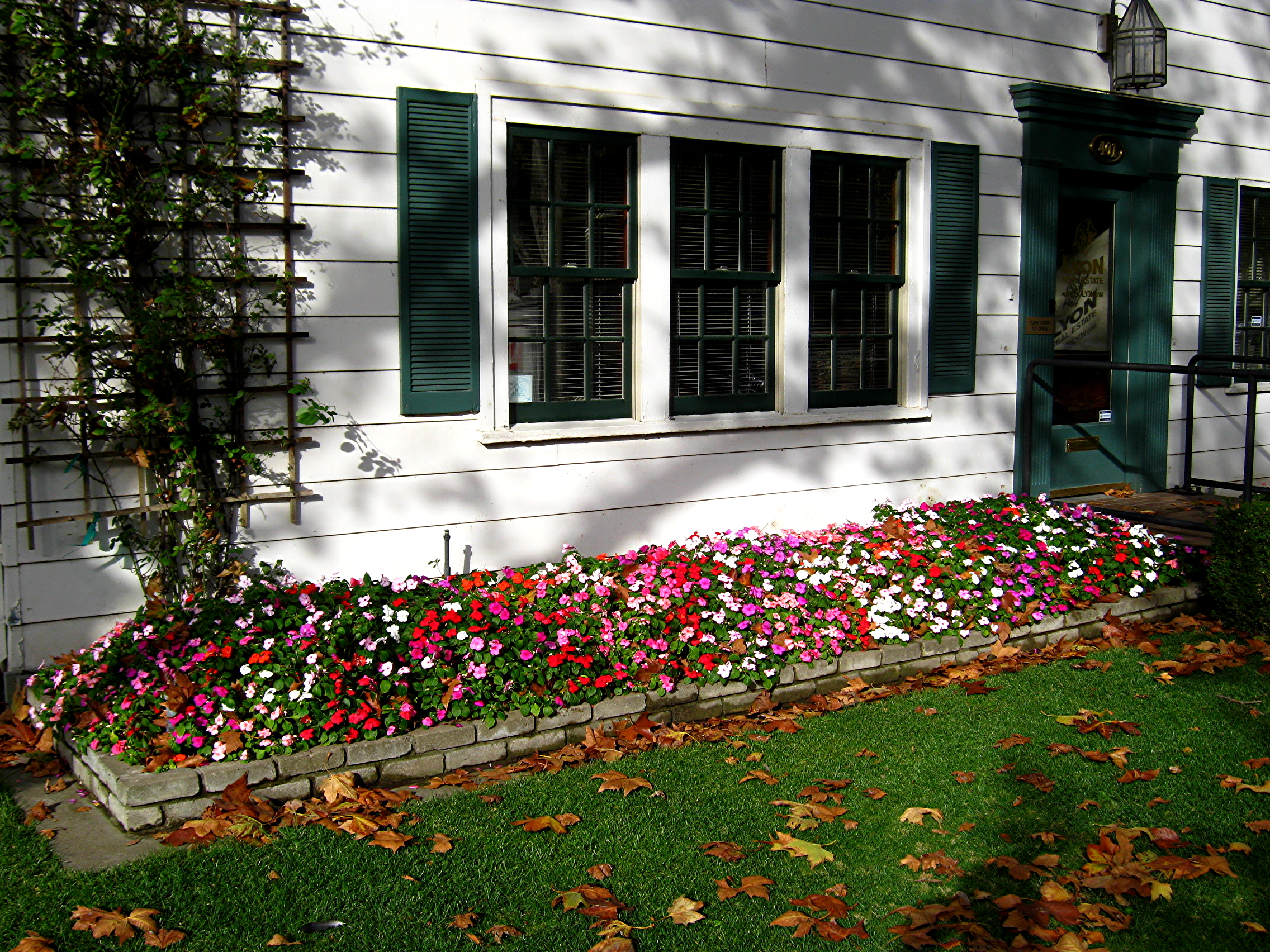
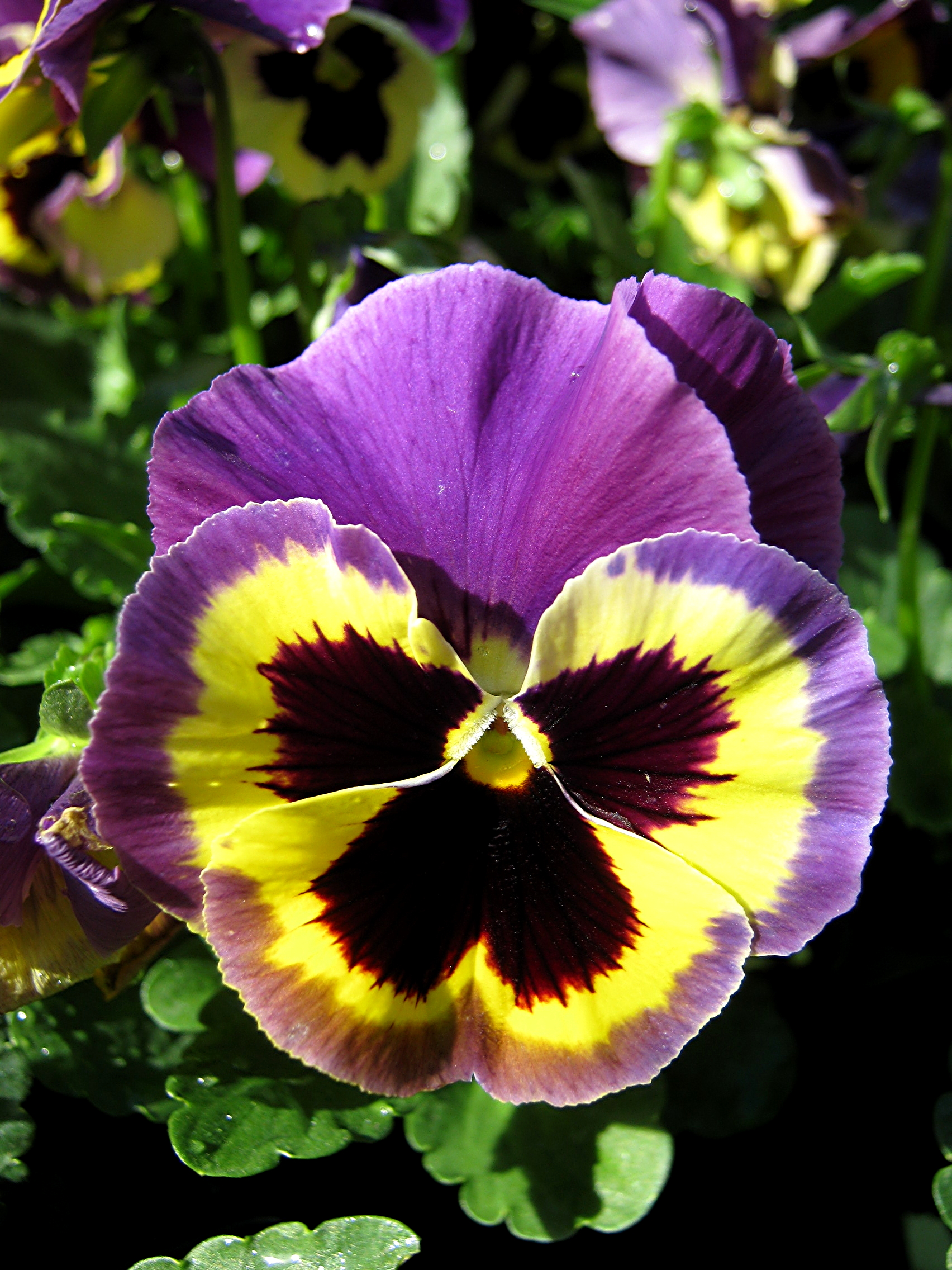
Pansy 'Delta Premium' -- no need for protection!
Which plants should we protect from frost?
Some succulents such as jade plant, some aloes, and kalanchoes.
Tender subtropicals such as hibiscus and mandevilla.
Semi-tender subtropicals such as bougainvillea, Guatemalan avocado, Mexican lime, young lemon and citron trees.
Which plants should we protect from a freeze?
Older lemons, other young citrus trees, Mexican avocado, geranium (Pelargonium). Blossoms of Lilac vine (Hardenbergia), which bloom in late winter, can be saved by covering the plants.
As temperatures drop further we may get concerned about some of the hardier citrus. Tangeloes, grapefruit, navel and Valencia oranges can be damaged in the mid-20's.
There are many subtropical plants I don't worry about. Brugmansia, lantana, and passionflower may defoliate, or be partially killed, but will recover. Once you get used to the winter appearance of these semi-tender plants, you'll worry less. Just think of them as deciduous. Leave them alone: wait until new growth begins in spring before you cut off the frost-burnt parts.
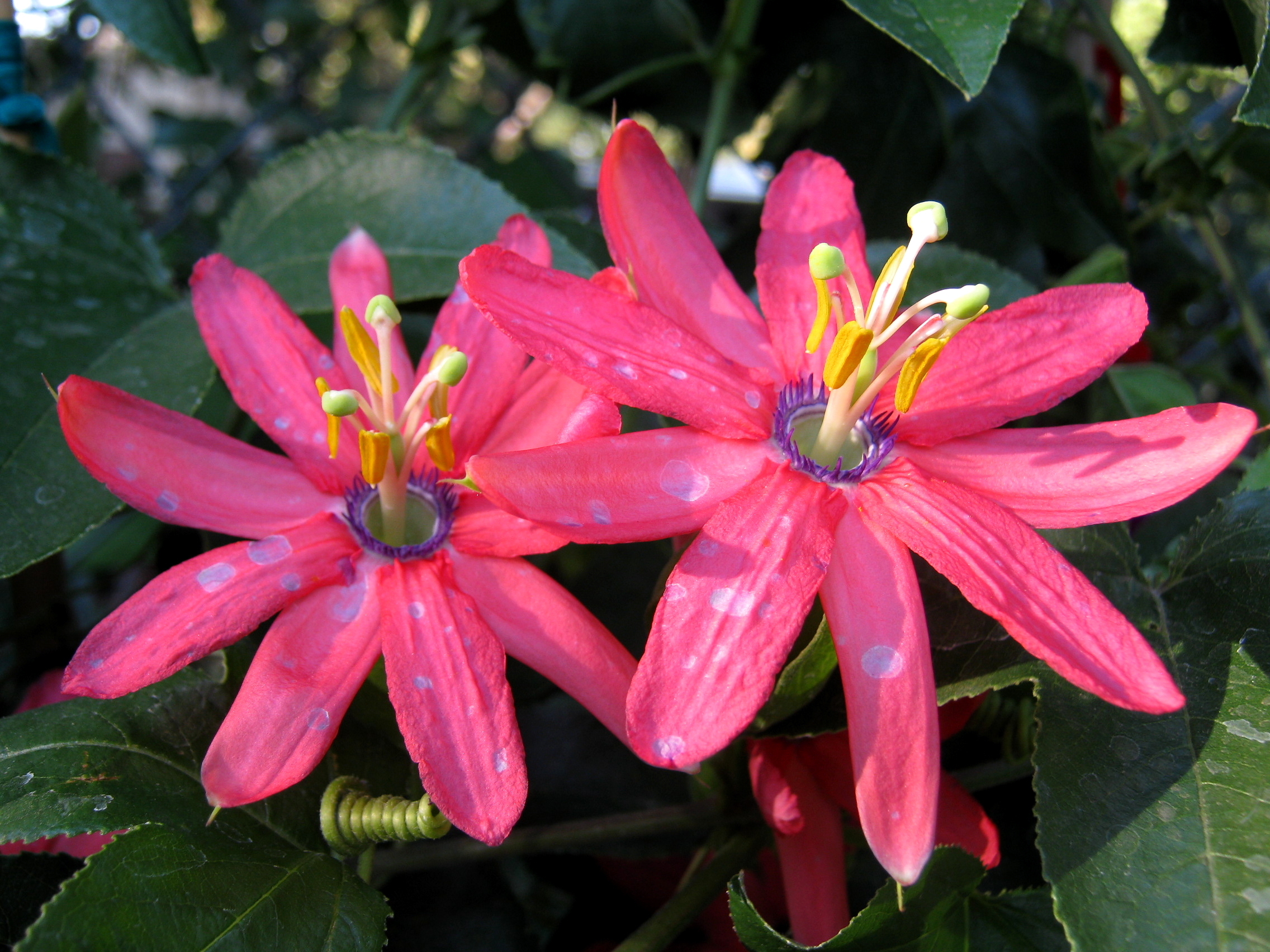
Passiflora 'Coral Glow'
We grow many subtropical plants in Northern California. Some are badly harmed by freezing weather, while others (such as the Coral Glow Passionflower shown here) re-sprout readily in spring. Temperatures in the upper 20's will damage the leaves and cause some die-back, but the plants will recover. Lower temperatures may completely kill the tops. Damage can be reduced by taking simple measures to trap or provide heat to the plant.
Some citrus are much hardier than lemons and limes. My mandarins and kumquats have been through major freezes with minimal damage. Fruit of Satsuma mandarins may be harmed at very low temperatures, so you might harvest the fruit if extreme cold is predicted. But citrus fruit won't ever get any sweeter once you pick it, so stripping the tree is a last resort.
There are two main ways to protect plants:
Trap heat.
A plant under an overhang is safe, as the building will keep the heat from escaping to the sky. Frost blankets, which are made of light fabric that allows light in, act to create a mini-greenhouse. Anchored with metal pins, these are the simplest way to provide protection.

Using frost blanket to protect fruit on a mature lemon tree.
Provide heat.
Old-fashioned holiday lights generate enough heat to keep the plant warm. Even a 40-watt bulb on a shop light fixture, attached at the base of the tree (grounded outdoor-rated only!) may be enough for a small tree. Combined with the frost blankets, you can get a few degrees of warmth, enough to keep the local temperature above freezing.
Finally, plants in containers may be damaged by desiccation (cold-induced drying) during freezing weather. Keep your outdoor containers watered during the winter! They won't need it very often: once every week to ten days should be fine if we don't have rain.
Monday, November 8, 2010
Fall Color in the Sacramento Valley!
Why do leaves turn color in the fall?
This is right up there with 'how do they grow seedless watermelons?' among the most-asked questions directed at plant professionals.
The answer is simple! The days get shorter, the nights get colder, and Jack Frost magically paints the leaves in your yard!
Well, actually, the answer is more complicated, involving daylength (actually nightlength), temperature, nutrients, and genetics.
Trees that have adapted to cold winter climates go through several steps as winter approaches. The first part of the process is a reaction to longer nights. The plant forms a layer at the base of the leaves that blocks the movement of carbohydrates (sugars, starches) out of the leaves, and blocks the movement of minerals into the leaves. That 'abscission' layer eventually gets brittle and breaks, so the leaf falls.
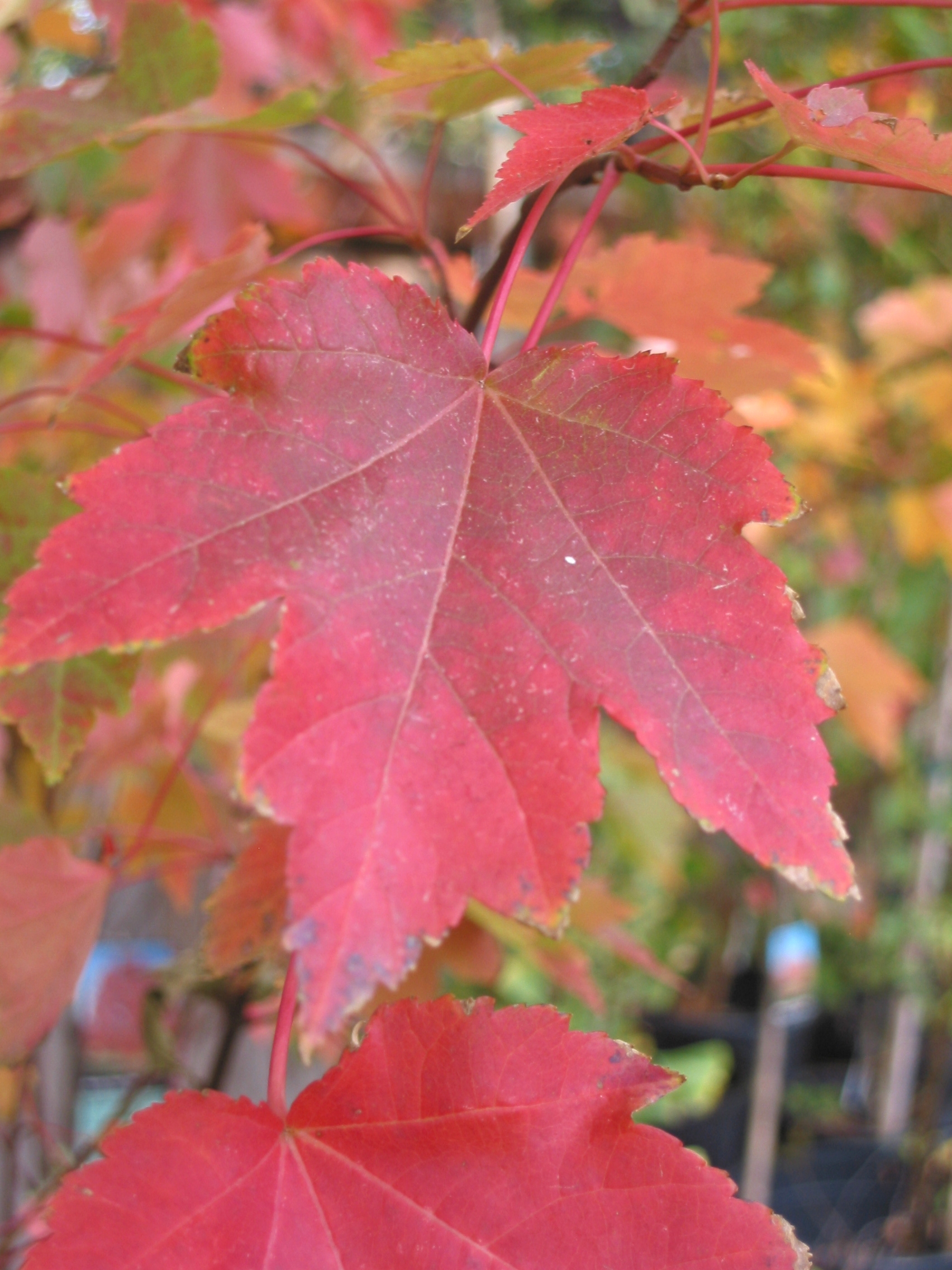
October Glory maple
But before that happens, the plant produces less and less chlorophyll because it has less stuff to make it from. That is the pigment which makes leaves green. It is also the most fragile pigment, breaking down in sunlight very quickly. Usually the plant is replenishing it very quickly. But as it breaks down and becomes less abundant, the less common pigments of yellow and orange become visible. So these are the first fall colors that we see. Those colors were already there; we're just seeing them now because the green is gone. This first reaction mostly follows the calendar, although severely drought-stressed plants will begin to go dormant earlier than normal.
Some minerals are mobile within the plant, moving from one place to another as needed. The plant moves phosphorus out of the leaf and into the stem where it is stored during cold weather. The absence of phosphorus changes the chemical reaction in the leaves, and the remaining trapped carbohydrates are now made into certain other pigments, notably the ones that are red and purple. So these are the more spectacular colors that we see next. They weren't there before; the tree is making them now out of what's left in the leaf.

Chinese pistache leaves
Some trees make more of these pigments than others do, so it varies between species. There are also genetic differences of seedlings within a species. Variation in temperature from year to year, and the nutrient status of the specimen, also affects fall color. Within those species that have the pigments to begin with, sunny clear days and cool nights encourage the production of more red and purple pigments. A tree with adequate nutrition will have more basic material to work with to create pigment. Trees that are overwatered have damaged root hairs, so they've been unable to take up nutrients readily during the summer.
Click here for more of this article, and pictures
Thursday, October 28, 2010
20 Easy Fragrant Plants
Plant people get excited about strange things. A breeder developing a yellow Salvia. A single-flowered variant of Lady Banks rose. A white daylily. These are the things that get plant collectors all a-twitter. Or a plant re-surfacing after many years.

Osmanthus fragrans 'Aurantiacus'
When I first moved to Davis to attend UC Davis I lived in the Primero dormitories located along Russell Boulevard. As I walked by the Student Health Center on my way to class, I noticed a powerfully fragrant shrub blooming in spring and fall. The flowers were nondescript and the foliage was a drab green-olive color, so one hardly noticed the plant itself. The fragrance resembled peaches and apricots, with sharp sweet notes, like a fine liqueur. Osmanthus fragrans: commonly called sweet olive. There was also a plant located near the Memorial Union building before it was remodeled. The former had white flowers; the latter had orange ones and bloomed more heavily in the fall.
Alas, Primero dorms are gone, though not lamented: they had no A/C and had antiquated heaters; gone also are both of those shrubs. In my mind's eye I can still see each one, more than 35 years later. As a nascent student of horticulture, anything with an aroma like that would distract me as I crossed campus. My bike got totaled, and then stolen, within a month of my arrival here, so I gave up on bicycles. I was a pedestrian on campus for all of my student years, which enabled me to see the plants close up that 99% of the students whizzed past.
Recently the orange variety came through my store for the first time I can remember. Osmanthus fragrans 'Aurantiacus'is the official name. "Fragrans" is self-explanatory, and "Aurantiacus" is Latin for orange. This Osmanthus species is native to Asia; flowers are used in tea, jam, and liquor and various Asian dishes.
The flowers of 'Aurantiacus' are pumpkin-orange, appear mostly in autumn, and each flower is only about one-quarter inch. Not spectacular, but it would be difficult to overstate the powerful fragrance of these tiny flowers. Everyone who walked by the evergreen shrub raved about the scent. As with many fragrant flowers, the volatile oils evaporate and drift several feet from the plant.
Common O. fragrans is readily available, but 'Aurantiacus' is hard to propagate and very rare in the trade. I don't know how this grower produced it, and as soon as they released their small crop it was gone. Both grow with an open habit, at a moderate pace of 2 to 3 feet a year, ultimately becoming ten to fifteen feet tall with about half that spread. They tolerate sun, but look best with protection from the hottest sun of the afternoon, and will also grow and bloom in bright shade.
Osmanthus is just one of many easy landscape shrubs providing rich fragrance without special attention. In fact, along with certain perennials and annuals, it is possible to plant a garden of easy plants for fragrance year-around. Here are some choices, sorted by season of bloom.
1. Brugmansia
Common name: Angel's trumpet.
A big shrub with bold leaves, growing to 10 feet +. Hardy subtropical. Tops are damaged in winter, sometimes killed to the ground, but it always resprouts. Appearance is best if it is sheltered from hot sun and wind, and frost protection prolongs the late fall bloom. Blossoms are intoxicatingly fragrant, but only at night. All parts are poisonous.
2. Osmanthus fragrans 'Aurantiacus'
Common name: Orange tea olive.
Hardy evergreen shrub best in partial sun or shade. Full morning sun is ok. Drought tolerant.
3. Sarcococca ruscifolia
Common name: Victorian box.
Slow growing evergreen shrub to 3 to 4' tall and wide, easily clipped as a hedge. Little white flowers in January smell like gardenias! Very shade tolerant, burns in any direct sun. Drought tolerant.
4. Wisteria species: W. sinensis, floribunda, and venusta.
Common name: Wisteria.
Very vigorous deciduous vine with purple or white flowers in late winter.
Blooms best in full sun and under dry conditions.
5. Citrus
Evergreens grown as shrubs or trees. April blossoms are intensely fragrant. Meyer lemon flowers and fruits year around. Kumquats bloom in summer. Hardiness varies: mandarins are hardiest; limes are tender.
6. Jasminum polyanthum
Common name: Winter jasmine.
Very vigorous evergreen vine that can take over part of your yard. Pink buds open to pungent white blossoms in Feb. - April, depending on weather.
7. Lathyrus odorata
Common name: Sweet pea.
Annual vine that we plant from seed in fall for winter and spring bloom.
8. Philadelphus
Common name: Mock orange.
Deciduous shrub grows pretty fast to 8 feet tall, 5 to 6 feet wide. There are dwarf varieties. Open, somewhat rangy habit. Lemon-scented blossoms in May. This is what east-coasters call Mock orange.
9. Pittosporum tobira
Common name: Mock orange.
Common evergreen grows 2 to 3 feet a year to 10 feet or more; readily pruned to any height. Lemon-scented blossoms in April and early May. This is what Californians call Mock orange.
10. Rosa banksia
Common name: Lady banks rose.
Gigantic evergreen, thornless climbing rose. Very tough. Blooms for a couple of weeks in early spring before the other roses begin. The yellow and single white forms smell like cotton candy. Best in full sun. Very drought tolerant.
11. Syringa vulgaris
Common name: Lilac
The familiar hardy deciduous shrub from colder climates grows fine here and blooms freely in full sun or light shade. Very drought tolerant.
12. Osmanthus fragrans
Common name: Sweet olive.
The white form blooms most in the spring.
13. Dianthus
Common name: Pinks, carnations.
Hardy perennials that can last for years. The grey-leaved forms are tougher garden plants than the green-leaved ones (which are usually sold as annuals, though they will live two to three years). Many Dianthus have strongly spice-scented blooms.
14. Phlomis fruticosa
Common name: Jerusalem sage.
Tough shrub with fuzzy grey-green leaves, grows to 4 to 5 feet tall and 6 feet or more across. Blooms in waves in spring and summer. The strange-shaped whorls of bright yellow flowers smell just like carnations! Tolerate extreme sun, heat, and drought.
15. Rosa hybrids
Common name: Rose
Obviously roses belong on any list of fragrant shrubs. Look for varieties noted for their scent, as many hybrids have light or no fragrance. Roses like full sun and lot of water.
16. Fortunella margarita
Common name: Kumquat.
This evergreen citrus, which grows as a large shrub or small tree, is the hardiest of all. The summer flowers are smaller than other types, but very fragrant. The fruit is a nice ornamental and edible bonus, hanging on the tree year around.
17. Jasminum officinale
Common name: Poet's jasmine.
Hardy evergreen vine that blooms in the summer. Much less invasive than the spring-blooming jasmine, the bloom is less abundant but lasts longer.
18. Trachelospermum jasminoides
Common name: Star jasmine.
This evergreen vine hardly needs introduction. The fragrance is too powerful for some people Very drought tolerant and grows in anything from full sun to full shade (though bloom is limited in shade). Very drought tolerant.
19. Aloysia triphylla
Common name: Lemon verbena.
Open, airy shrub with yellow-green foliage that is packed with citronella aromatics. It gets 6 feet or more tall and broad. Either prune it to enhance the open form, or cut it back hard every couple of springs. A hardy subtropical, it often loses leaves and might even die back during freezing weather, but always resprouts.
20. Lobularia maritima
Common name: Sweet alyssum.
Easy-to-grow annual flower that reseeds all over your yard. The honey-scented blooms can be present all year around once you have an established population. Pink and purple forms will reseed lighter, eventually white. Best in full sun or very light shade. Very drought tolerant.
Ceanothus species and hybrids: Mountain lilac.
Fast-growing shrubs and ground covers are very drought tolerant but also easy to kill by watering too often. Blue, purple, or white blossoms in spring smell like honey.
Cestrum nocturnum: Night-blooming Jessamine.
Dies back to the ground most years, but usually resprouts. Powerful fragrance at night only. Poisonous.
Daphne odora: Winter Daphne.
Spicy lemon-scented blooms in winter. So, so, so easy to kill. Poisonous.
Elaeagnus species.
Cousins of Russian olive, several species of Elaeagnus have sweet-scented clusters of flowers. Very tough, informal shrubs for rural areas or large hedges; in small yards they'll need a lot of pruning. E. ebbingei 'Gilt Edge' has strongly variegated leaves and a manageable upright habit. The fruit are edible (I'm told) and popular with songbirds. Very drought tolerant.
Gardenia jasminoides.
Not happy about our alkaline water, so it gets anemic without special fertilizer. Blooms best where it gets morning sun, afternoon shade.
Jasminum sambac: Arabian jasmine.
The wonderful Pikake of Hawai'i. Tender even to a light frost, it must be indoors in winter here.
Lonicera species: honeysuckles.
I hesitate to recommend the most fragrant (and most common) species, L. japonica, because it is very invasive.
Here is a substitute, although it is rare:
Lonicera hildebrandtiana
Common name: Giant Burmese honeysuckle.
Fast-growing evergreen subtropical vine with large, shiny leaves, it is just hardy here, showing damage after severe frost but usually recovering. Giant blooms have exceptional fragrance. Difficult to propagate, it is usually grafted onto L. japonica, so watch carefully for any root suckers and remove them immediately.
Passiflora species and hybrids
Passion flowers and passionfruit. Many hybrids have spicy-scented flowers. Variable hardiness, and some are rampant. Choose accordingly.
Scented geraniums (Pelargonium species).
Easy to grow, somewhat frost tender. Expect to replace them every year or so.
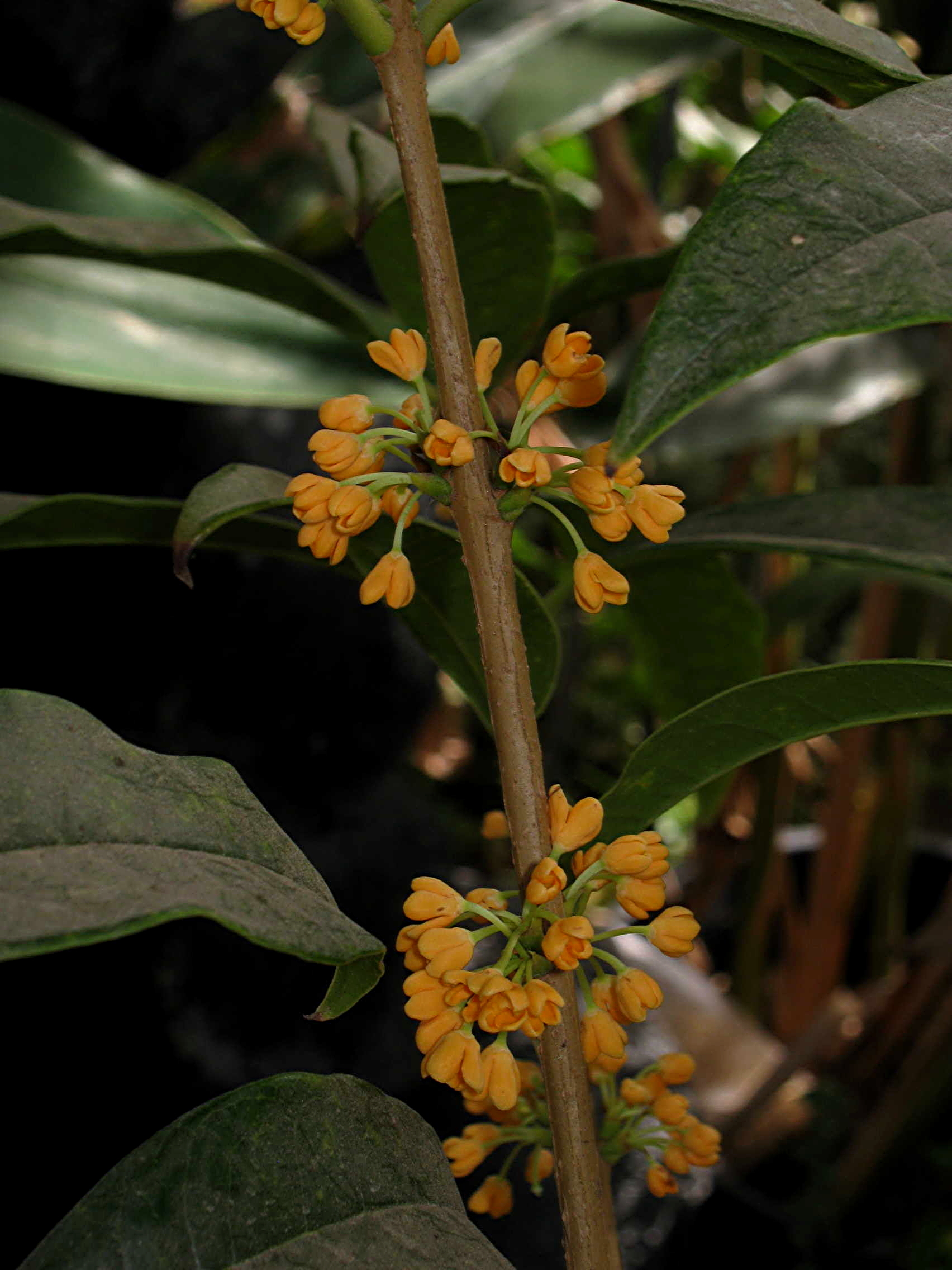
Osmanthus fragrans 'Aurantiacus'
When I first moved to Davis to attend UC Davis I lived in the Primero dormitories located along Russell Boulevard. As I walked by the Student Health Center on my way to class, I noticed a powerfully fragrant shrub blooming in spring and fall. The flowers were nondescript and the foliage was a drab green-olive color, so one hardly noticed the plant itself. The fragrance resembled peaches and apricots, with sharp sweet notes, like a fine liqueur. Osmanthus fragrans: commonly called sweet olive. There was also a plant located near the Memorial Union building before it was remodeled. The former had white flowers; the latter had orange ones and bloomed more heavily in the fall.
Alas, Primero dorms are gone, though not lamented: they had no A/C and had antiquated heaters; gone also are both of those shrubs. In my mind's eye I can still see each one, more than 35 years later. As a nascent student of horticulture, anything with an aroma like that would distract me as I crossed campus. My bike got totaled, and then stolen, within a month of my arrival here, so I gave up on bicycles. I was a pedestrian on campus for all of my student years, which enabled me to see the plants close up that 99% of the students whizzed past.
Recently the orange variety came through my store for the first time I can remember. Osmanthus fragrans 'Aurantiacus'is the official name. "Fragrans" is self-explanatory, and "Aurantiacus" is Latin for orange. This Osmanthus species is native to Asia; flowers are used in tea, jam, and liquor and various Asian dishes.
The flowers of 'Aurantiacus' are pumpkin-orange, appear mostly in autumn, and each flower is only about one-quarter inch. Not spectacular, but it would be difficult to overstate the powerful fragrance of these tiny flowers. Everyone who walked by the evergreen shrub raved about the scent. As with many fragrant flowers, the volatile oils evaporate and drift several feet from the plant.
Common O. fragrans is readily available, but 'Aurantiacus' is hard to propagate and very rare in the trade. I don't know how this grower produced it, and as soon as they released their small crop it was gone. Both grow with an open habit, at a moderate pace of 2 to 3 feet a year, ultimately becoming ten to fifteen feet tall with about half that spread. They tolerate sun, but look best with protection from the hottest sun of the afternoon, and will also grow and bloom in bright shade.
Osmanthus is just one of many easy landscape shrubs providing rich fragrance without special attention. In fact, along with certain perennials and annuals, it is possible to plant a garden of easy plants for fragrance year-around. Here are some choices, sorted by season of bloom.
Fall-blooming
1. Brugmansia
Common name: Angel's trumpet.
A big shrub with bold leaves, growing to 10 feet +. Hardy subtropical. Tops are damaged in winter, sometimes killed to the ground, but it always resprouts. Appearance is best if it is sheltered from hot sun and wind, and frost protection prolongs the late fall bloom. Blossoms are intoxicatingly fragrant, but only at night. All parts are poisonous.
2. Osmanthus fragrans 'Aurantiacus'
Common name: Orange tea olive.
Hardy evergreen shrub best in partial sun or shade. Full morning sun is ok. Drought tolerant.
Winter-blooming
3. Sarcococca ruscifolia
Common name: Victorian box.
Slow growing evergreen shrub to 3 to 4' tall and wide, easily clipped as a hedge. Little white flowers in January smell like gardenias! Very shade tolerant, burns in any direct sun. Drought tolerant.
4. Wisteria species: W. sinensis, floribunda, and venusta.
Common name: Wisteria.
Very vigorous deciduous vine with purple or white flowers in late winter.
Blooms best in full sun and under dry conditions.
Spring-blooming
5. Citrus
Evergreens grown as shrubs or trees. April blossoms are intensely fragrant. Meyer lemon flowers and fruits year around. Kumquats bloom in summer. Hardiness varies: mandarins are hardiest; limes are tender.
6. Jasminum polyanthum
Common name: Winter jasmine.
Very vigorous evergreen vine that can take over part of your yard. Pink buds open to pungent white blossoms in Feb. - April, depending on weather.
7. Lathyrus odorata
Common name: Sweet pea.
Annual vine that we plant from seed in fall for winter and spring bloom.
8. Philadelphus
Common name: Mock orange.
Deciduous shrub grows pretty fast to 8 feet tall, 5 to 6 feet wide. There are dwarf varieties. Open, somewhat rangy habit. Lemon-scented blossoms in May. This is what east-coasters call Mock orange.
9. Pittosporum tobira
Common name: Mock orange.
Common evergreen grows 2 to 3 feet a year to 10 feet or more; readily pruned to any height. Lemon-scented blossoms in April and early May. This is what Californians call Mock orange.
10. Rosa banksia
Common name: Lady banks rose.
Gigantic evergreen, thornless climbing rose. Very tough. Blooms for a couple of weeks in early spring before the other roses begin. The yellow and single white forms smell like cotton candy. Best in full sun. Very drought tolerant.
11. Syringa vulgaris
Common name: Lilac
The familiar hardy deciduous shrub from colder climates grows fine here and blooms freely in full sun or light shade. Very drought tolerant.
12. Osmanthus fragrans
Common name: Sweet olive.
The white form blooms most in the spring.
Spring and Summer blooming
13. Dianthus
Common name: Pinks, carnations.
Hardy perennials that can last for years. The grey-leaved forms are tougher garden plants than the green-leaved ones (which are usually sold as annuals, though they will live two to three years). Many Dianthus have strongly spice-scented blooms.
14. Phlomis fruticosa
Common name: Jerusalem sage.
Tough shrub with fuzzy grey-green leaves, grows to 4 to 5 feet tall and 6 feet or more across. Blooms in waves in spring and summer. The strange-shaped whorls of bright yellow flowers smell just like carnations! Tolerate extreme sun, heat, and drought.
Spring, summer, and fall blooming
15. Rosa hybrids
Common name: Rose
Obviously roses belong on any list of fragrant shrubs. Look for varieties noted for their scent, as many hybrids have light or no fragrance. Roses like full sun and lot of water.
Summer blooming
16. Fortunella margarita
Common name: Kumquat.
This evergreen citrus, which grows as a large shrub or small tree, is the hardiest of all. The summer flowers are smaller than other types, but very fragrant. The fruit is a nice ornamental and edible bonus, hanging on the tree year around.
17. Jasminum officinale
Common name: Poet's jasmine.
Hardy evergreen vine that blooms in the summer. Much less invasive than the spring-blooming jasmine, the bloom is less abundant but lasts longer.
18. Trachelospermum jasminoides
Common name: Star jasmine.
This evergreen vine hardly needs introduction. The fragrance is too powerful for some people Very drought tolerant and grows in anything from full sun to full shade (though bloom is limited in shade). Very drought tolerant.
Fragrant foliage
19. Aloysia triphylla
Common name: Lemon verbena.
Open, airy shrub with yellow-green foliage that is packed with citronella aromatics. It gets 6 feet or more tall and broad. Either prune it to enhance the open form, or cut it back hard every couple of springs. A hardy subtropical, it often loses leaves and might even die back during freezing weather, but always resprouts.
Blooms year-around
20. Lobularia maritima
Common name: Sweet alyssum.
Easy-to-grow annual flower that reseeds all over your yard. The honey-scented blooms can be present all year around once you have an established population. Pink and purple forms will reseed lighter, eventually white. Best in full sun or very light shade. Very drought tolerant.
Also-rans ("why didn't you mention....?"):
Ceanothus species and hybrids: Mountain lilac.
Fast-growing shrubs and ground covers are very drought tolerant but also easy to kill by watering too often. Blue, purple, or white blossoms in spring smell like honey.
Cestrum nocturnum: Night-blooming Jessamine.
Dies back to the ground most years, but usually resprouts. Powerful fragrance at night only. Poisonous.
Daphne odora: Winter Daphne.
Spicy lemon-scented blooms in winter. So, so, so easy to kill. Poisonous.
Elaeagnus species.
Cousins of Russian olive, several species of Elaeagnus have sweet-scented clusters of flowers. Very tough, informal shrubs for rural areas or large hedges; in small yards they'll need a lot of pruning. E. ebbingei 'Gilt Edge' has strongly variegated leaves and a manageable upright habit. The fruit are edible (I'm told) and popular with songbirds. Very drought tolerant.
Gardenia jasminoides.
Not happy about our alkaline water, so it gets anemic without special fertilizer. Blooms best where it gets morning sun, afternoon shade.
Jasminum sambac: Arabian jasmine.
The wonderful Pikake of Hawai'i. Tender even to a light frost, it must be indoors in winter here.
Lonicera species: honeysuckles.
I hesitate to recommend the most fragrant (and most common) species, L. japonica, because it is very invasive.
Here is a substitute, although it is rare:
Lonicera hildebrandtiana
Common name: Giant Burmese honeysuckle.
Fast-growing evergreen subtropical vine with large, shiny leaves, it is just hardy here, showing damage after severe frost but usually recovering. Giant blooms have exceptional fragrance. Difficult to propagate, it is usually grafted onto L. japonica, so watch carefully for any root suckers and remove them immediately.
Passiflora species and hybrids
Passion flowers and passionfruit. Many hybrids have spicy-scented flowers. Variable hardiness, and some are rampant. Choose accordingly.
Scented geraniums (Pelargonium species).
Easy to grow, somewhat frost tender. Expect to replace them every year or so.
A gallery of fragrant plants |
| click to enlarge |
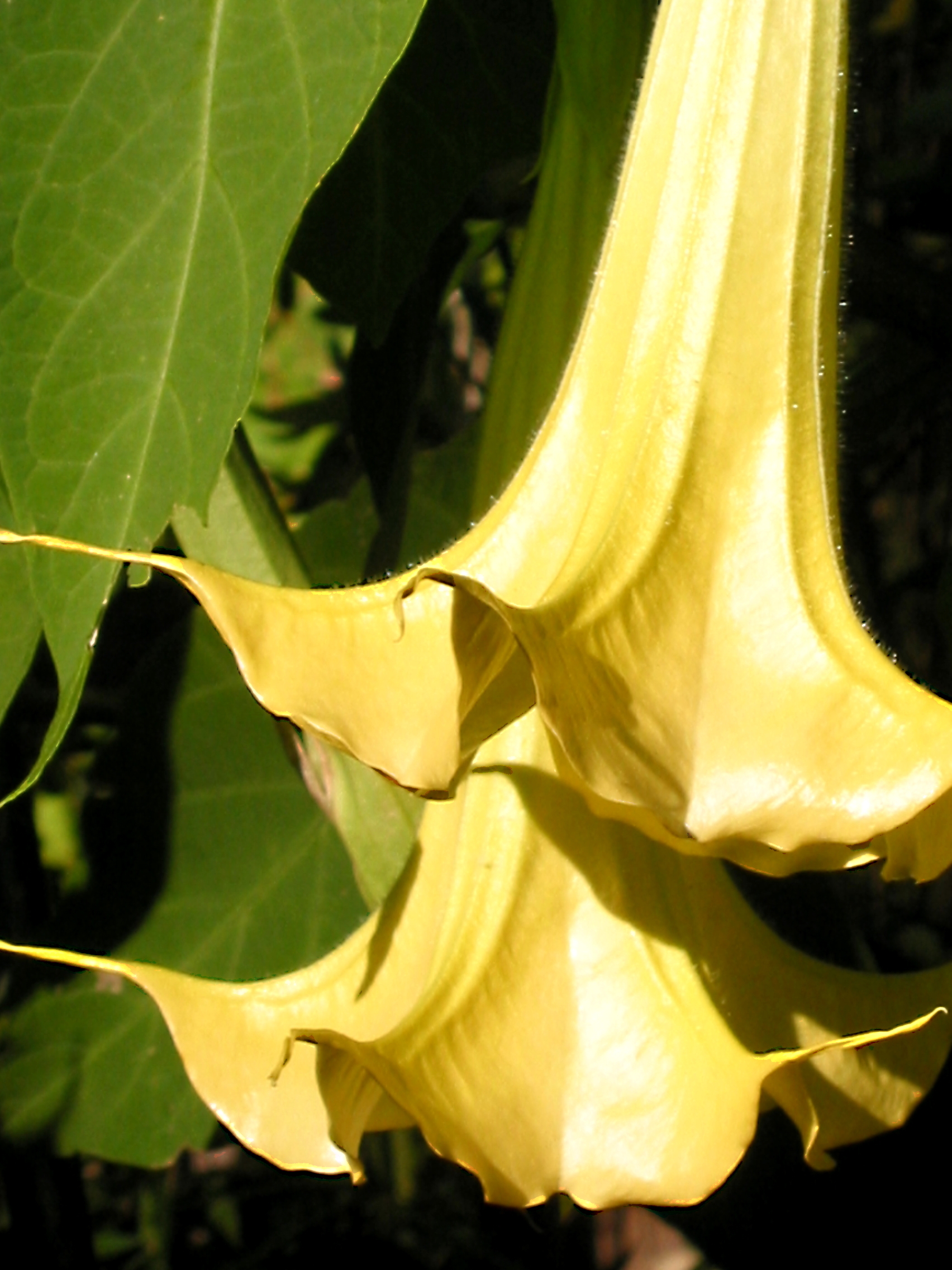 Brugmansia Angel's Trumpet ('Charles Grimaldi' shown here) |
Osmanthus fragrans 'Aurantiacus' Orange tea olive |
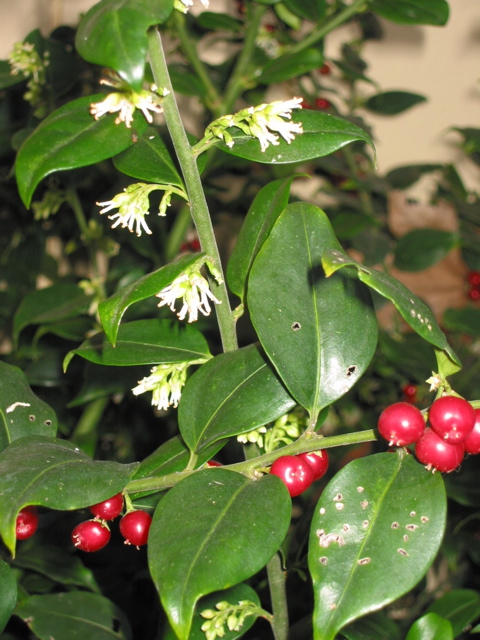 Sarcococca ruscifolia Sweet Victorian box |
 Wisteria species 'Cooke's Purple' shown here |
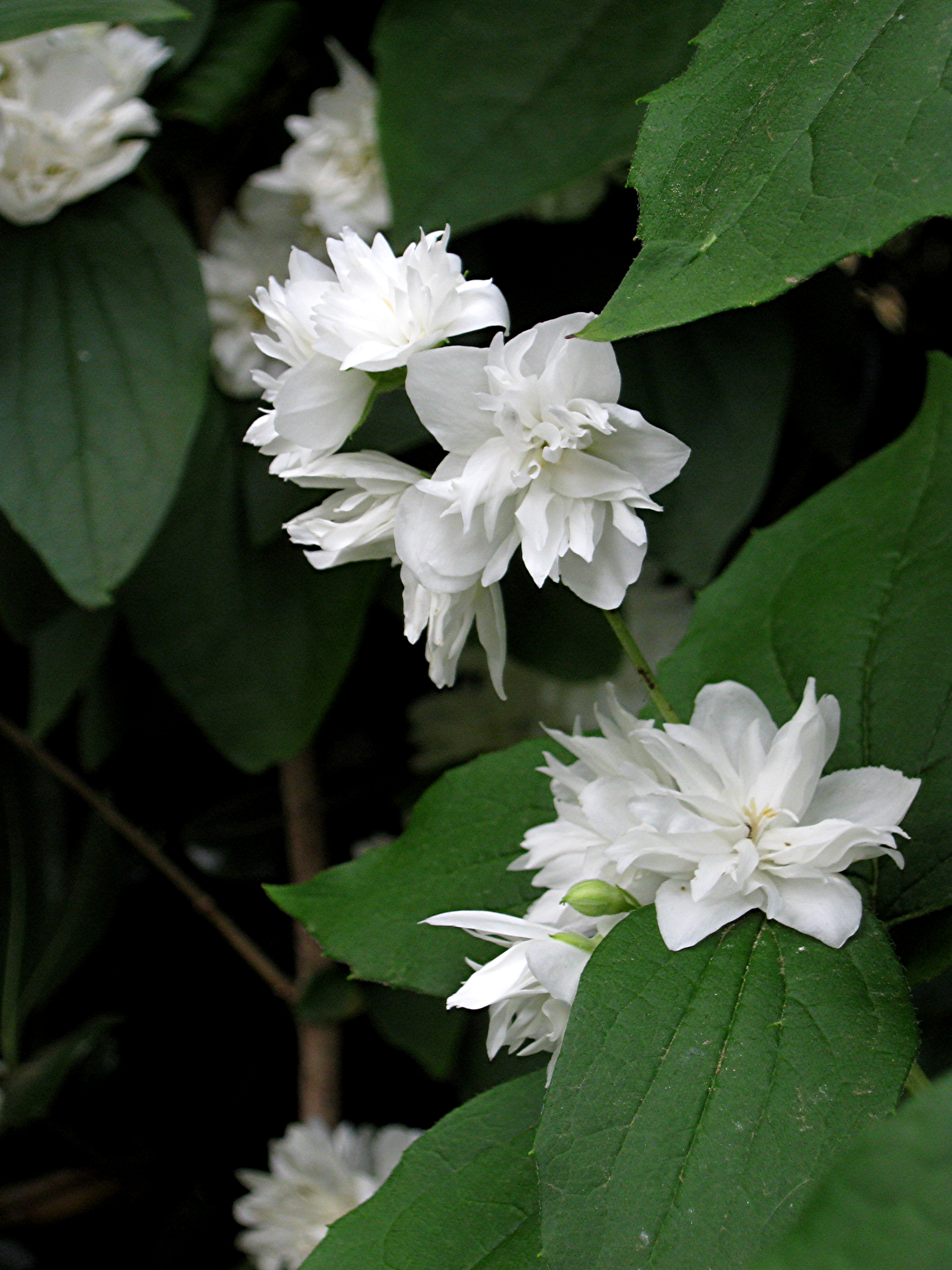 Philadelphus Mock orange |
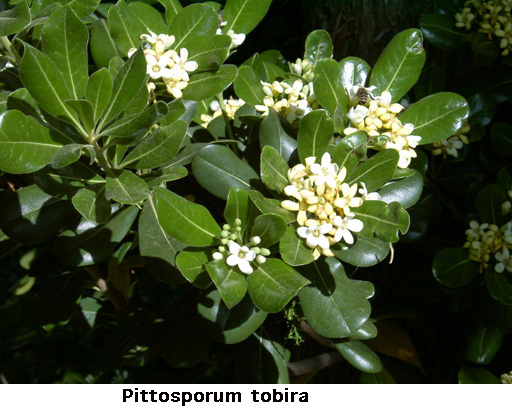 Pittosporum tobira Mock orange |
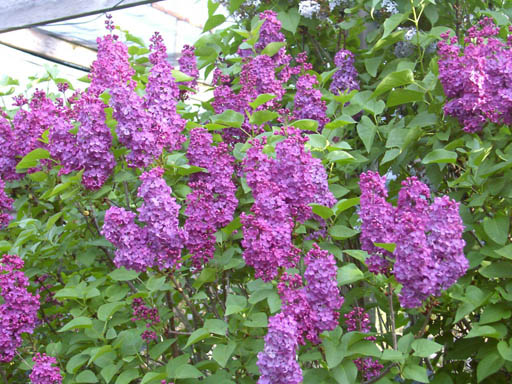 Syringa vulgaris Common lilac |
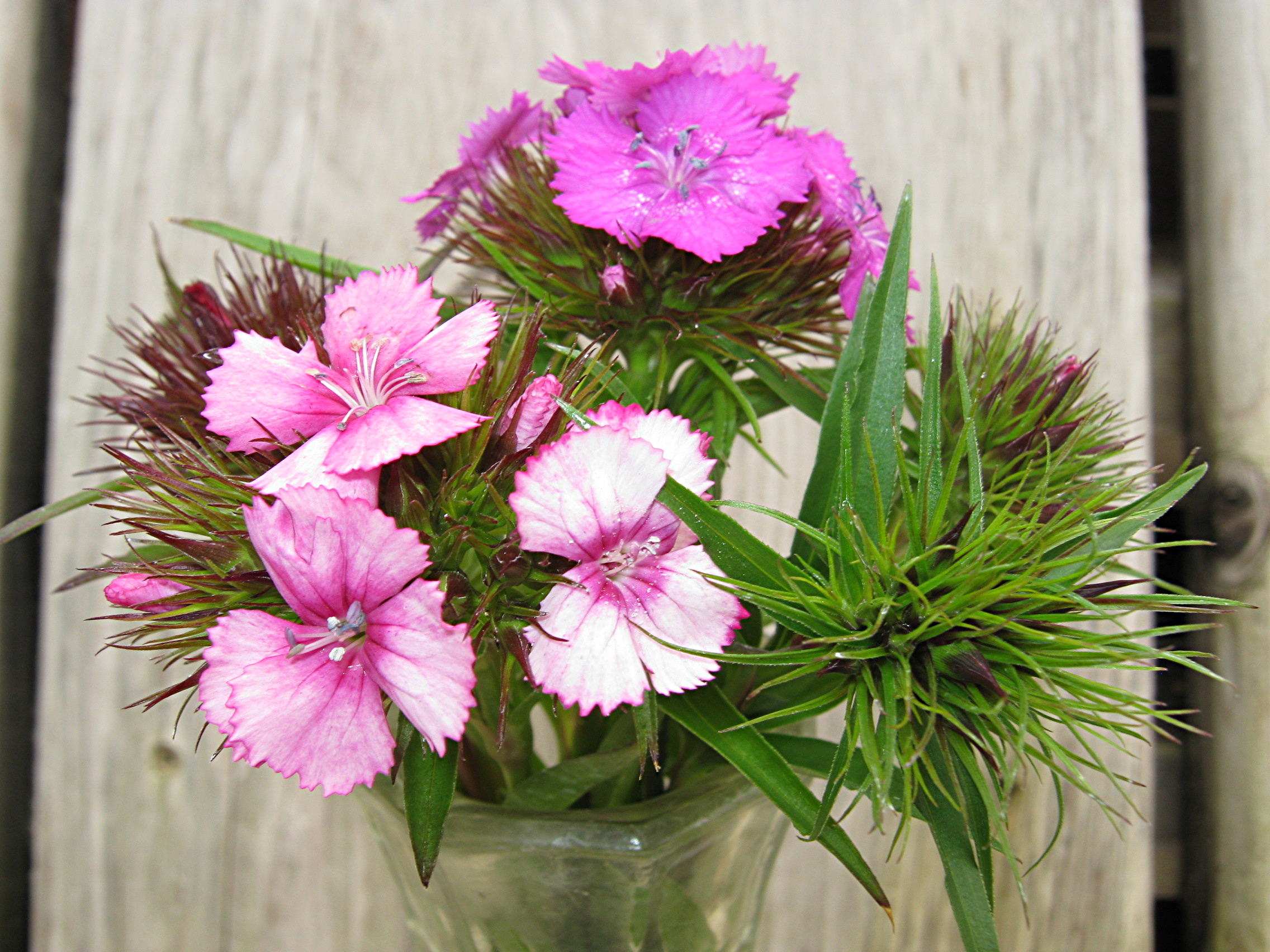 Dianthus barbatus Sweet william |
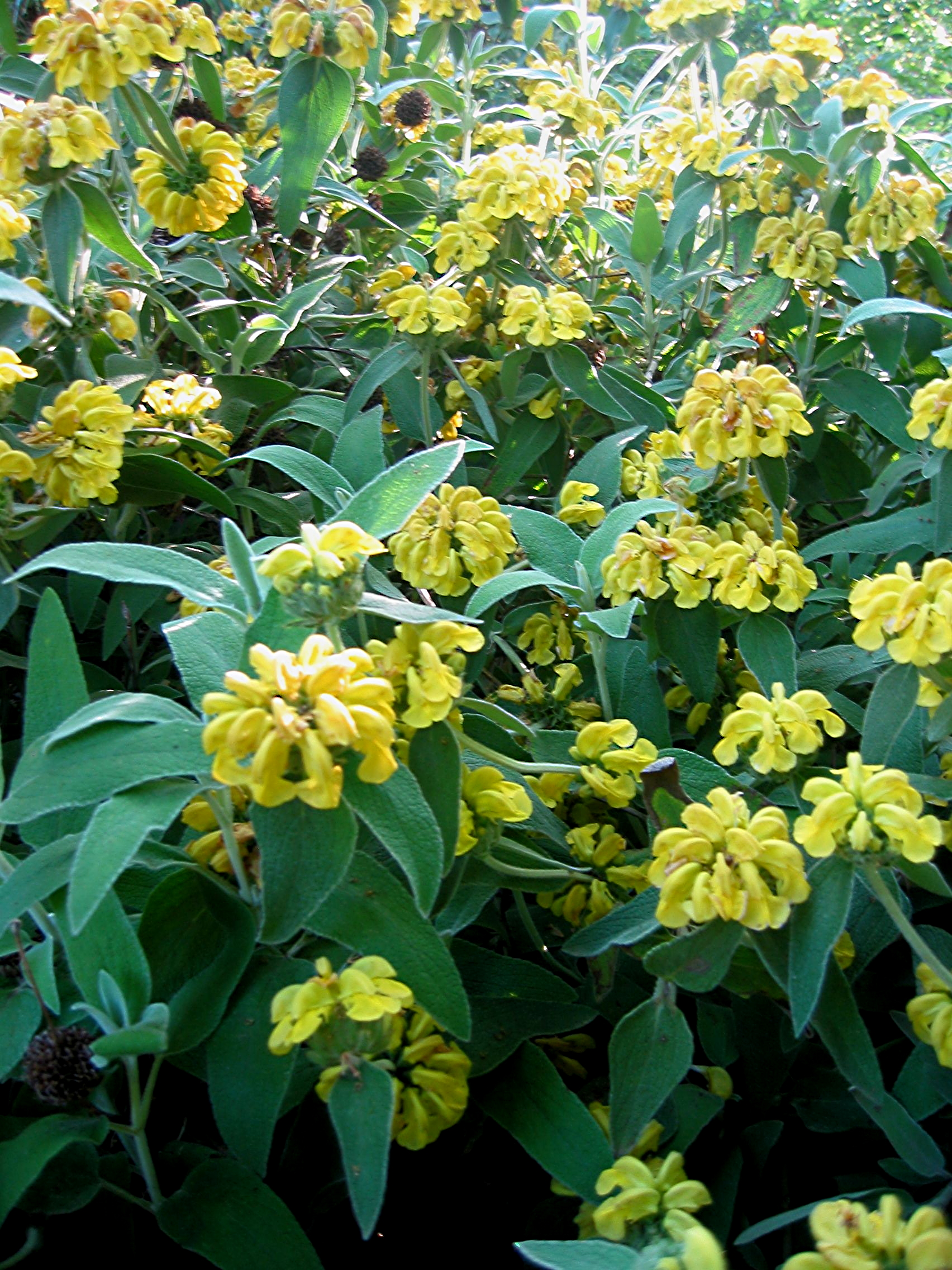 Phlomis fruticosa Jerusalem sage |
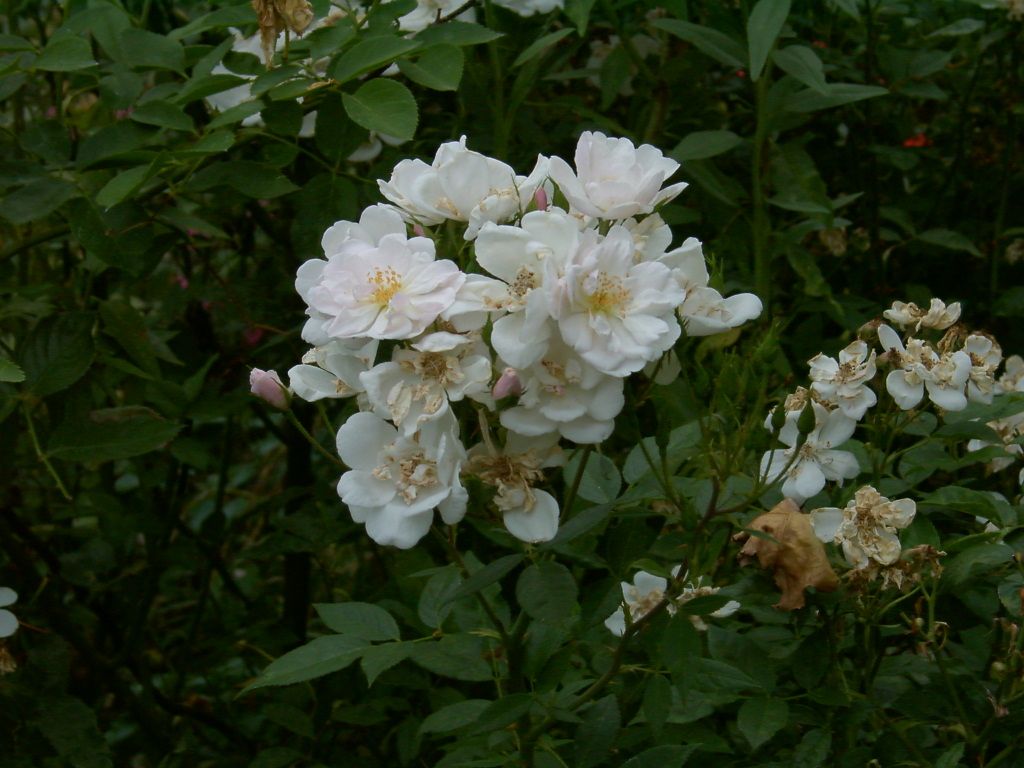 Rosa moschata 'Nastarana' |
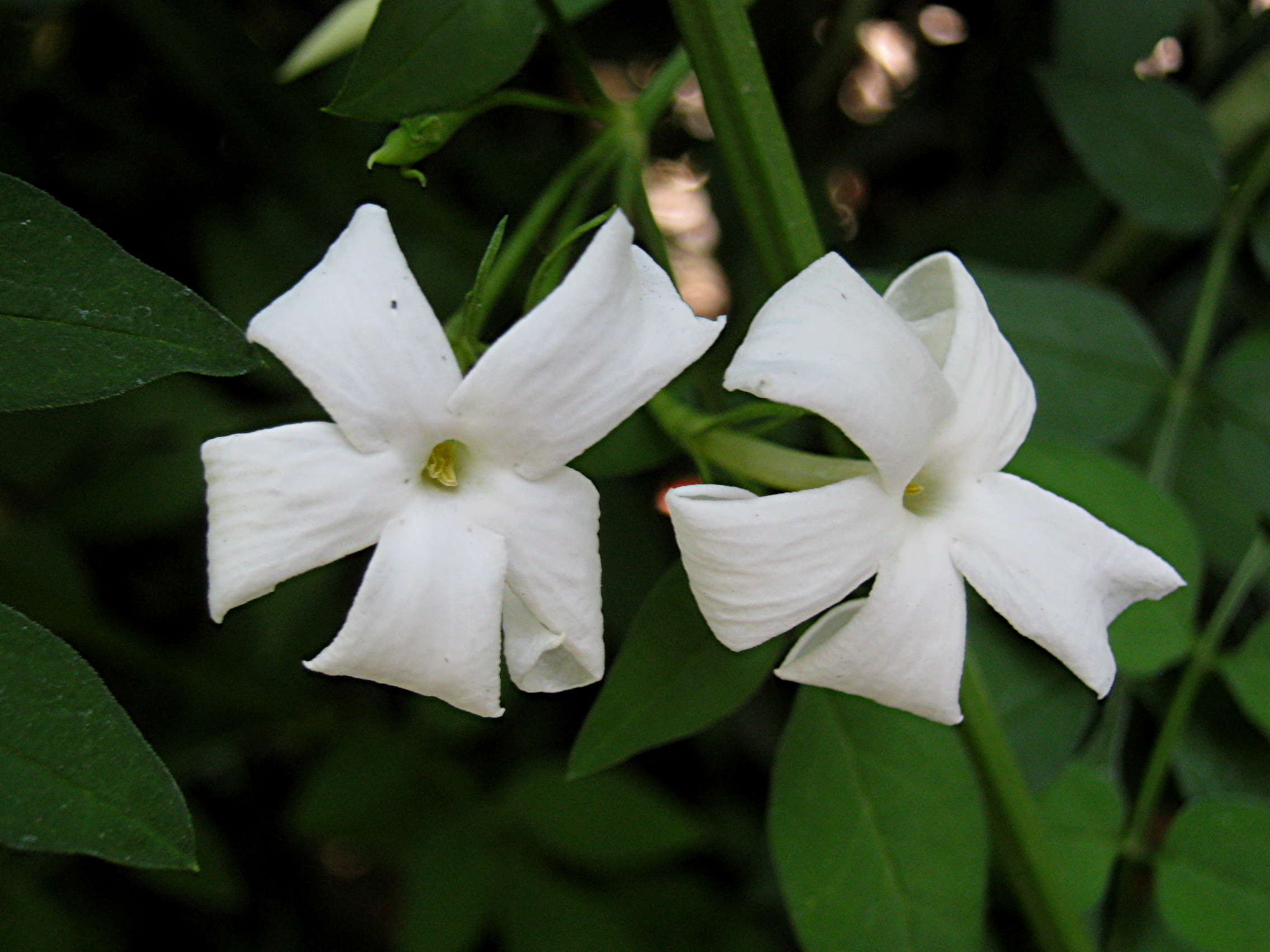 Jasminum officinale Poet's jasmine |
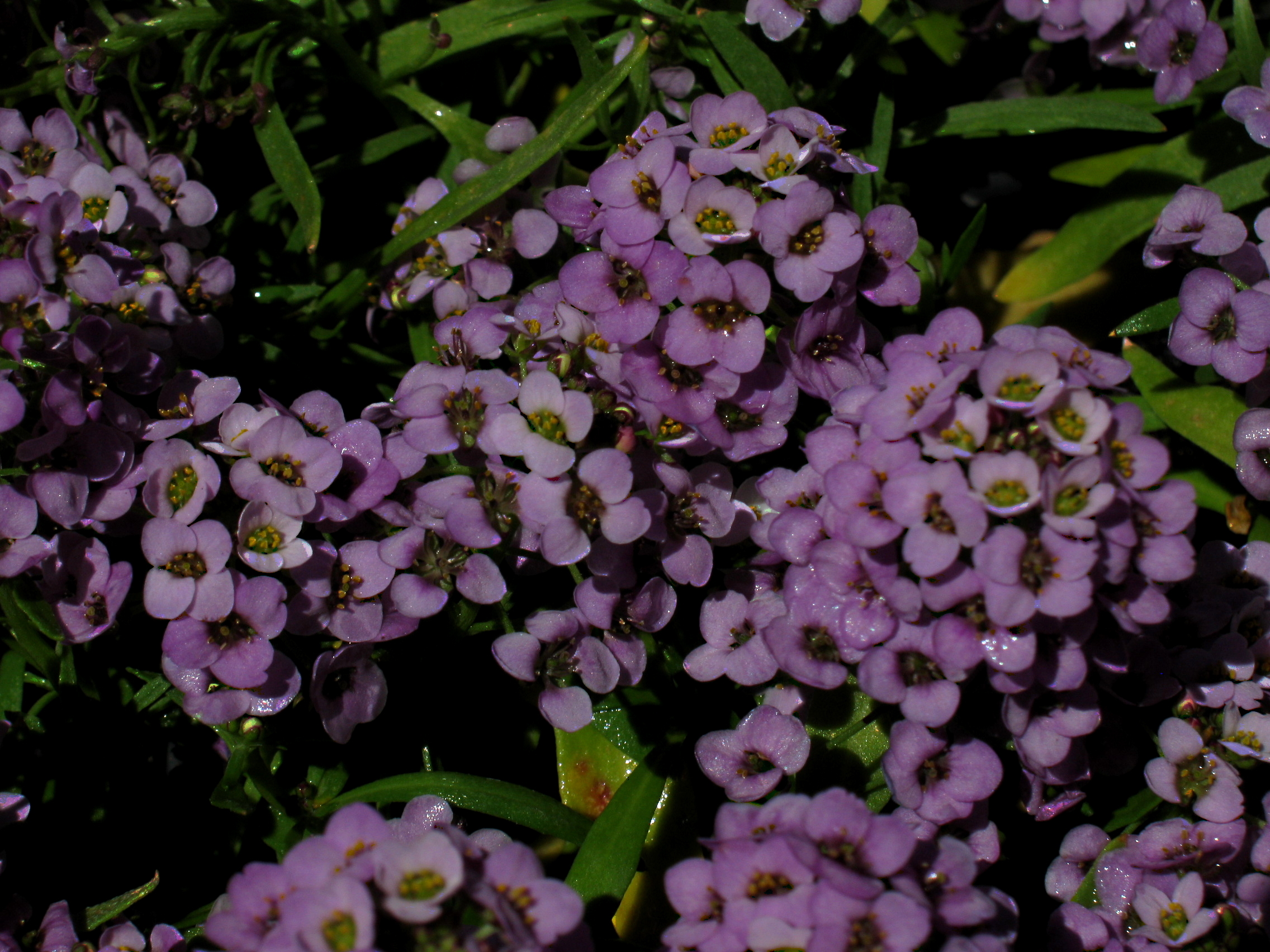 Lobularia maritima Sweet alyssum -- 'Easter Bonnet' shown here |
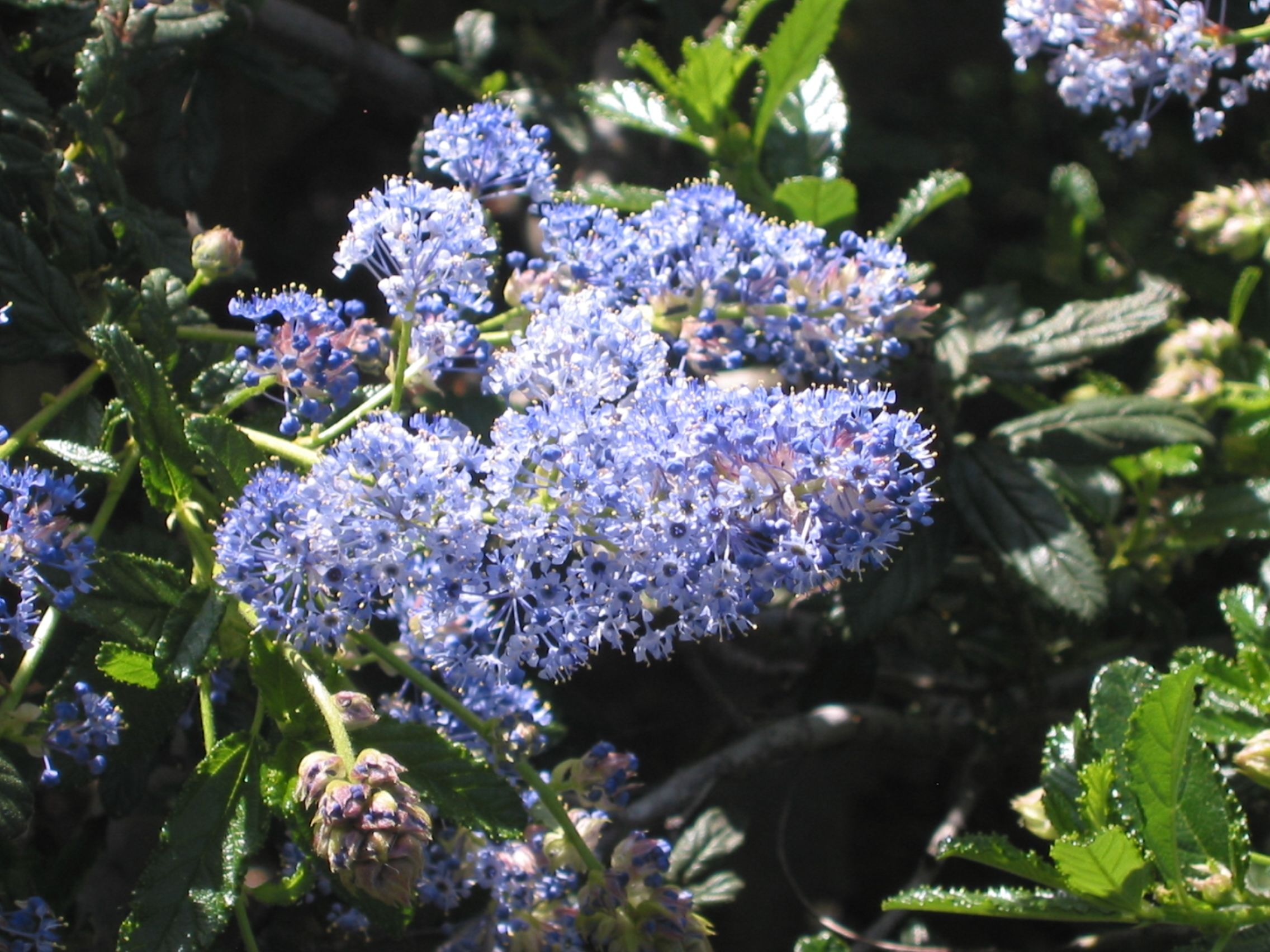 Ceanothus Wild lilac |
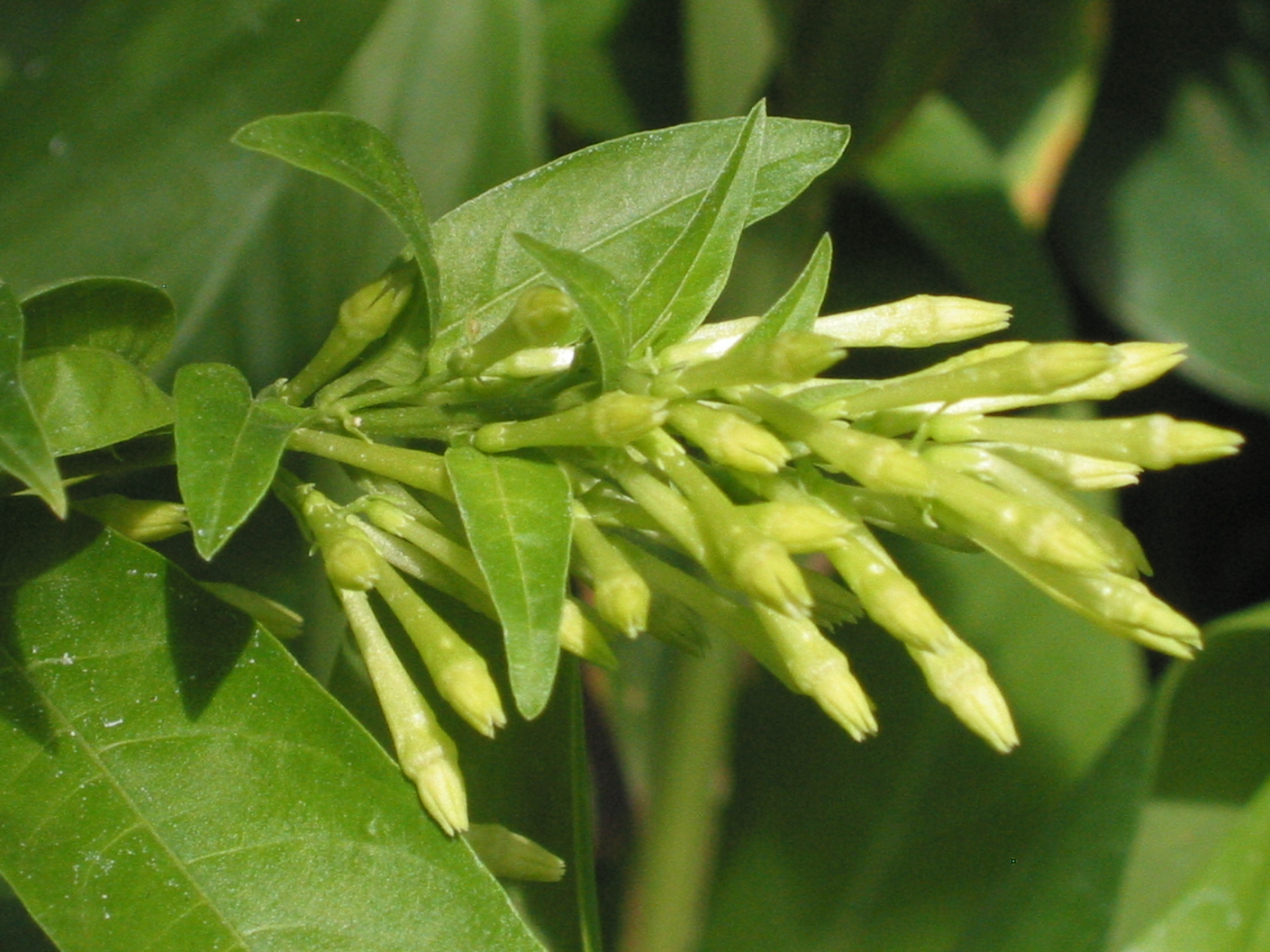 Cestrum nocturnum NIght-blooming jessamine |
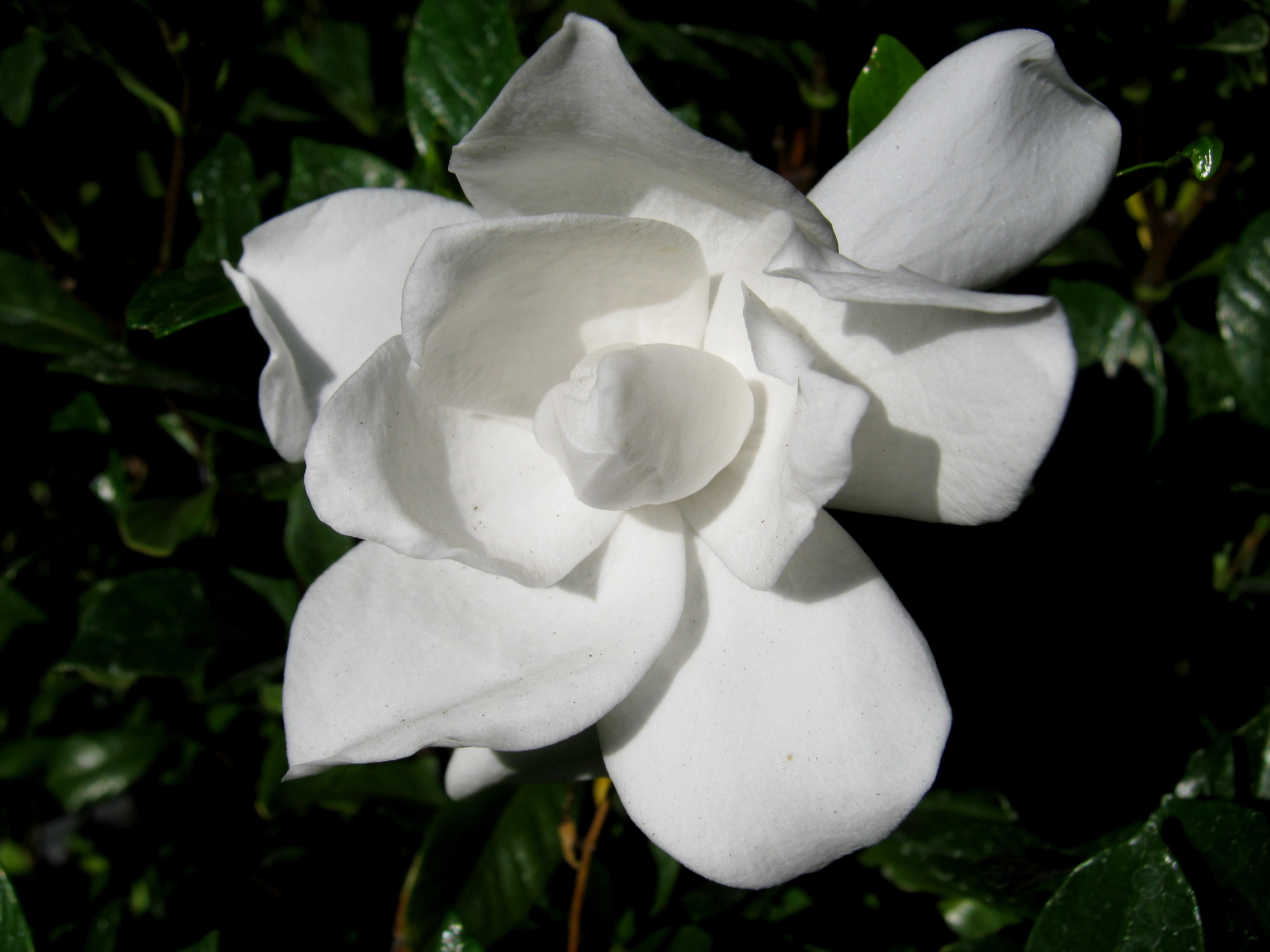 Gardenia jasminoides 'August Beauty' shown here |
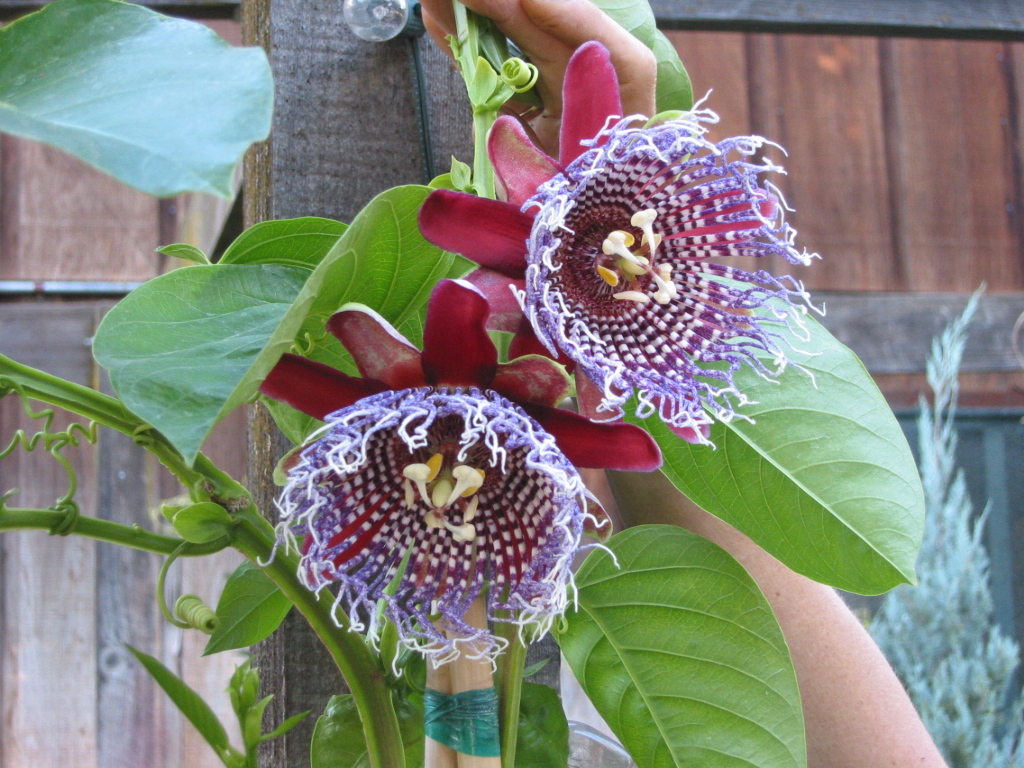 Passiflora Passion flower -- 'Purple Tiger' shown here |
Friday, October 1, 2010
Sir, can you get me a pawpaw?
Do you really want a pawpaw?
Asimina species
Why aren't these common in the nursery trade?
1. You need two trees of different varieties to cross-pollenize.
2. Crushed leaves smell like diesel fuel. Mmmm.
3. Pollinated by carrion flies and beetles, the flowers smell like rotting meat. This alluring idea comes from a web site: “I have hung chicken bones to attract carrion flies to the flowers, and others have used this practice to improve pollination.” Or this from Wikipedia: “Growers of pawpaws sometimes place rotting fruit or roadkill meat near the trees at bloom time to increase the number of pollinators.”
Charming.
4. The fruit flavor is low-acid, often described as like bananas or custard. It ripens quickly, with a soft texture. Each fruit has numerous large seeds, so it is mainly eaten as pulp. If they are pollinated and pollenized correctly, yields are high. Imagine large amounts of custard-like fruit with very short shelf life all ripening at once.
5. The trees are tap-rooted and the roots are fragile, so they aren’t common in the nursery trade; trees with those characteristics have notoriously high failure rates.
So no, I probably can't get you a pawpaw. Perhaps the great folks at ForestFarm in Oregon can help you out:
http://www.forestfarm.com/product.php?id=635
Asimina species
Why aren't these common in the nursery trade?
1. You need two trees of different varieties to cross-pollenize.
2. Crushed leaves smell like diesel fuel. Mmmm.
3. Pollinated by carrion flies and beetles, the flowers smell like rotting meat. This alluring idea comes from a web site: “I have hung chicken bones to attract carrion flies to the flowers, and others have used this practice to improve pollination.” Or this from Wikipedia: “Growers of pawpaws sometimes place rotting fruit or roadkill meat near the trees at bloom time to increase the number of pollinators.”
Charming.
4. The fruit flavor is low-acid, often described as like bananas or custard. It ripens quickly, with a soft texture. Each fruit has numerous large seeds, so it is mainly eaten as pulp. If they are pollinated and pollenized correctly, yields are high. Imagine large amounts of custard-like fruit with very short shelf life all ripening at once.
5. The trees are tap-rooted and the roots are fragile, so they aren’t common in the nursery trade; trees with those characteristics have notoriously high failure rates.
So no, I probably can't get you a pawpaw. Perhaps the great folks at ForestFarm in Oregon can help you out:
http://www.forestfarm.com/product.php?id=635
Subscribe to:
Posts (Atom)
