
Happy to see that John Lichter's Tree Associates has gone to a blog format. John and his associates are very knowledgeable about trees. This should be one to bookmark!
Tree Associates
Friday, December 9, 2011

Thursday, December 8, 2011
Do you have an Android?
Don,
sorry for the unsolicited mail but I noticed an article on your blog today about frost and wanted to see if there was any chance you would be willing to mention an app I have written for android mobile phones. I realise it's a bit cheeky asking for free advertising but as you'll see, I put the app on for only 99p and will never make a fortune from it...but would like to see it become a little more popular given the number of hours I've put into it ! I originally developed it purely for myself, after losing a lot of stuff to a late frost in the UK, then realised others might find it useful so published it on the android market to see what happened...it's been quite interesting to see who downloads it (I have about 120 users now and many aren't gardeners at all !)
It's the only app on android that will notify you based on the weather forecast, if the temperature is due to drop below the temperature you set (I didn't need yet another weather app...I just wanted something that warned me when there was going to be a low temperature...rather than me have to remember to check the forecast every day).
Many thanks for taking the time to read this, and any feedback or suggestions you might have are most welcome.
many thanks,
Antony Cook
ColdSnap! Frost Alarm
sorry for the unsolicited mail but I noticed an article on your blog today about frost and wanted to see if there was any chance you would be willing to mention an app I have written for android mobile phones. I realise it's a bit cheeky asking for free advertising but as you'll see, I put the app on for only 99p and will never make a fortune from it...but would like to see it become a little more popular given the number of hours I've put into it ! I originally developed it purely for myself, after losing a lot of stuff to a late frost in the UK, then realised others might find it useful so published it on the android market to see what happened...it's been quite interesting to see who downloads it (I have about 120 users now and many aren't gardeners at all !)
It's the only app on android that will notify you based on the weather forecast, if the temperature is due to drop below the temperature you set (I didn't need yet another weather app...I just wanted something that warned me when there was going to be a low temperature...rather than me have to remember to check the forecast every day).
Many thanks for taking the time to read this, and any feedback or suggestions you might have are most welcome.
many thanks,
Antony Cook
ColdSnap! Frost Alarm
Monday, December 5, 2011
Frost warning? Freeze Warning?
Written for the Davis Enterprise, November 24, 2010
Click on any image for a larger version
"He comes, - he comes, - the Frost Spirit comes!
On the rushing Northern blast ... " John Greenleaf Whittier
On the rushing Northern blast ... " John Greenleaf Whittier
This week marked the first National Weather Service frost warning of the season. Our main frost season typically runs from Thanksgiving through Valentine's Day. There have been frosts after Feb. 14, and occasionally before the last week of November, but those have been infrequent and of little consequence.
What weather conditions lead to a frost warning?
The poem was a bit of hyperbole on Whittier's part: frost doesn't "rush" in, it forms under still, clear skies. But he had a point. Frost can occur after a cold air mass, usually a storm, moves through the region. Cloud cover during the day gives way to clear skies in the early evening. As heat is lost to the sky, the surfaces cool rapidly. When the air temperature gets to the dew point, fog forms. When surface temperatures drop below freezing, frost forms. [Note that the air temperature you measure or see online may still be above freezing; it is the surface temperature that matters.]
When the surface reaches 32 degrees, the layer of water vapor molecules in contact with that surface freezes, and then the layer above that, and so on. Frost doesn't fall from the air, it freezes directly on a surface. Some surfaces cool faster than others. The metal on your car may show frost by midnight; bare soil by dawn, while grass might not even reach freezing that same morning. It all has to do with how efficiently the particular surface conducts heat.
What would prevent the frost?
"The Frost performs its secret ministry,
Unhelped by any wind." - Coleridge
Unhelped by any wind." - Coleridge
Clouds and fog prevent frost by trapping the outbound heat. Light winds mix the warmer air from above back down to ground level. This is the principle behind the giant fans you see on the edges of vineyards in Napa Valley.
What's the potential for harm in the garden?
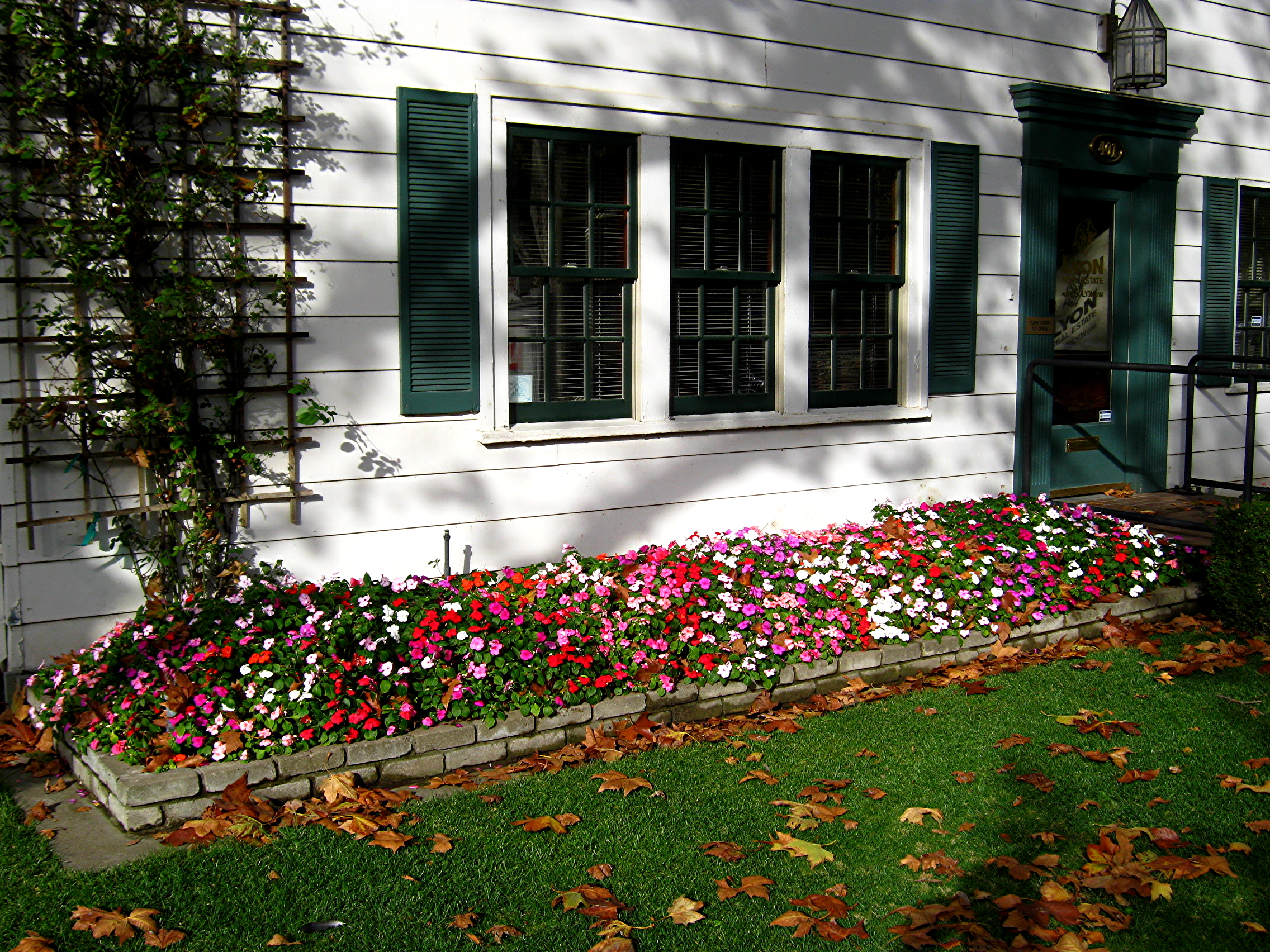
Leaves lose heat to the sky! Damage to a plant depends on the structure and contents of those leaves. Soft, succulent plants such as Impatiens turn to mush as the cells rupture. Hardy plants contain sugars and other chemicals that act as natural antifreeze.
A frost is not a freeze.
First, don't panic. If a plant is considered hardy here, damage will be cosmetic. The leaves may look ugly, but the plant will survive. It is a freeze that we are concerned about: a period of colder temperatures when a very cold air mass moves over the region.
Our biggest risk is mid-December to mid-January. Temperatures below the mid-20's are unusual here and spell trouble for many plants. On December 23 1990 we reached 16 degrees. The morning of January 14 2007 got to 20 degrees.
Freeze damage is a matter of how cold we get, for how long. That morning in 1990 was the start of a ten-day episode, with each successive day causing further tissue damage to leaves, shoots, and eventually the woody parts of plants.
Which plants are we going to lose on a frosty night?
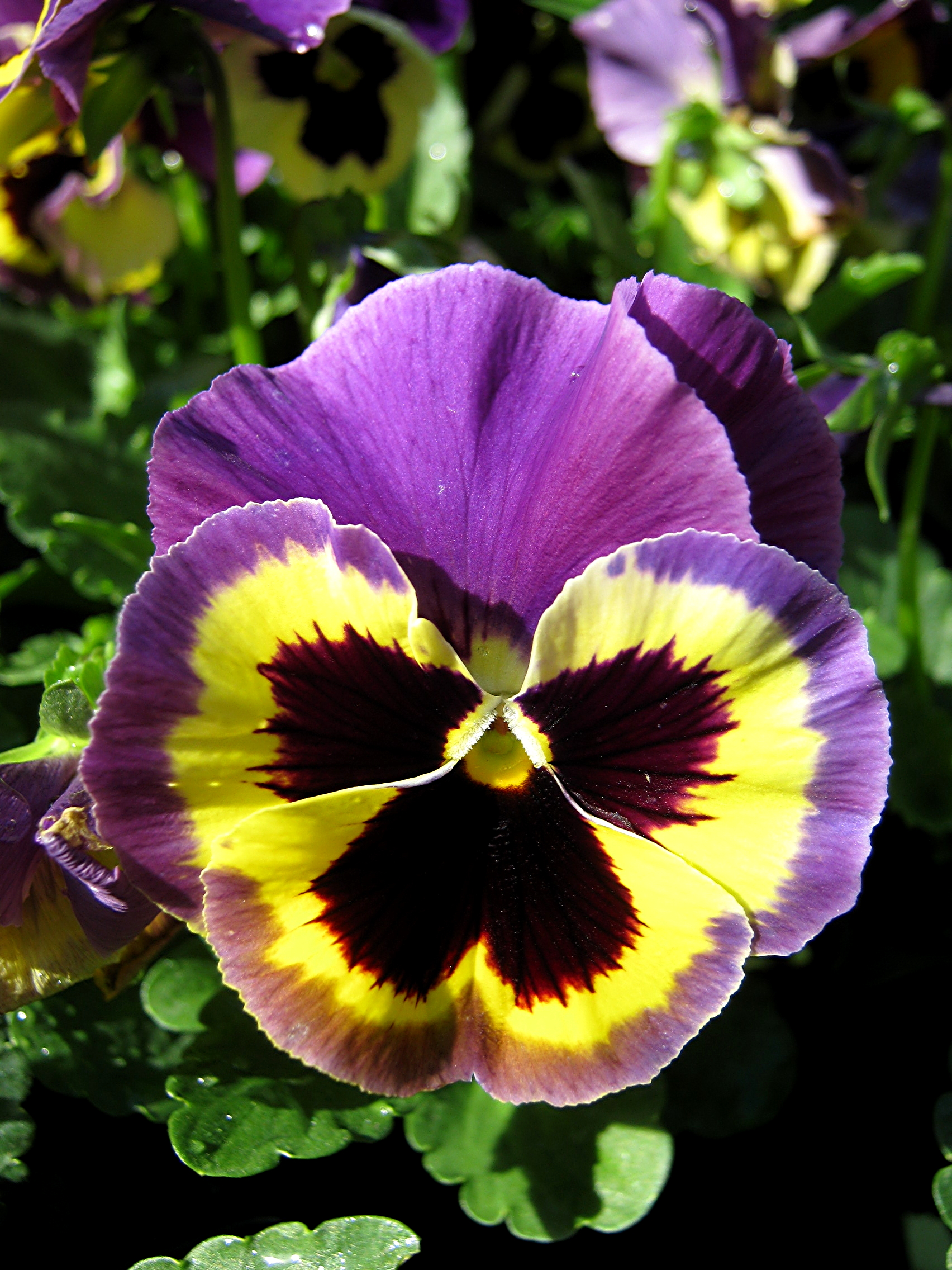
Pansy 'Delta Premium' -- no need for protection!
Which plants should we protect from frost?
Some succulents such as jade plant, some aloes, and kalanchoes.
Tender subtropicals such as hibiscus and mandevilla.
Semi-tender subtropicals such as bougainvillea, Guatemalan avocado, Mexican lime, young lemon and citron trees.
Which plants should we protect from a freeze?
Older lemons, other young citrus trees, Mexican avocado, geranium (Pelargonium). Blossoms of Lilac vine (Hardenbergia), which bloom in late winter, can be saved by covering the plants.
As temperatures drop further we may get concerned about some of the hardier citrus. Tangeloes, grapefruit, navel and Valencia oranges can be damaged in the mid-20's.
There are many subtropical plants I don't worry about. Brugmansia, lantana, and passionflower may defoliate, or be partially killed, but will recover. Once you get used to the winter appearance of these semi-tender plants, you'll worry less. Just think of them as deciduous. Leave them alone: wait until new growth begins in spring before you cut off the frost-burnt parts.
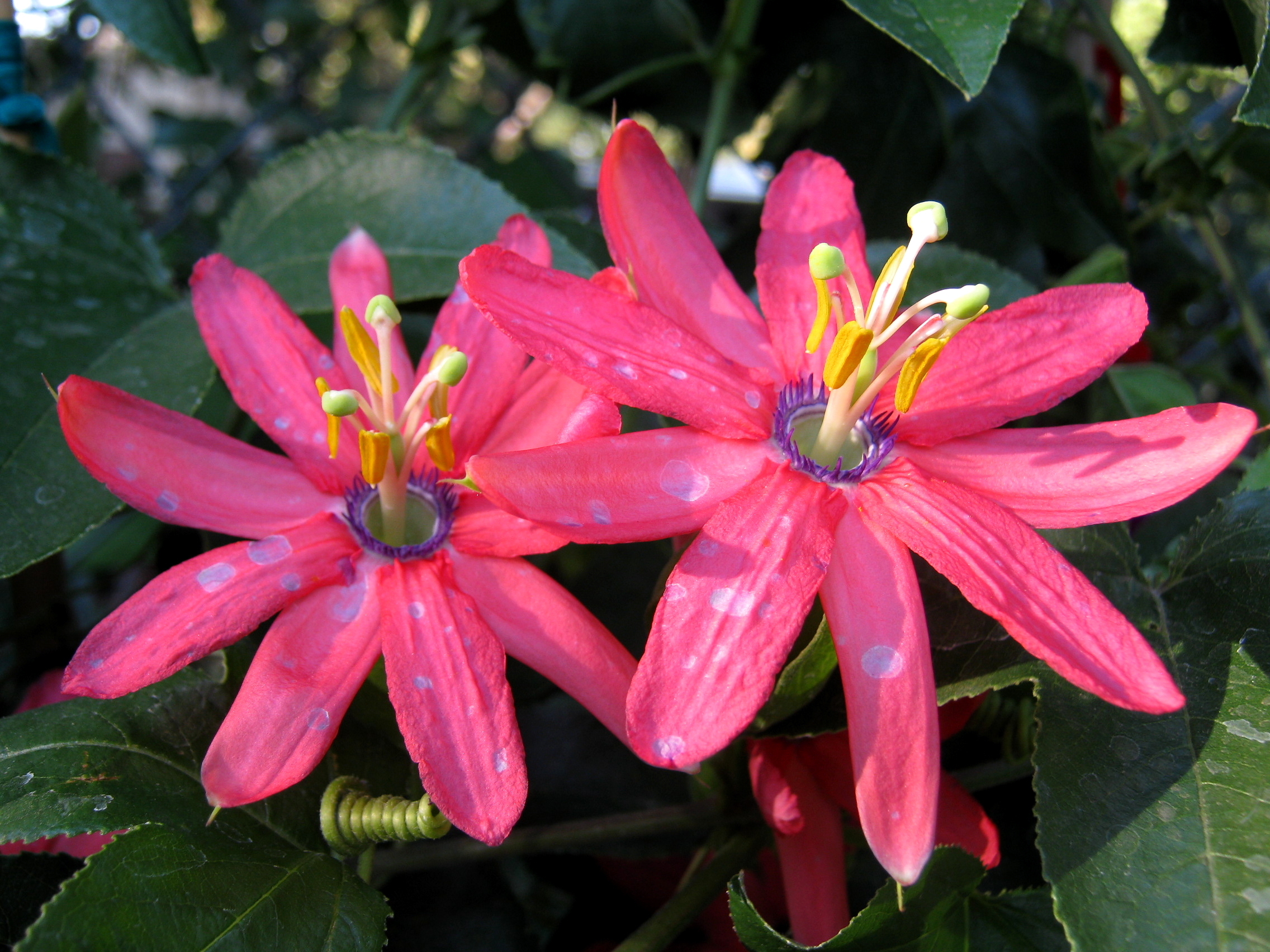
Passiflora 'Coral Glow'
We grow many subtropical plants in Northern California. Some are badly harmed by freezing weather, while others (such as the Coral Glow Passionflower shown here) re-sprout readily in spring. Temperatures in the upper 20's will damage the leaves and cause some die-back, but the plants will recover. Lower temperatures may completely kill the tops. Damage can be reduced by taking simple measures to trap or provide heat to the plant.
Some citrus are much hardier than lemons and limes. My mandarins and kumquats have been through major freezes with minimal damage. Fruit of Satsuma mandarins may be harmed at very low temperatures, so you might harvest the fruit if extreme cold is predicted. But citrus fruit won't ever get any sweeter once you pick it, so stripping the tree is a last resort.
There are two main ways to protect plants:
Trap heat.
A plant under an overhang is safe, as the building will keep the heat from escaping to the sky. Frost blankets, which are made of light fabric that allows light in, act to create a mini-greenhouse. Anchored with metal pins, these are the simplest way to provide protection.

Using frost blanket to protect fruit on a mature lemon tree.
Provide heat.
Old-fashioned holiday lights generate enough heat to keep the plant warm. Even a 40-watt bulb on a shop light fixture, attached at the base of the tree (grounded outdoor-rated only!) may be enough for a small tree. Combined with the frost blankets, you can get a few degrees of warmth, enough to keep the local temperature above freezing.
Finally, plants in containers may be damaged by desiccation (cold-induced drying) during freezing weather. Keep your outdoor containers watered during the winter! They won't need it very often: once every week to ten days should be fine if we don't have rain.
Poems:
The Frost Spirit, by John Greenleaf Whittier
Frost At Midnight, by Samuel Coleridge
(Yes, Dr. Hayden, I still read poetry!)
Thursday, November 24, 2011
Choosing shrubs to use less water
Written for the Davis Enterprise, November 25, 2011
Click on any image for a larger version
This month we continue our theme of reducing water use in the landscape. It is estimated that 80% of residential water use goes to yard watering.
Last month's (October 2011) column focused on water use by lawns.
To recap:
* reduce total square footage of grass;
* plant seed of grass species that can use less water, such as fine fescues;
* replace some lawn areas with lower-water ground covers.
This month I'm going to focus on shrubs that make the backbone of the yard, providing privacy, attractive foliage, and seasonal flowers. Aesthetically, it is best to repeat one type, rather than having a hodge-podge of mixed foliage, and then add some of the others for contrast. If you have existing shrubs, interplant some of these listed, do some careful pruning for a couple of years, and then remove the more water-intensive types after the new ones grow up a bit.
What about your existing shrubs?
We see a lot of plants with problems resulting from watering too often, so just by watering correctly you can reduce your water bills and have a healthier landscape. Water slowly, deeply, and infrequently. When we ask about watering schedules, it is common to learn that shrubs are being watered 3 to 4 times a week. That's too often! And they're being watered for ten or fifteen minutes. That's not long enough!
Did you know that many or most of your landscape shrubs could go a week or more between waterings if you irrigate deeply enough each time? Many can go much of the summer on just a few deep irrigations, and some need no summer water at all!
Careful plant selection is another approach to reducing your water bill.
Choose trees, shrubs, and flowering plants that can live with reduced watering.
Here is a list of some shrubs that could be watered as little as once a month once established (which means after the first summer). Some require drought: California natives are sensitive to crown rot if watered too often. The others can be watered more often if necessary. All are evergreen unless noted as deciduous.
* Botanical name: Buddleia davidii
Common name: Butterfly bush
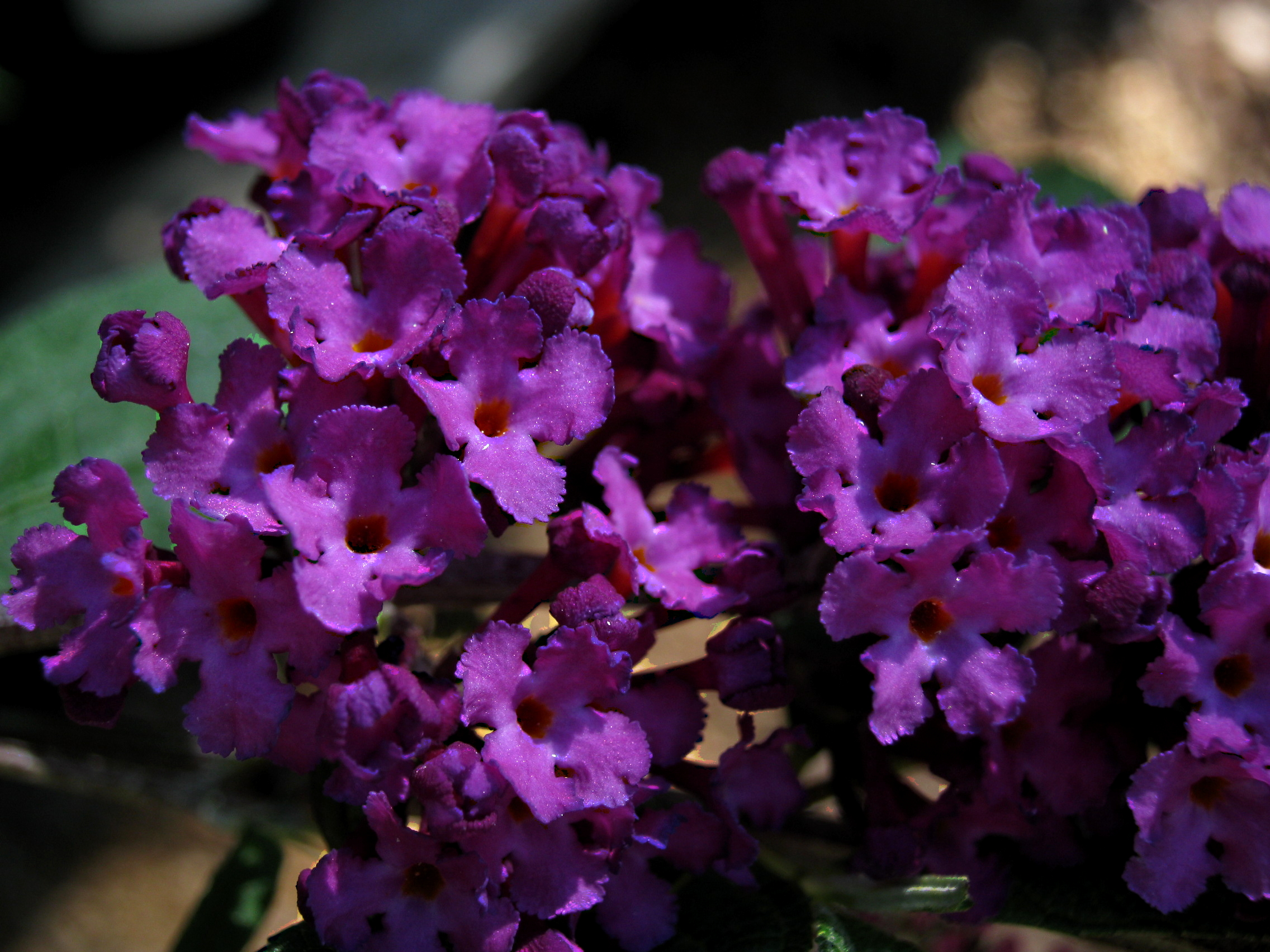
Butterfly bushes love sun, attract butterflies and hummingbirds, and bloom all spring and summer. There are many varieties, ranging from 6 feet to more than ten feet tall, with purple, pink, violet, or white flowers.
* Callistemon citrinus
Bottlebrush
Fast-growing, somewhat open growth habit benefits from pinching and shaping. Showy red flowers, off and on through the year, attract hummingbirds. Prone to iron chlorosis when irrigated.
* Chaenomeles japonica
Flowering quince
The first shrub to bloom in the late winter! Some stay under 3 feet; several varieties grow to 5 - 6 feet or more. Fruit, if any develops, makes unique, aromatic jelly. There are white, pink, orange, and red varieties. Deciduous.
* Dodonea viscosa 'Purpurea'
Purple hopseed bush
Fast-growing quick screen. Bronze foliage turns dark purple, almost maroon, in winter. Fairly open habit, but can be sheared for greater density.
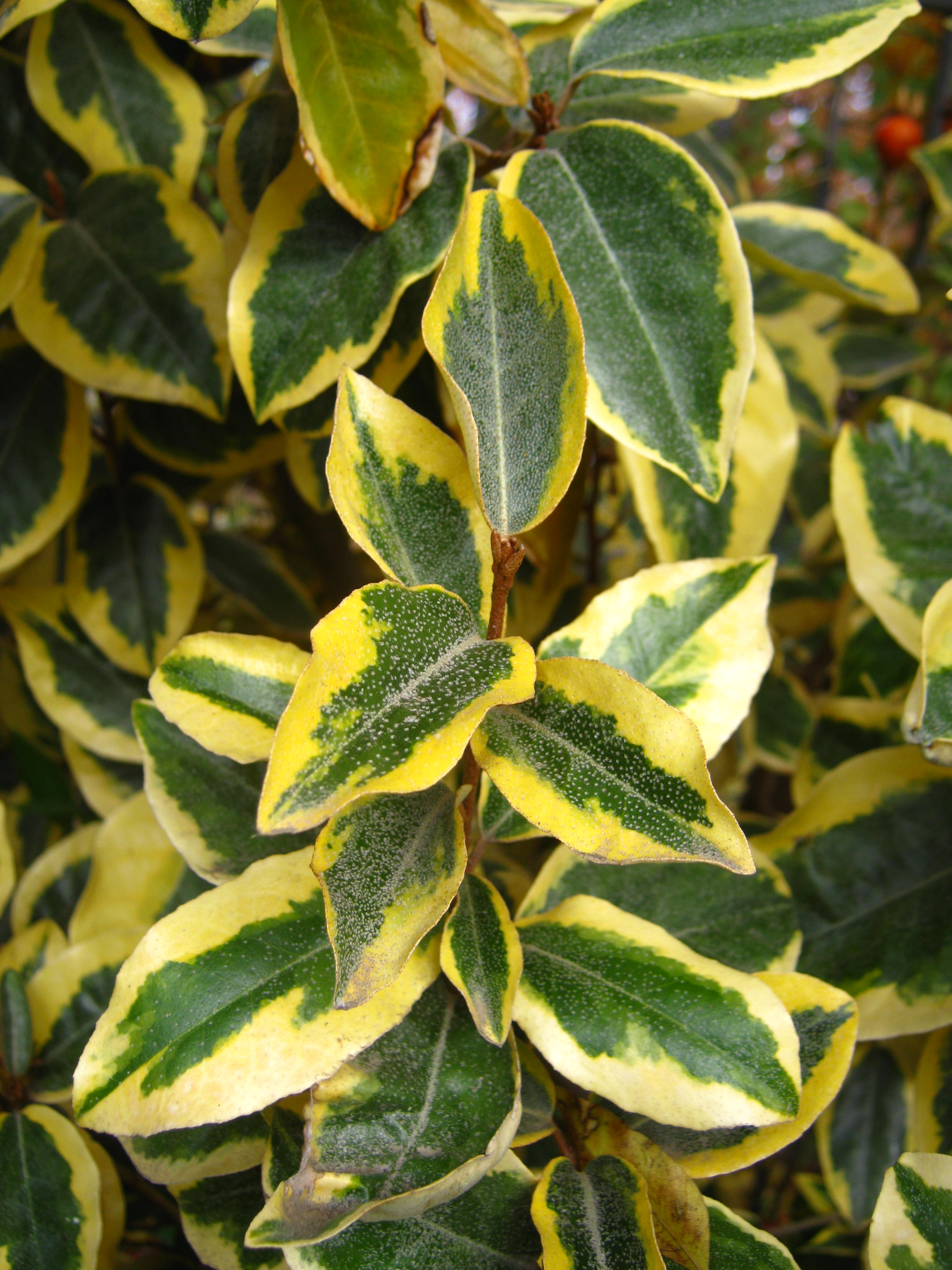
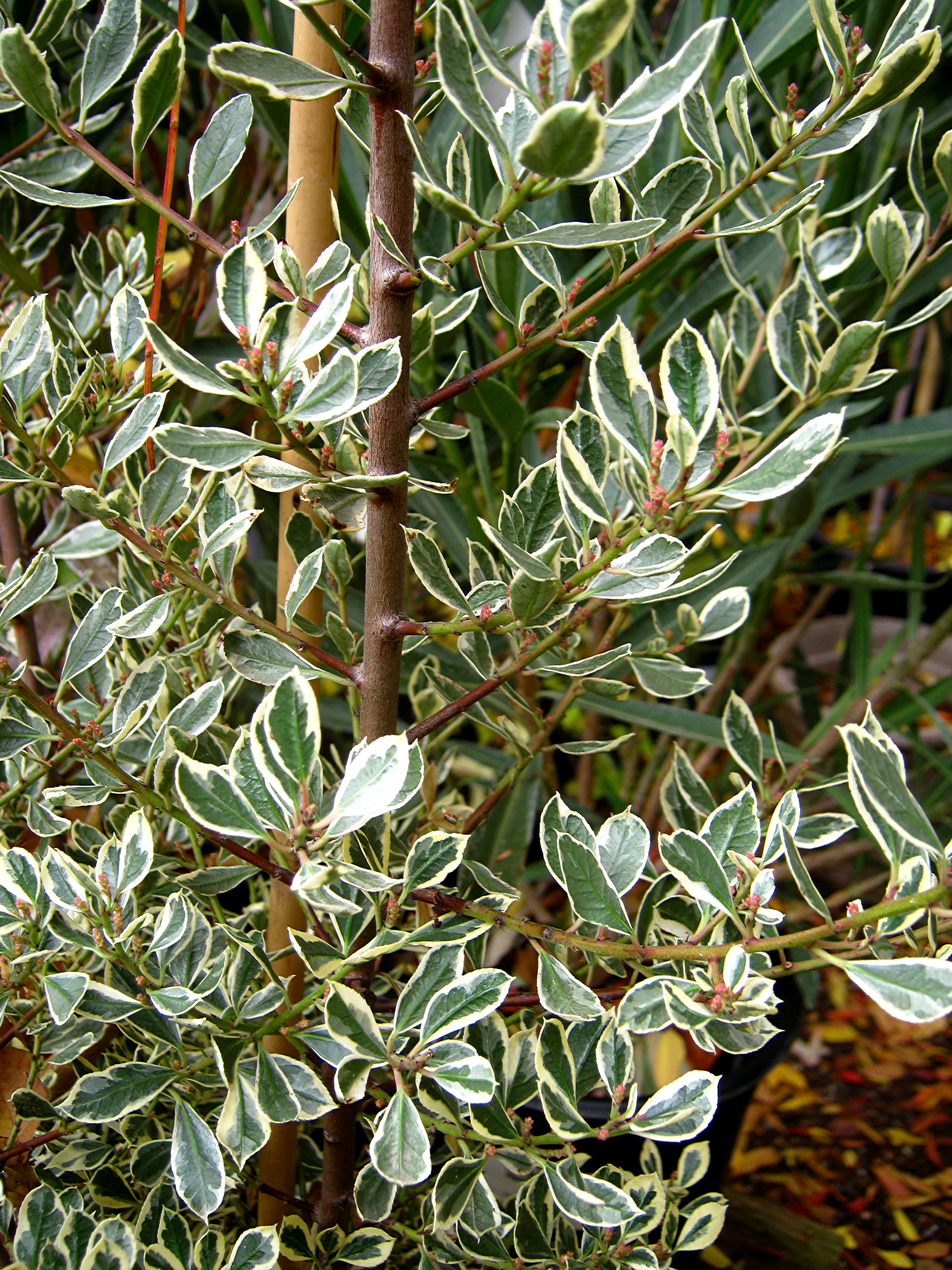
* Eleagnus x ebbingei 'Gilt Edge'
Elaeagnus
Upright growth habit, thornless. Silvery leaves with bright golden margins. Flowers attract beneficial insects; edible fruit attracts songbirds.
* Escallonia rubra
Red escallonia
Big shrub with dark, glossy green leaves and dark red flowers. Leaves have a resinous odor. Flowers attract hummingbirds.
* Garrya elliptica
Coast silktassel
Dark green foliage on a large, dense shrub. Long tassels of flowers in late winter are interesting and attractive. 'James Roof' is a shorter, more compact variety than the species. This California native is best unirrigated.
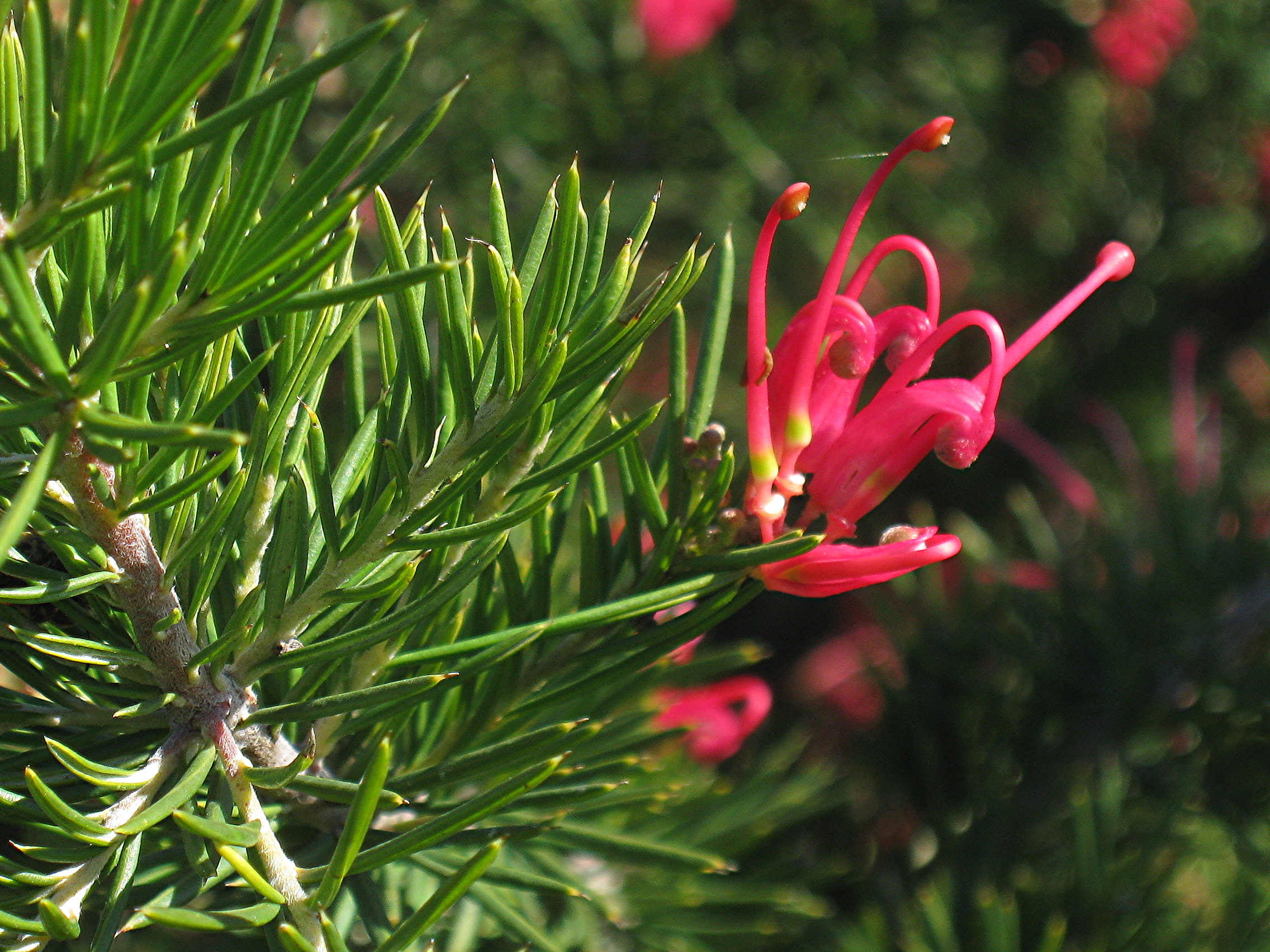
* Grevillea species and varieties
Australian natives that have odd-shaped, showy pink or red flowers over a long season. All attract hummingbirds. There are dozens of varieties; check descriptions for winter hardiness in our area.
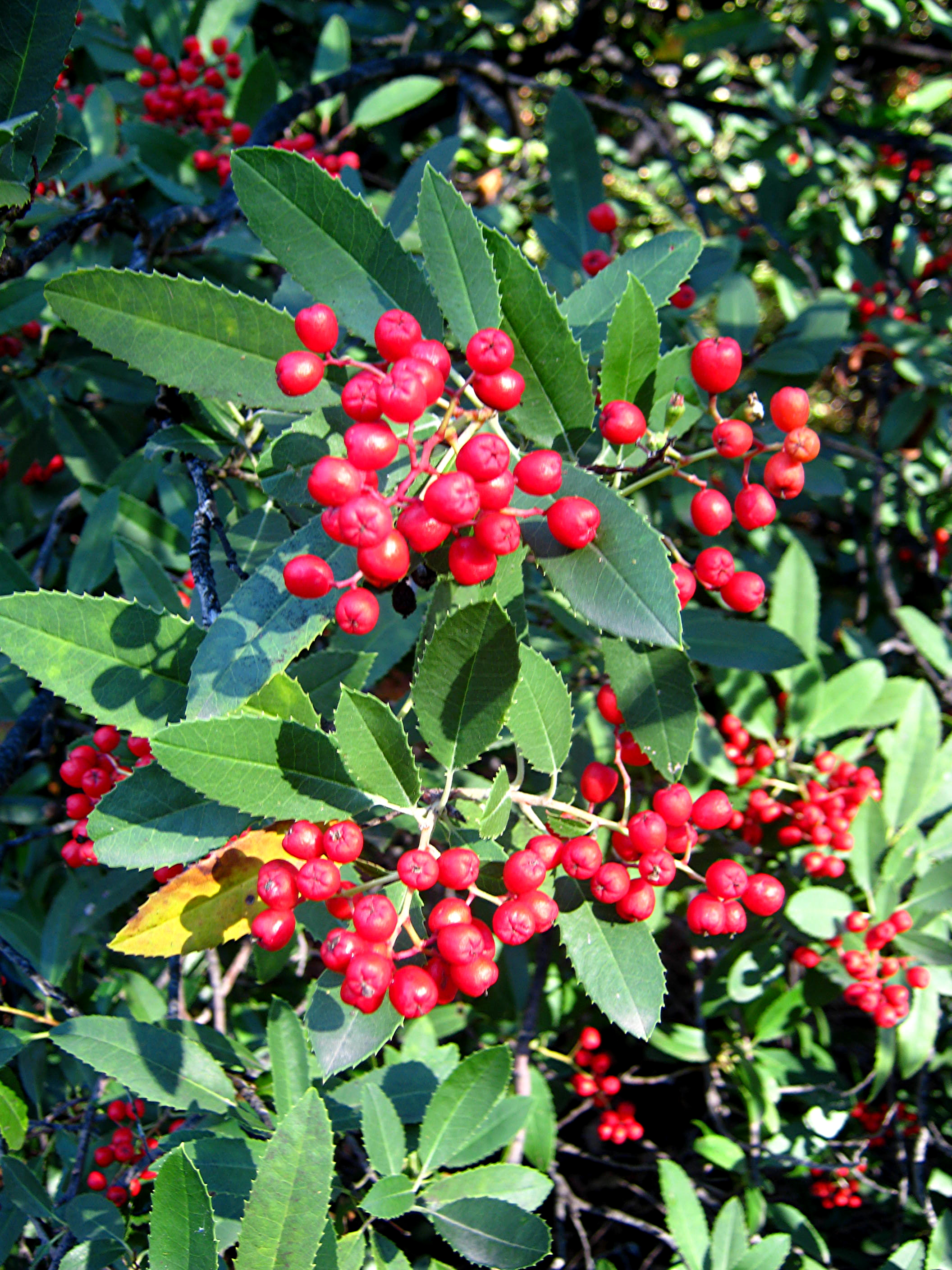
* Heteromeles arbutifolia
Toyon
Grows 2 to 3 feet a year, eventually more than ten feet tall. Flowers are very attractive to beneficial insects. Beautiful shiny red fruit hangs on into winter, attracts birds. There is a yellow-berried variety called Putah Gold, introduced by the Arboretum. This California native is best unirrigated.
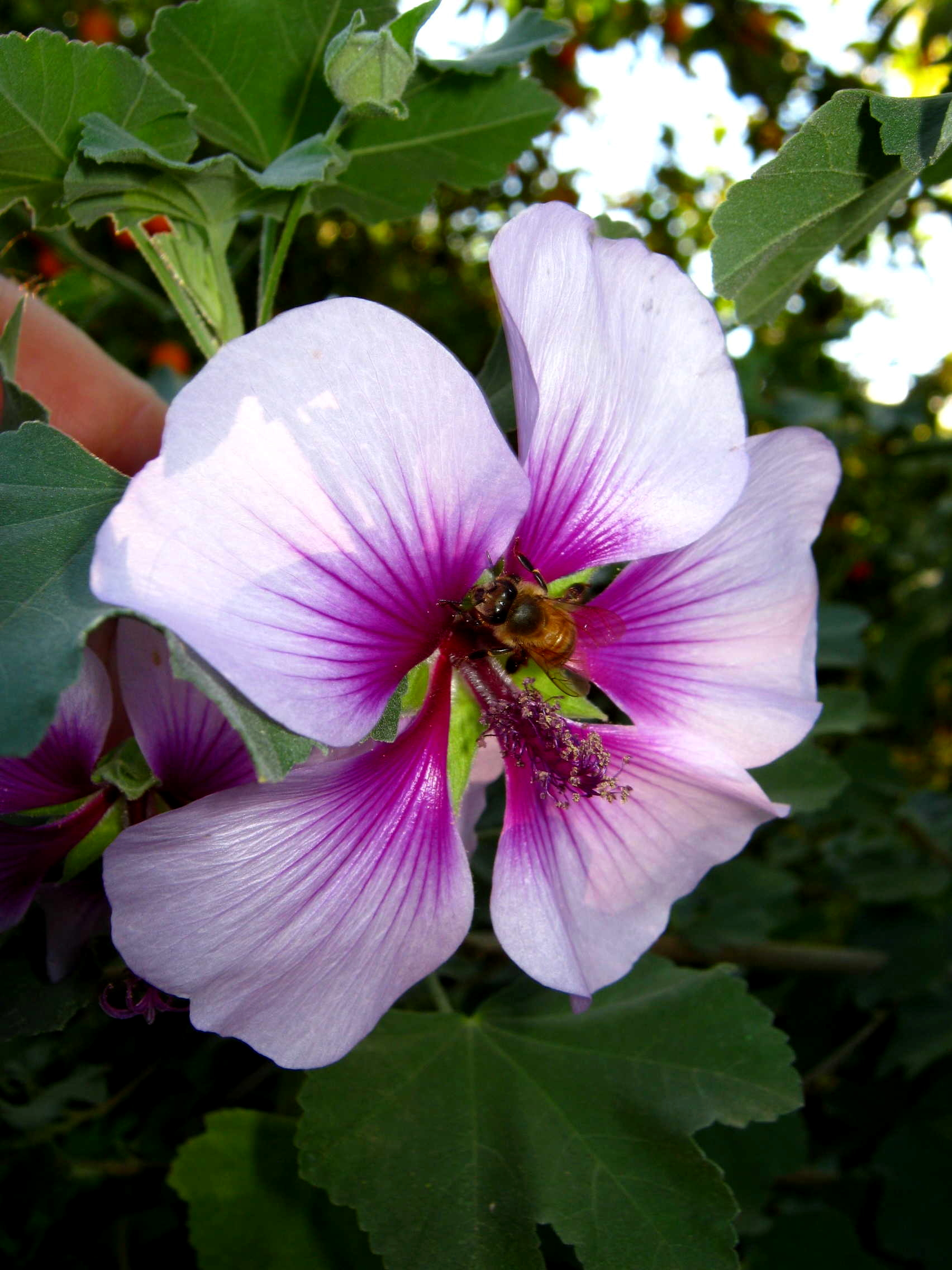
* Lavatera maritima
Tree mallow
Also sold as L. bicolor. Fast grower. Gawky growth habit--shear it occasionally, or prune it back severely in the spring or fall. Flowers are light pink with dark rose veins. Blooms all summer.
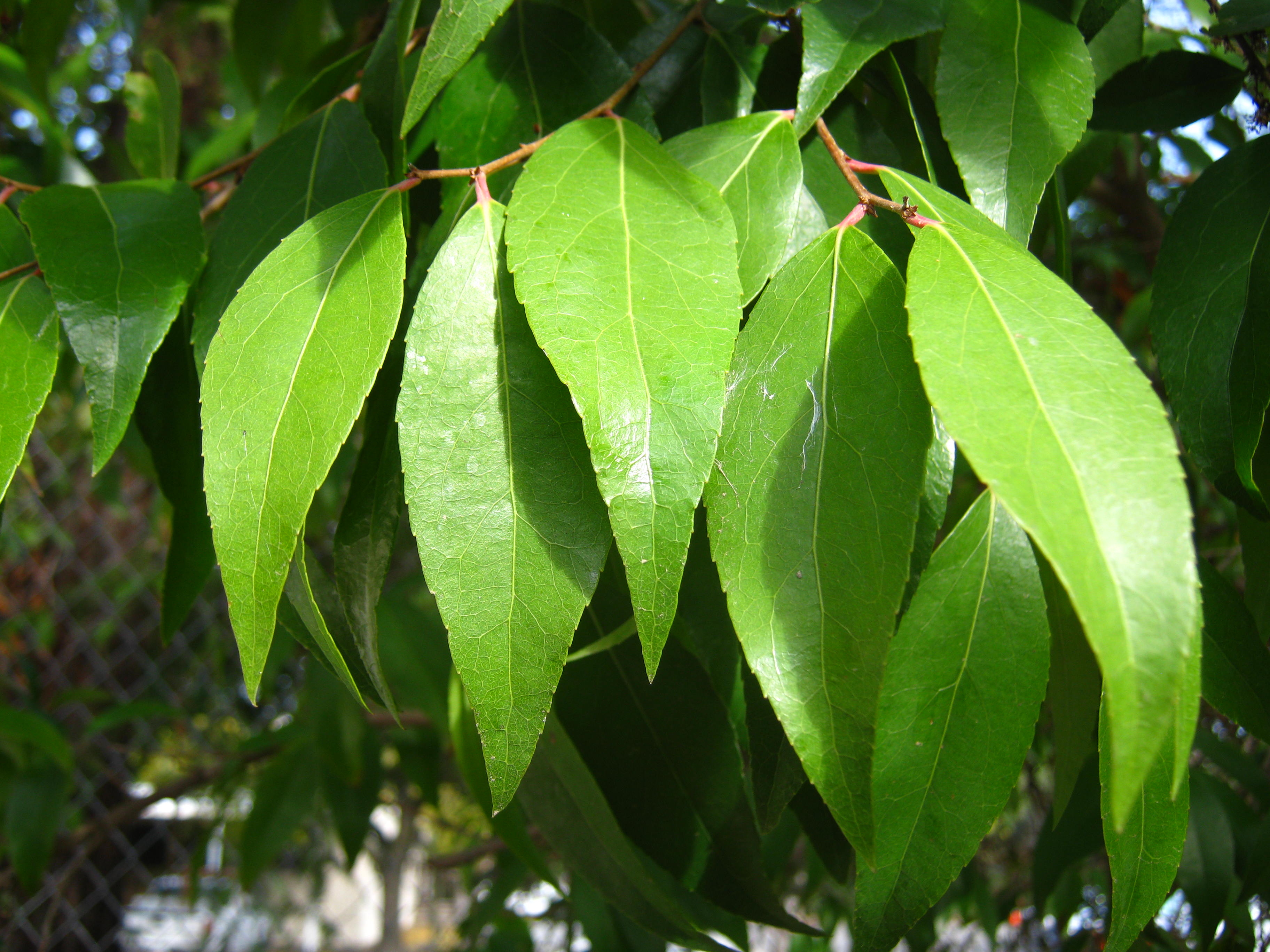
* Rhamnus alaternus
Italian buckthorn
Fast-growing, upright, with dark shiny green, dense foliage. Flowers attract beneficial insects; small berries (you don't see them) attract songbirds. Great for a quick hedge for privacy. Don't overwater. The selected form John Edwards is more resistant to crown rot. Variegata has cream-variegated leaves, is slower growing and smaller.
* Rhamnus californica
Coffeeberry
Slow-growing native cousin of the buckthorn that looks very much like Toyon (Heteromeles), with similar, larger red berries in winter. Variety called Leatherleaf has larger, darker leaves. This California native is best unirrigated.
* Xylosma congestum
Shiny xylosma
One of the toughest landscape shrubs around. Tolerates heat, even reflected off a west wall; drought; shade. Can be trained into a beautiful small tree, clipped as a formal hedge, or trimmed for an informal screen.
Some plants usually grown as trees can be grown and pruned as shrubs.
* Arbutus unedo 'Compacta'
Strawberry tree
Showy flowers and fruit, beautiful bark like madrone. Fruit litter may be a problem, but it is edible and birds like it. Heat and drought tolerant. Grows 1 - 2 feet a year. Easily kept at 6 to 8 feet with one annual pruning.
* Ceanothus 'Ray Hartman'
Wild lilac
This variety grows to 10 - 15 feet or more. Attractive, large shiny leaves. Pretty medium blue flowers in large clusters in spring. Water deeply and very infrequently in summer.
* Citrus hybrids and varieties
Many varieties make excellent patio or container trees, or can be clipped as shrubs. Meyer lemons, kumquats, and satsuma mandarins are naturally dwarf. Minneola tangelo is especially attractive.
* Cotinus coggygria 'Royal Purple'
Purple Smoke tree
Purple leaves and purple flowers make a striking contrast with grey or glossy-leaved plants. Very tolerant of drought and heat. Gets iron chlorosis if irrigated heavily. Deciduous.
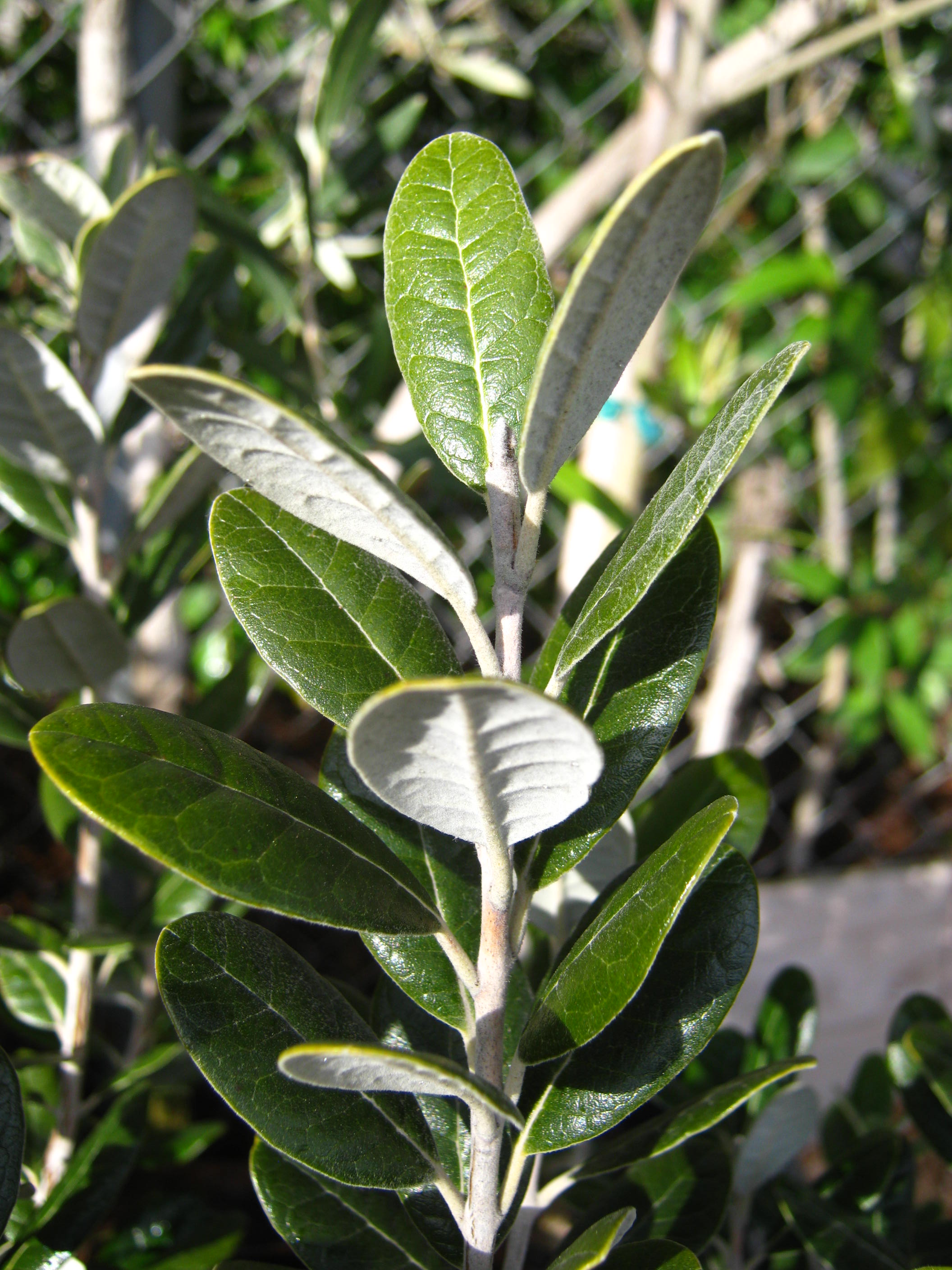
* Feijoa sellowiana
Pineapple guava
Plant named varieties if you want reliable fruit production. Edible flowers! Very drought tolerant. Fuzzy grey-green leaves make a nice contrast with red-leaved or shiny-leaved shrubs.
* Junipers:
Juniperus chinensis 'Torulosa' (also called 'Kaizuka')
Hollywood juniper
Striking, contorted upright growing juniper with dark green foliage. Excellent specimen plant. Very tough, drought-tolerant.
Juniperus scopulorum 'Gray Gleam'
Gray Gleam juniper
Other varieties of this species (Cologreen, Pyramidalis, Blue Haven) have similar growth habits. These are all pyramidal-shaped, upright growers useful in formal plantings. Wichita Blue is more cone-shaped. Very tough, drought-tolerant.
Juniperus virginiana 'Skyrocket'
Skyrocket juniper
Upright column like an Italian cypress. Useful for a formal effect in smaller gardens. Very tough, drought-tolerant.
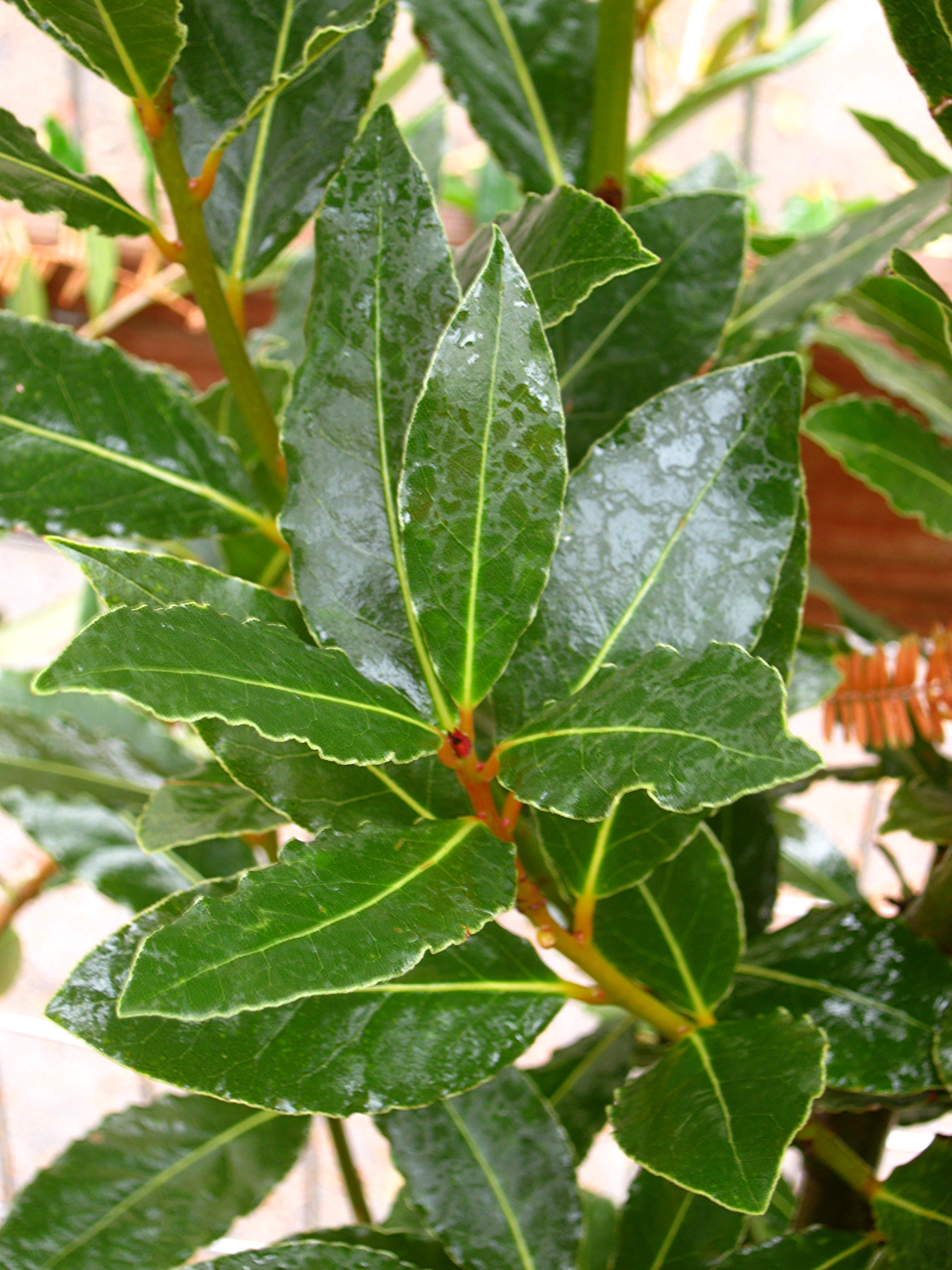
* Laurus nobilis
Grecian Bay laurel
The bay leaf used in cooking. Very versatile garden plant. Large shrub, eventually growing to 30 feet +, but very upright habit and ease of pruning make it manageable. Will grow in total shade to full sun. Drought tolerant. Very easy to keep in a pot for years.
* Punica granatum
Pomegranates
All pomegranates tolerate heat, wind, drought, poor soil. Great choice for west exposure. Fruiting forms yield large crops here with no effort on your part. Fruitless forms with showy flowers are available and are equally tough.
* Vitex agnus-castus
Chaste tree
Light blue flowers; white form also available. Fast-growing large shrub or small tree with light green palmate leaves. Tolerates heat, drought; will grow in partial shade.
Previous (October 2011) article: Easy Steps to Reduced Water Use
Here are some lists of drought-tolerant plants

Saturday, November 5, 2011
Easy Steps to Water Conservation
Easy Water Conservation.
Water rates are in the news, and we are getting more interest in lower-water landscaping. It is estimated that 80% of residential water use is outside, with a very large percentage of that due to the lawn.
There are a number of easy ways to reduce your landscape water use.
First is to water correctly.
Water deeply, and as infrequently as possible for the types of plants you have chosen. For example, nothing needs water more often than twice a week during the summer here. Established shrubs and trees can often be watered once a week or less, if they get a thorough watering each time.
Most people could easily reduce their water use by 20% or more just by watering more deeply but less often.
Second is to zone your plants by water need.
You may wish to have a tropical oasis or fern grotto, so put those plants together in one area. You might want a lawn area. Your shrubs and trees don't need to be watered as often as those other types of plants.
Third is to reduce lawn area if possible.
Your lawn, properly watered, uses about 1000 gallons per 1000 square feet each week. And many people apply much more water than needed. Some turf species are more tolerant of infrequent watering, but in nearly any case the lawn is the highest water user in the landscape.
"Form follows function," Louis Sullivan said. Let your landscape form follow the actual use patterns of your family. Lawns are for kids and dogs, and are usually unneeded in front. Put lawn where you will use it, not just where you'll look at it.
Fourth is to choose plants that use less water.
For this article I'll focus on ground covering plants that can replace your lawn and use less water. First is the botanical name, then the common name if there is one. Landscape designers can choose from among Mediterranean plants, natives of South Africa and Australia, California natives, and more.
Herbaceous (soft) ground covers
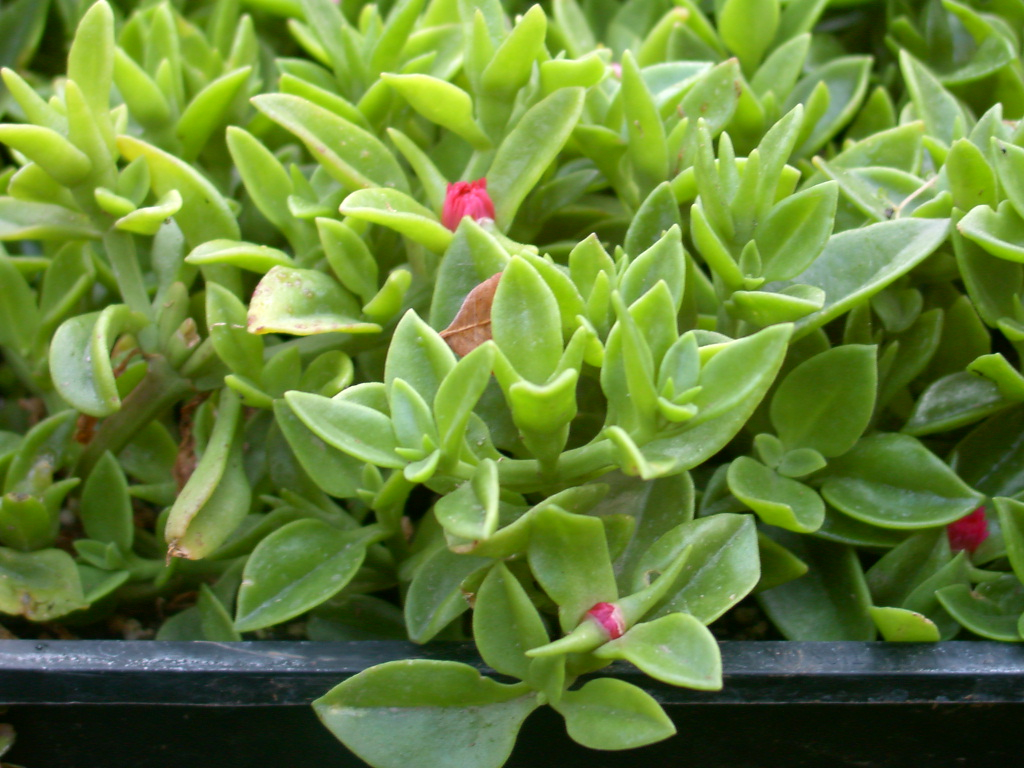
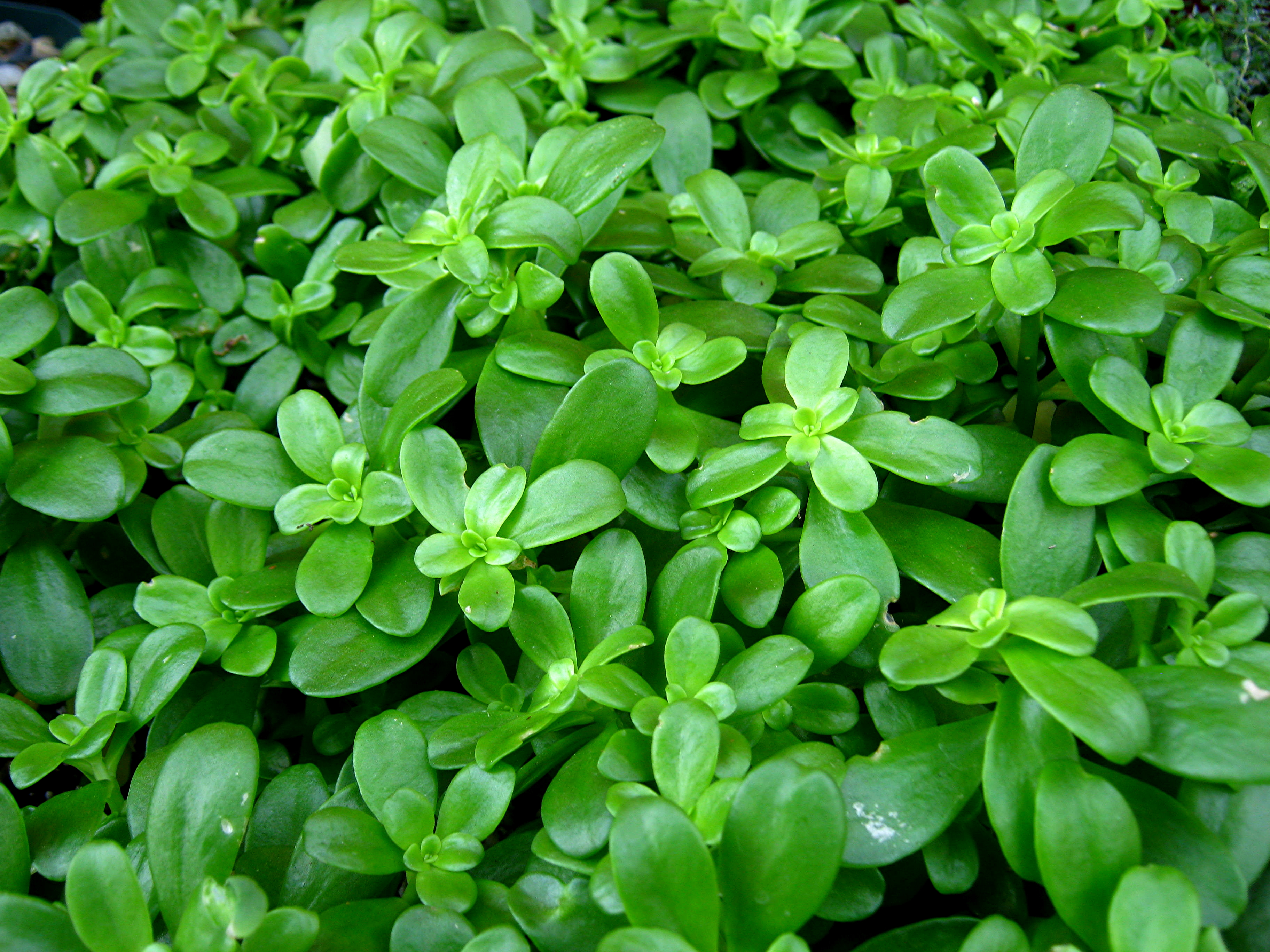
* Aptenia cordifolia
Red apples
Popular succulent with red flowers. Rampant! Blooms freely, smothers weeds. Bees love it. Frost turns leaves to mush, but it quickly resprouts in spring.
* Dymondia margaretae
Very tough, low-growing ground cover for dry areas. Little yellow flowers. Some die-out if overwatered. May be damaged in cold winters, but recovers. Excellent between step stones.
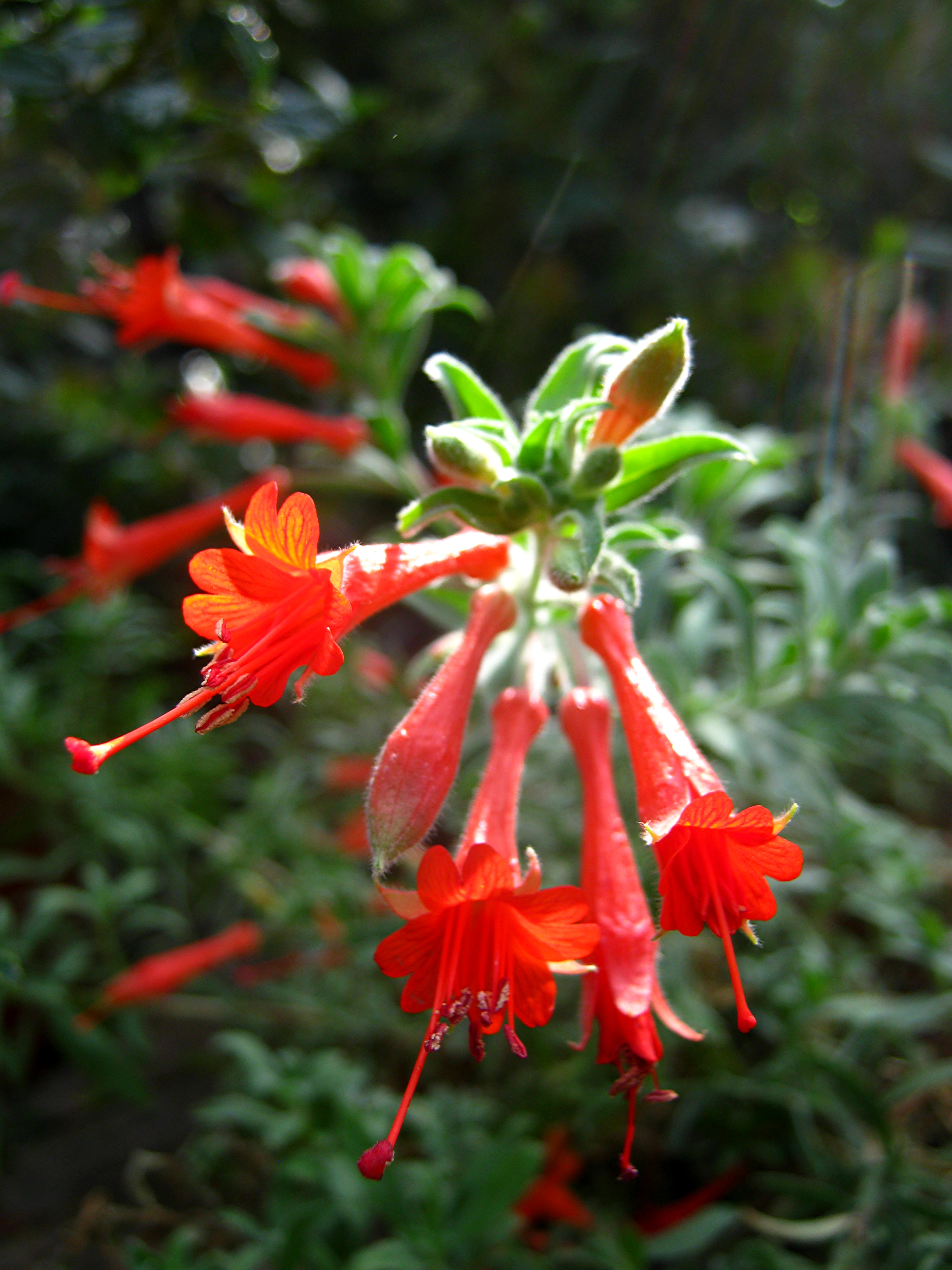
* Epilobium species (formerly Zauschneria)
California fuchsia
Several species and varieties, ranging from 6" to 2'+. Bright orange-red flowers in late summer through fall attract hummingbirds. Tolerate drought or infrequent watering. Will grow in very light shade or full sun. Cut back when they look rough in the winter.
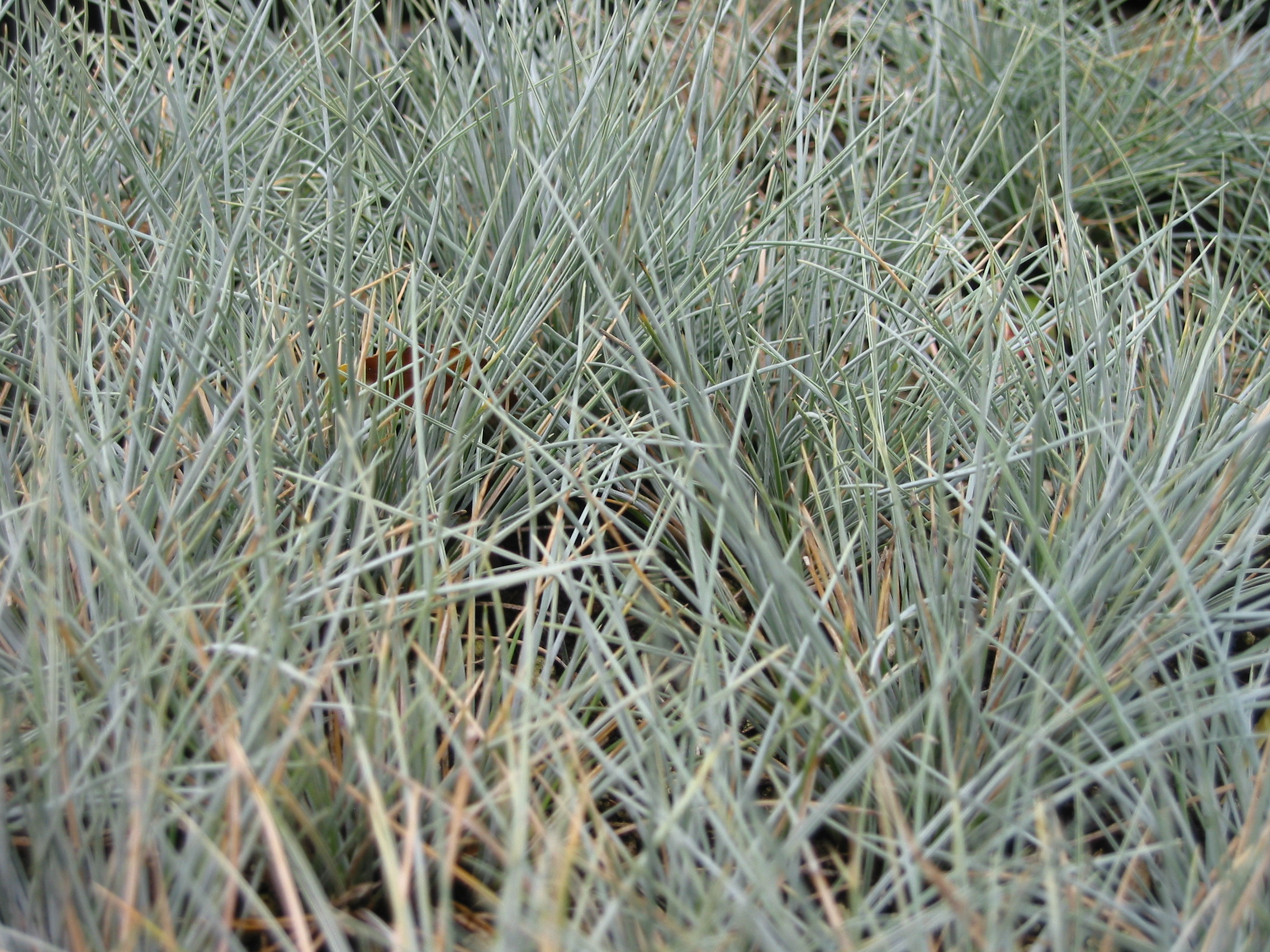
* Festuca ovina glauca
Blue or Grey fescue
Little tufts of silver grass foliage to about a foot tall. Single plants make a clump. Planted on 6 to 12 inch centers, makes an informal grey meadow.
* Gazania hybrids
G. leucoleana forms spread, have silver foliage, yellow or orange flowers. Clumping types have showier flowers, but don't cover ground as thoroughly--better in perennial borders.
* Lantana sellowiana
Trailing Lantana
Lavender flowers all summer and fall; there is a less-common white form. Grows to a foot tall, with each plant spreading 6 - 10'. Very tolerant of heat and drought.
Cut back in spring to remove frost damage. Also sold as L. montevidensis.
* Rosmarinus officinalis
Rosemary
There are selected forms with spreading habit, and others that are upright. They vary in height (1 - 2 foot +), depth of blue flower color. All can be used in cooking.
* Sedum confusum
Golden sedum
Dense, slow-growing succulent with shiny yellow-green leaves and showy yellow flowers. Great for edging; mix with grasses, use in pots, around stepstones. Takes sun or moderate shade, drought or average watering.
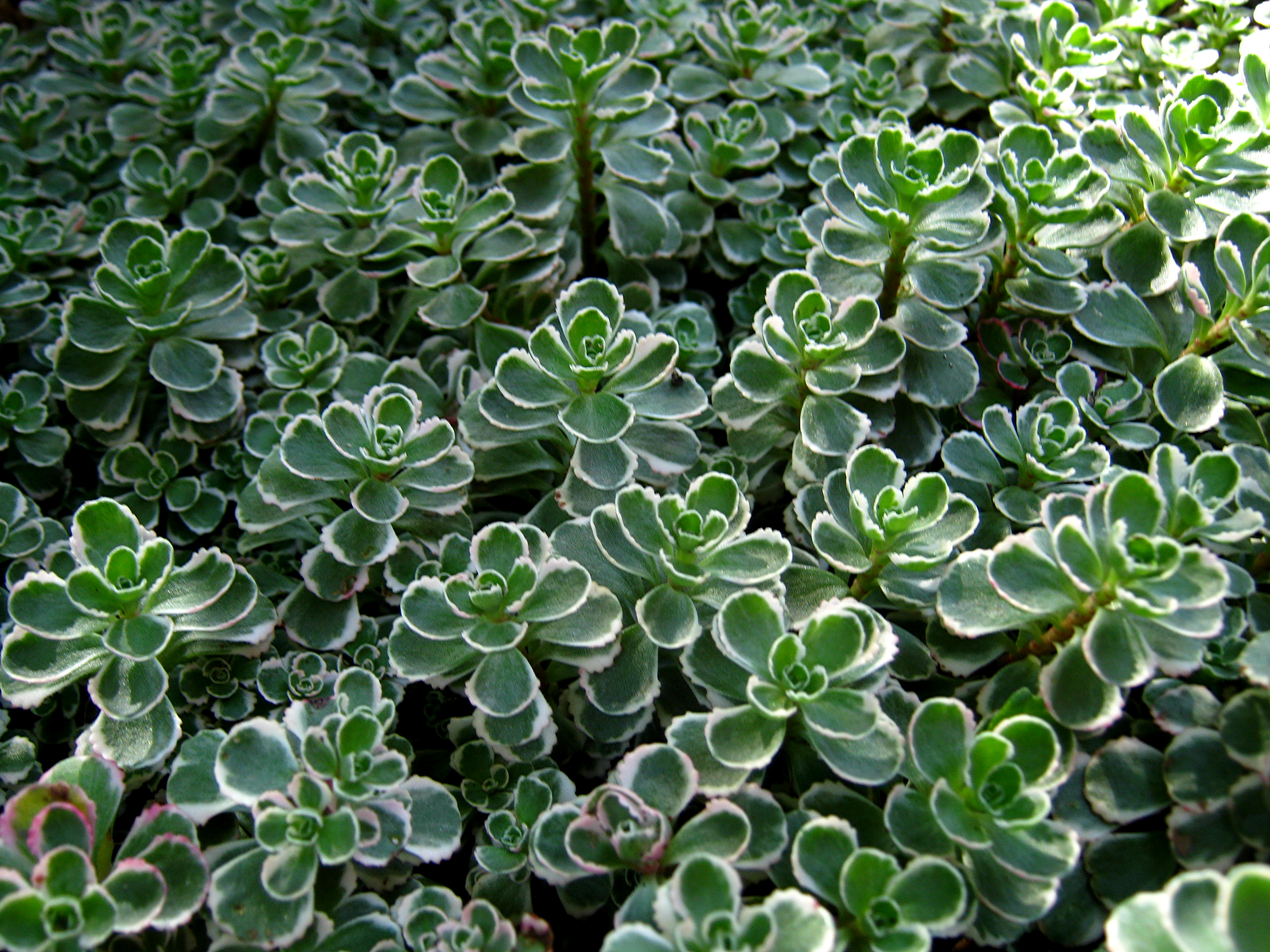
* Sedum spurium
Dragon's Blood sedum
Very low succulent grown for attractive reddish-bronze leaves. Tolerates sun or some shade; average watering or drought. Color intensifies in winter. 'Tricolor' has leaves that are white, pink, and green.
* Zoysia tenuifolia
Korean grass
Very dense, interestingly lumpy grass ground cover with needle-fine leaves. Dormant (brown) in winter. Very tough.
Vines that are planted as ground covers.
These are especially drought tolerant.
* Sollya heterophylla (fusiformis)
Australian bluebell creeper
Small, with dense, tiny, shiny leaves. Can be used as a ground cover. Grows slowly to about 6' tall when supported; 1 - 2' as a ground cover. Nodding blue flowers in summer; 'Alba' has white flowers. 'Boddy's Choice' is a very slow-growing type grown as a shrub or ground cover. Quite shade or sun tolerant, will grow under Eucalyptus trees.
* Trachelospermum asiaticum
Asian jasmine
Nearly always grown as a ground cover. Hardly ever flowers; grown for shiny leaves and exceptional durability. Can be tied up as a vine, but doesn't twine.
* Trachelospermum jasminoides
Star jasmine
Super fragrant flowers in May and June. Tolerates heat, cold, sun, shade, poor soil, drought or watering.
Shrubby ground covers
There are many woody plants that spread across the ground, making a shrubby ground cover. These tend to be two to three feet high.
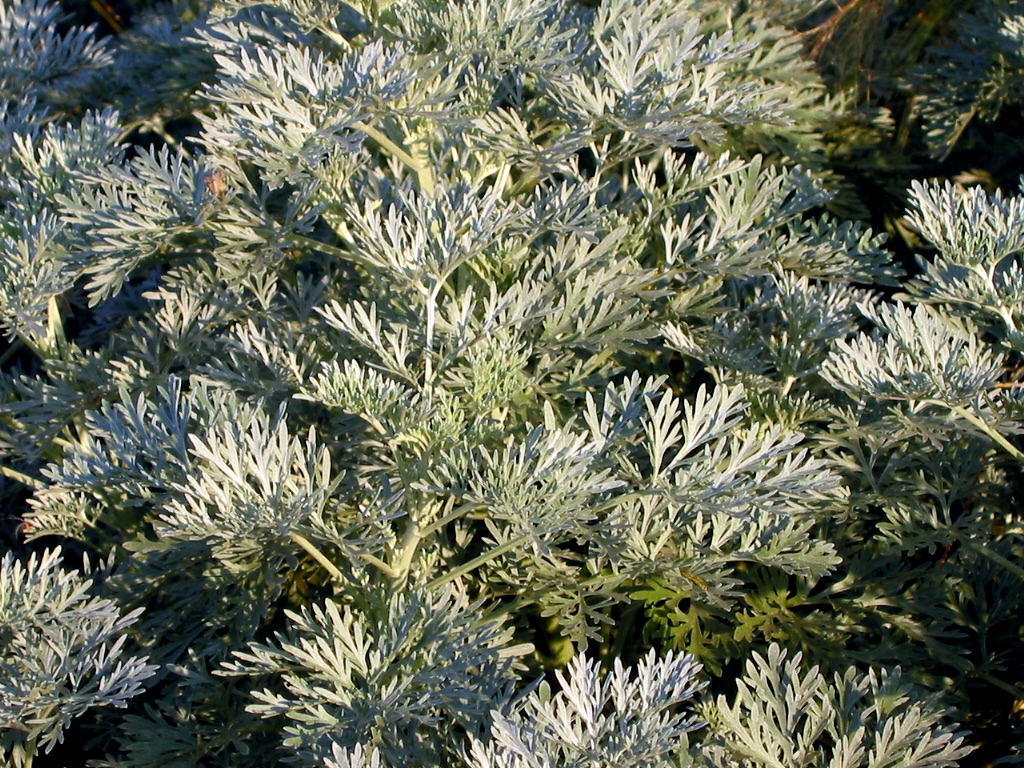
* Artemisia 'Powis Castle'
Vigorous spreader with silver, ferny foliage. Extremely tolerant of heat, drought; ok in partial shade. Leaves have a strong medicinal scent. Completely shades out weeds. Can cover quite an area!
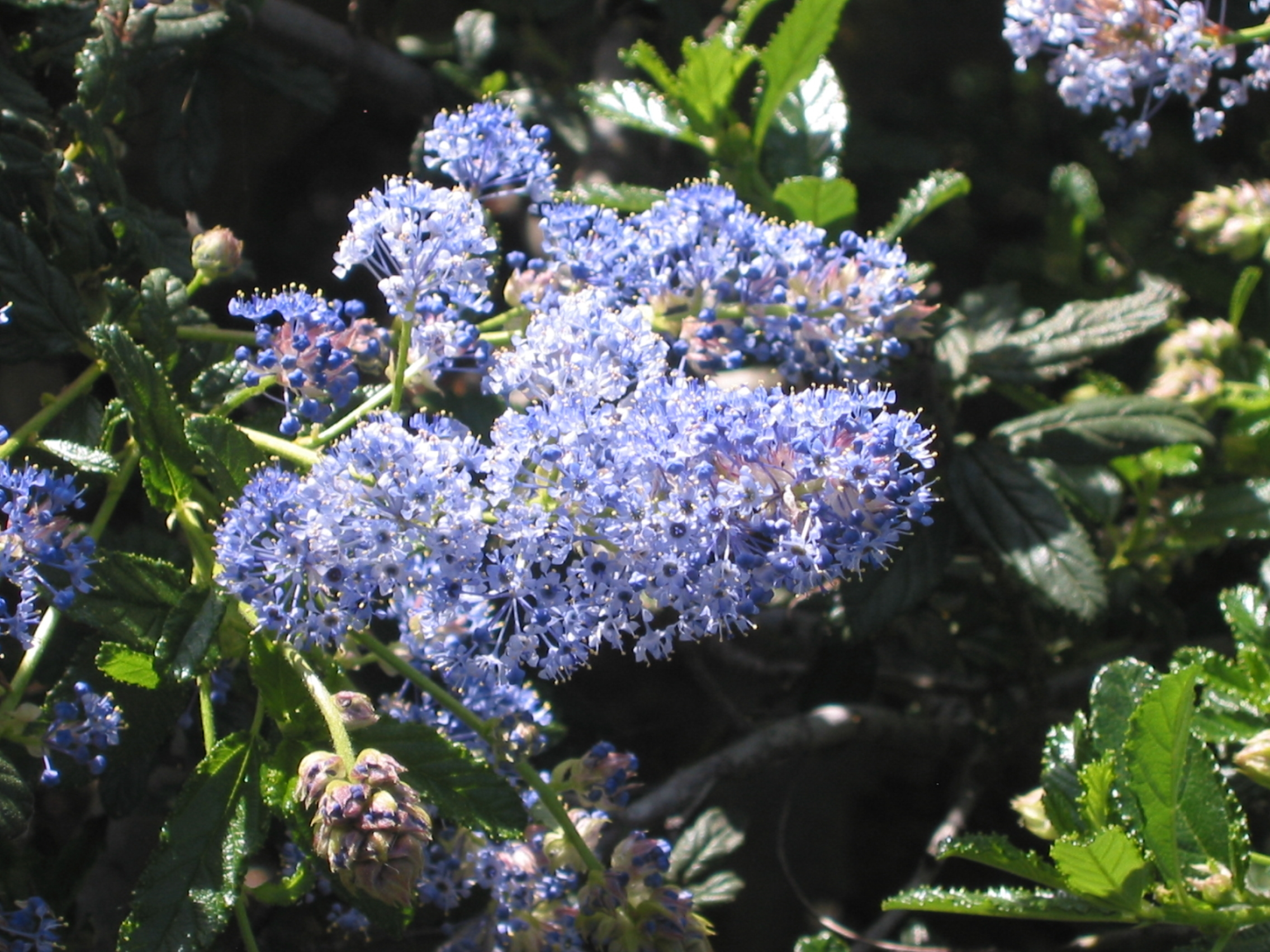
* Ceanothus species
Wild lilac
Several low spreading varieties are used as ground covers. Attractive shiny leaves; pretty blue flowers in spring. Ground cover forms range from a few inches to a few feet tall, spreading several feet. Don't plant where they'll have to be pruned. Water deeply and very infrequently in summer. California native.
* Euonymus fortunei 'Emerald Gaiety'
Variegated Wintercreeper
Low grower creeps along the ground, or can be clipped as a shrub. Very tough, tolerant of shade or sun. Flowers aren't noticeable. White portions turn pretty pink color in winter.
* Mahonia repens
Creeping mahonia
Shiny leaves, yellow flowers, shade tolerant. Slow to get going, but persistent and tough.
* Ribes viburnifolium
Catalina perfume, Evergreen currant
Will grow in considerable shade. Spreads steadily to make an attractive ground cover. Fragrant foliage. Very small light pink flowers in winter attract hummingbirds; red berries attract songbirds. California native.
How to do it.
You will need to kill out your grass somehow first. You can spray with an herbicide, or cover the area with black plastic for several weeks. Get your turf species identified since some grasses can be persistent and troublesome, especially bermudagrass. The plants listed don't need any special soil preparation. Rototilling will make planting easier. But you can just dig individual holes for the small plants.
Watering of the new plantings can be done with your lawn sprinklers, but you will water far less often. Or you can convert your system to drip irrigation. You may want to ask a landscape contractor for help if you do that.
Unplanted areas can be covered with a thick mulch to retain moisture and prevent weeds. Any bark or compost product can be used. Local rock yards can deliver bulk quantities at a reasonable price.
You need to do a little math to order the right amount of mulch. For two inches of mulch on 100 square feet, you need 16.7 cubic feet (100 divided by 6 = 16.67 cubic feet). There are 27 cubic feet in a cubic yard.
Green is good, but green lawns are high water users. So reducing your water consumption often begins right in the front yard, by choosing water-thrifty plants.
Some choices:


Wednesday, October 19, 2011
Bulbs!
Bulbs have got to be the easiest things we plant in the garden, with the highest bloom:effort ratio. Dig a hole, stick 'em in, cover with soil, and water. The rains come along and do the rest. A few weeks later, up they come--growing and blooming without any more work by you.
Some technical terms.
'Bulb' is a generic term for modified, swollen stems. A true bulb has a set of overlapping, fleshy leaves, usually surrounded by dry, papery skin that protects it from drying. Cut a true bulb in half and it'll look somewhat like an onion on the inside (it'll also be useless after you do this!). Corms, rhizomes, and tubers are other modified stems that are sold as 'bulbs'. The primary function of each is to store food and some water, and each has one or more growing points to start new plants.
Bulbs are perennials, meaning they bloom again after the first season. Some repeat for a few years; others spread for many. Most are cold hardy. Subtropical types (paperwhites, freesias) need winter protection in colder climates, which is important to know if you are sending them as gifts.
How do you plant them?
It's so easy, even a child can do it. In fact, since it's down at the ground level and we are old and stiff, it might be better if a child did it. And bulb planting is a great thing to do with kids; it's nearly impossible to make a mistake.
--Dig a hole a little more than twice as deep as the bulb is tall--a 3" daffodil goes into a 6" hole. I generally dig holes wide enough for several bulbs, since a solitary bulb looks pretty lonely the first season, and plant them 3 - 4 inches apart. Exceptions: iris rhizomes are planted only half-buried. Amaryllis should have their necks exposed.
It's not necessary to mix compost in the soil, but the bulbs will grow and increase more quickly if you do. I've done plenty of bulb planting in soil that was too muddy to mix anything into. They'll be fine.
--Sprinkle some fertilizer in the bottom of the hole. It should have some nitrogen and a fairly high amount of phosphorous (those are the first two numbers on the label). Bone meal is popular due to the high phosphorous content, but it is very, very slow acting. Commercial bulb foods are better (specialty vegetable or flower foods are fine, too).
--Set the bulbs a few inches apart. The point goes up (this may seem basic, but it's pretty important!). Some bulbs don't have an obvious point, so look for the scarred area where roots used to be and put that side down. If you really can't figure it out, put it on what appears to be the side. Ranunculus are planted 'prongs down'.
--Cover with soil and water to settle the soil. That's it! Winter rains will take care of the rest.
It is ok to plant low-growing annual winter flowers right on top of the bulbs: pansies, violas, sweet alyssum, Cyclamen, and dwarf snapdragons all make excellent companions. Low ground covers are also great. The bulbs will grow right up through them to make a spring bouquet.
When to plant?
Anytime between September and early January. Tulips and Hyacinths shouldn't be planted until the soil has cooled, meaning after the end of October. If you find the bag of bulbs in your garage in January or February (we get these calls every year…), plant them. They'll still grow and bloom, albeit a little later than normal, and they'll be back on cycle the next year.
Bulb plants continue to grow for several weeks after they bloom, storing energy for the following year. If you cut off the foliage, you weaken the bulb. So let them die down naturally, though you can tie or braid the foliage if you want to look fastidious.
There's no need to dig up bulbs for the following year. If they've been in the ground for several years and are blooming less and less, it may be time to divide them. Or they may be getting too much shade. In either case, just after (or as) they die down is a good time to dig them. Replant them right away, or store them in the garage until fall.
It used to be recommended to put tulips and hyacinths in the refrigerator for 4 - 6 weeks before planting, but this is unnecessary. Just wait until the soil is cool. Pre-chilling WILL make them break dormancy and bloom all at the same time, so if you want your tulips to flower uniformly go ahead. Do NOT put them in the freezer (we get calls….). That kills them.
Some bulbs are planted in the spring for summer bloom--Dahlias, Gladiolus, and others. We plant those from February into the summer, depending on the type.
Which to grow?
Daffodils and narcissus
are the easiest of the bigger-flowered bulbs. At a minimum, they'll repeat their bloom for a few years. Some varieties will multiply, giving more flowers every year.
A note about the names: all are members of the genus Narcissus. Those with a single large flower (usually with a trumpet) are called daffodils. Those with small flowers in clusters are called narcissus. The fragrant ones with pure white blooms in early winter are paperwhites, a type of narcissus; there is a yellow form and another called the Chinese sacred lily in this category. Europeans call the whole group 'jonquils', but we use that term for a particular, small, fragrant narcissus. Confusing, eh?
Some good daffodil choices:
- February Gold (short, very early dwarf trumpet; spreads freely)
- Fortune (orange/yellow, spreads vigorously)
- Flower Record (white with orange cup)
- Ice Follies (white with pale yellow large cup; spreads vigorously)
- Mt. Hood (ivory white)
- Salome (pink, sort of)
- Spellbinder (yellow with white trumpet--striking!)
Good narcissus choices:
- Cheerfulness
- Geranium
- Pheasant Eye
- Thalia
- Yellow Cheerfulness
- Miniatures: Baby Moon
- Tete-a-Tete (one of the best!)
'King Alfred' was once a variety of large, yellow trumpet daffodil. It is now a generic name for that type; Unsurpassable and Early Splendor are newer, more vigorous varieties that will repeat and increase somewhat.
Irises
are very easy--both the large-flowered bearded types (grown from rhizomes) and the Dutch irises grown from bulbs. Not generally the most attractive garden plants, but worth the space for fragrance and cutting. There are also cute miniature types which bloom very early, and other species which can grow standing in water. A diverse group.
Tulips, hyacinths, and crocus
will bloom very nicely the first spring. The trick to getting them to bloom in subsequent years is to plant them where they won't get watered in the summer. Tulips with minimal summer water will repeat, though the flowers will be smaller, and hyacinths will increase. These latter have powerful fragrance reminiscent of Grandma's perfume. Giant Dutch crocus tend to peter out after a couple of years, but the species crocus will increase and bloom -- as early as late January here.
Some species of tulips come from Mediterranean climates similar to ours and will naturalize happily here. Tulipa chrysantha, T. clusiana, and others have miniature flowers on short stems. A half-dozen bulbs will increase to 2 - 3 dozen plants within just a few years. Grape hyacinths share the common name but are an entirely different plant (Muscari). These have short, purple flowers and spread very, very freely. The saffron of commerce is Crocus sativus--like some Mediterranean species, it blooms in the fall, and is easy to grow and increase here (coming as it does from Greece, a climate similar to ours).
'Minor' bulbs.
Many of these (i.e., small bulbs and flowers) spread to the point of being almost annoying. Cheap, easy, and prolific. Most can tolerate some shade, will spread through flower borders and even into lawns.
Some old favorites just don't get enough winter chilling to bloom again, including Lily-of-the-valley and Snowdrops (Galanthus). Freesias are popular for fragrance, and very successful. The old-fashioned yellow and white forms are most fragrant.
Good 'minor' bulbs for this area:
- Allium (ornamental onions)
- Brodiaea
- Freesia
- Hyacinthoides (Wood hyacinth)
- Ipheion (Spring starflower)
- Leucojum (Snowflake)
There's no hurry on getting bulbs planted after you buy them. They do their thing with little input from us. They announce the spring with colorful bursts in every hue. These little storage units have everything they need, lying dormant through winter cold or summer drought, ready to expand and grow when conditions are to their liking. What a great adaptation the bulb is--for us!
Saturday, September 24, 2011
A Zen Garden In Davis
Written for the Davis Enterprise, August 25, 2011
Click on any image for a larger version


The first clue that this isn't a traditional California landscape is the branch of the Japanese maple peeking out behind the front gate. The drain channels filled with smooth pebbles and elegant "rain chains" are the next signs of some non-Western influences. Small plantings on the side as you walk around the house use gravel and interesting foliage plants.
Crilly Butler and his family live in a house on a quiet cul-de-sac in one of the newer subdivisions of east Davis. Crilly has visited Japan frequently and considers it his second home, and from the time they purchased the bare lot in 1996 they knew they wanted a zen garden. He invited me to view and photograph the garden this spring.
There are several styles of Japanese gardens. Karesansui is the waterless type, generally using limited amounts of plant material, moss (if possible), raked gravel to symbolize water, and groups of rock and stones. Lanterns and pavilions are often included in Japanese gardens of various types. Bamboo, both in plantings and used in construction material, is an important component. Among the many symbolic meanings for bamboo, I found humility, strength, readiness, resilience, simplicity, and more.
To the first-time visitor to a zen garden, it will seem bare. There are rarely flowering plants, and the seasonal changes are subtle. But the lack of abundance focuses the viewer's attention on those simple changes: the flush of new growth on the Japanese maples, the spectacular but fleeting bloom of the wisteria, the seasonal growth of moss on the boulders. In a more complex garden, these would be less individually notable.
From a design standpoint, I was curious how the garden would integrate in a California-style house (at least the exterior) and landscape, including some typical uses such as vegetables and roses. From a horticultural standpoint, my key question was: how did you confine the running bamboo?
Crilly answered my specific questions via email after my visit. As to my design question, it was clear that the zen garden is the strong visual element and that it was carefully designed to fill the key views from the house and patio. The roses and vegetable garden are in an appropriately sunny location off to the east side, just out of view from the house. The bamboo barrier is shown and described below. Note that it would be possible to use non-running bamboo varieties to avoid the confinement issue. Most clumpers, though, have very dense growth habit and might not provide the "see-through" effect that runners provide.
What was your motivation or inspiration for planting a zen garden?
I used to live in Japan, where I studied the martial art Aikido. I met and married my Japanese wife there 28 years ago. I've always loved my "second country", and deeply admire its aesthetic sense. We patterned our Zen garden after our favorite one, found at the famous Kyoto temple Ryoanji.
Did it replace an existing landscape?
We designed and built our Japanese/Western hybrid home on an empty lot, so we were able to plan our landscaping from scratch. Our Zen garden simply replaced barren ground. I think it's quite an improvement!
What year was the project begun, and when was it completed?
We began designing this garden in our minds as soon as we purchased our lot in 1996. After completing the Western rose and herb garden on the east side of our backyard, we started grading for the Zen garden in 2004, though we didn't actually began work on it until 2008. We finished building the border around it, and laying the gravel, in 2009.
Who helped with your design and installation?
My wife and I designed it ourselves, based, as I mentioned, on the garden at Ryoanji. You have to place the rocks just right, so they look as they should from every part of the yard, no matter what the angle. We used orange road construction cones to represent the three "islands", and over the course of 3-4 weeks, kept moving them around slightly until we were satisfied with their placement. My friend Steve Scott carried the large rocks into the yard in a sling attached to one of his small earth-movers, and helped us position them precisely. Other than that, my son Nicholas and I did all the work ourselves.
Tell us about selecting and installing the rocks.
We looked for just the right rocks for quite some time, but couldn't find any that looked like those at Ryoanji. Then we finally stumbled upon some petrified wood boulders at a quarry east of Sacramento. They were unexpectedly perfect!
Where did you buy your bamboo? Why did you select that species (Temple bamboo, Semiarundinaria fastuosa)?
Steve Scott, who's quite a bamboo aficionado, suggested the Temple Bamboo because of its very erect, tall and beautiful culms. We drove his truck to Bamboo Sourcery in Sebastopol, which is an amazing place. They had over three hundred varieties of bamboo there at the time. We planted them about two feet apart in an L-shape along most of our back fence, with the leg extending out about ten feet along the west side of our yard.
Because this species is quite a runner, I trenched around the planting area four feet deep and six inches wide, which I filled with rebar and concrete to keep the bamboo contained. There's nothing worse than seeing your bamboo growing up through the bottom of your neighbor's swimming pool, and I take being a good neighbor very seriously!
Just to verify: your barrier is a concrete trench 4 feet deep, six inches wide, with concrete rebar at 1 foot intervals. Watering is via drip soakers. How often do you run them? What other maintenance do you do?
I ran schedule 80 pvc underground to one end of the bamboo and installed a drip system using three separate soaker hoses winding through the base of the culms end-to-end. It runs for about 20 minutes three times per week in summer, and much less during the other three seasons.
Since bamboo takes in a lot of its moisture through its leaves, I also soak it down top to bottom with a hose periodically, especially when the humidity has been very low for a while. I fertilize every spring with a good lawn fertilizer mixed with FST, since the concrete probably raises the pH of the soil quite a bit. Every winter I thin out the older culms to make room for new growth. I leave the fallen leaves to decompose, rather than removing them, because of their high silica content, which growing bamboo loves.
Some further notes:
A very important part of this barrier system is the maintenance gap between the hedge and the fence. Rhizomes can grow right over a barrier and root, and can readily grow under a fence. Rhizome growth occurs mostly in the spring, so one seasonal walk (sidle, really) behind the hedge to check for escapees will be sufficient. Barriers can be made from very thick polypropylene (60 ml is best). This installation is much more attractive, in my opinion.
Although a zen garden can use considerably less water overall than a more traditional landscape, due simply to the large area without plants, those that are used tend to be high water users. Bamboo and Japanese maples look best if they are not drought stressed.
Japanese maples have some special preferences here. They prefer acid soil with abundant organic material, so turn in lots of planting compost and soil sulfur at the time of planting. While they can take morning sun, Japanese maples will burn in afternoon sun. Finally, true moss is seasonal in our dry, hot climate. Various ground covers can be used as substitutes.
Crilly Butler is a Senior Information Systems Analyst for the California Department of Fish and Game. He also owns the Davis-based Web development company, Develomation.
Steve Scott (http://stevestrees.com/) is a landscape contractor who specializes in moving large field-dug trees.
Subscribe to:
Comments (Atom)

