Thursday, November 24, 2011

Choosing shrubs to use less water

Written for the Davis Enterprise, November 25, 2011

Click on any image for a larger version


This month we continue our theme of reducing water use in the landscape. It is estimated that 80% of residential water use goes to yard watering.


Last month's (October 2011) column focused on water use by lawns.


To recap:

* reduce total square footage of grass;

* plant seed of grass species that can use less water, such as fine fescues;

* replace some lawn areas with lower-water ground covers.


This month I'm going to focus on shrubs that make the backbone of the yard, providing privacy, attractive foliage, and seasonal flowers. Aesthetically, it is best to repeat one type, rather than having a hodge-podge of mixed foliage, and then add some of the others for contrast. If you have existing shrubs, interplant some of these listed, do some careful pruning for a couple of years, and then remove the more water-intensive types after the new ones grow up a bit.


What about your existing shrubs?


We see a lot of plants with problems resulting from watering too often, so just by watering correctly you can reduce your water bills and have a healthier landscape. Water slowly, deeply, and infrequently. When we ask about watering schedules, it is common to learn that shrubs are being watered 3 to 4 times a week. That's too often! And they're being watered for ten or fifteen minutes. That's not long enough!


Did you know that many or most of your landscape shrubs could go a week or more between waterings if you irrigate deeply enough each time? Many can go much of the summer on just a few deep irrigations, and some need no summer water at all!


Careful plant selection is another approach to reducing your water bill.


Choose trees, shrubs, and flowering plants that can live with reduced watering.

Here is a list of some shrubs that could be watered as little as once a month once established (which means after the first summer). Some require drought: California natives are sensitive to crown rot if watered too often. The others can be watered more often if necessary. All are evergreen unless noted as deciduous.


* Botanical name: Buddleia davidii

Common name: Butterfly bush

Butterfly bushes love sun, attract butterflies and hummingbirds, and bloom all spring and summer. There are many varieties, ranging from 6 feet to more than ten feet tall, with purple, pink, violet, or white flowers.


* Callistemon citrinus

Bottlebrush

Fast-growing, somewhat open growth habit benefits from pinching and shaping. Showy red flowers, off and on through the year, attract hummingbirds. Prone to iron chlorosis when irrigated.


* Chaenomeles japonica

Flowering quince

The first shrub to bloom in the late winter! Some stay under 3 feet; several varieties grow to 5 - 6 feet or more. Fruit, if any develops, makes unique, aromatic jelly. There are white, pink, orange, and red varieties. Deciduous.


* Dodonea viscosa 'Purpurea'

Purple hopseed bush

Fast-growing quick screen. Bronze foliage turns dark purple, almost maroon, in winter. Fairly open habit, but can be sheared for greater density.


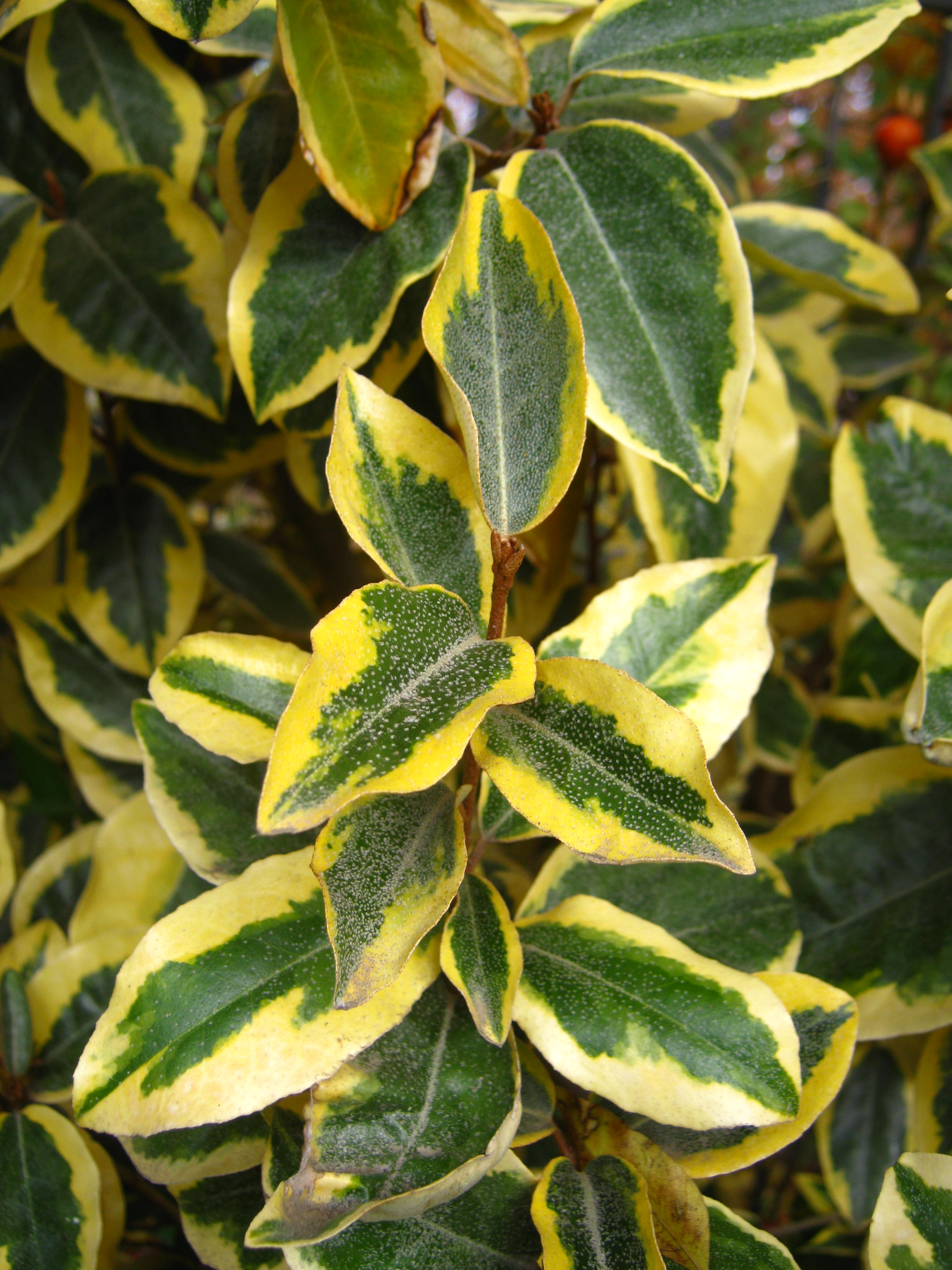
* Eleagnus x ebbingei 'Gilt Edge'

Elaeagnus

Upright growth habit, thornless. Silvery leaves with bright golden margins. Flowers attract beneficial insects; edible fruit attracts songbirds.


* Escallonia rubra

Red escallonia

Big shrub with dark, glossy green leaves and dark red flowers. Leaves have a resinous odor. Flowers attract hummingbirds.


* Garrya elliptica

Coast silktassel

Dark green foliage on a large, dense shrub. Long tassels of flowers in late winter are interesting and attractive. 'James Roof' is a shorter, more compact variety than the species. This California native is best unirrigated.


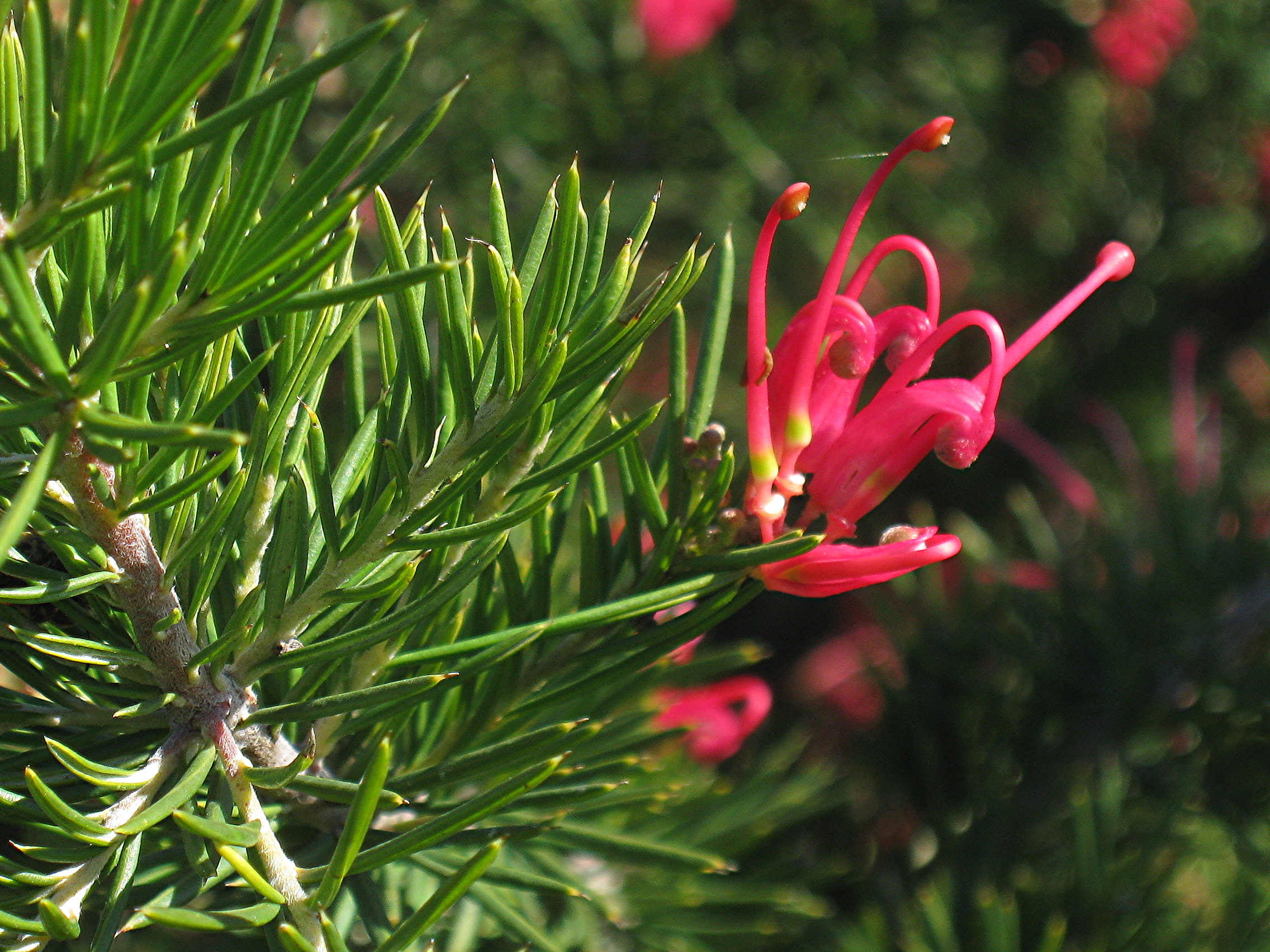
* Grevillea species and varieties

Australian natives that have odd-shaped, showy pink or red flowers over a long season. All attract hummingbirds. There are dozens of varieties; check descriptions for winter hardiness in our area.


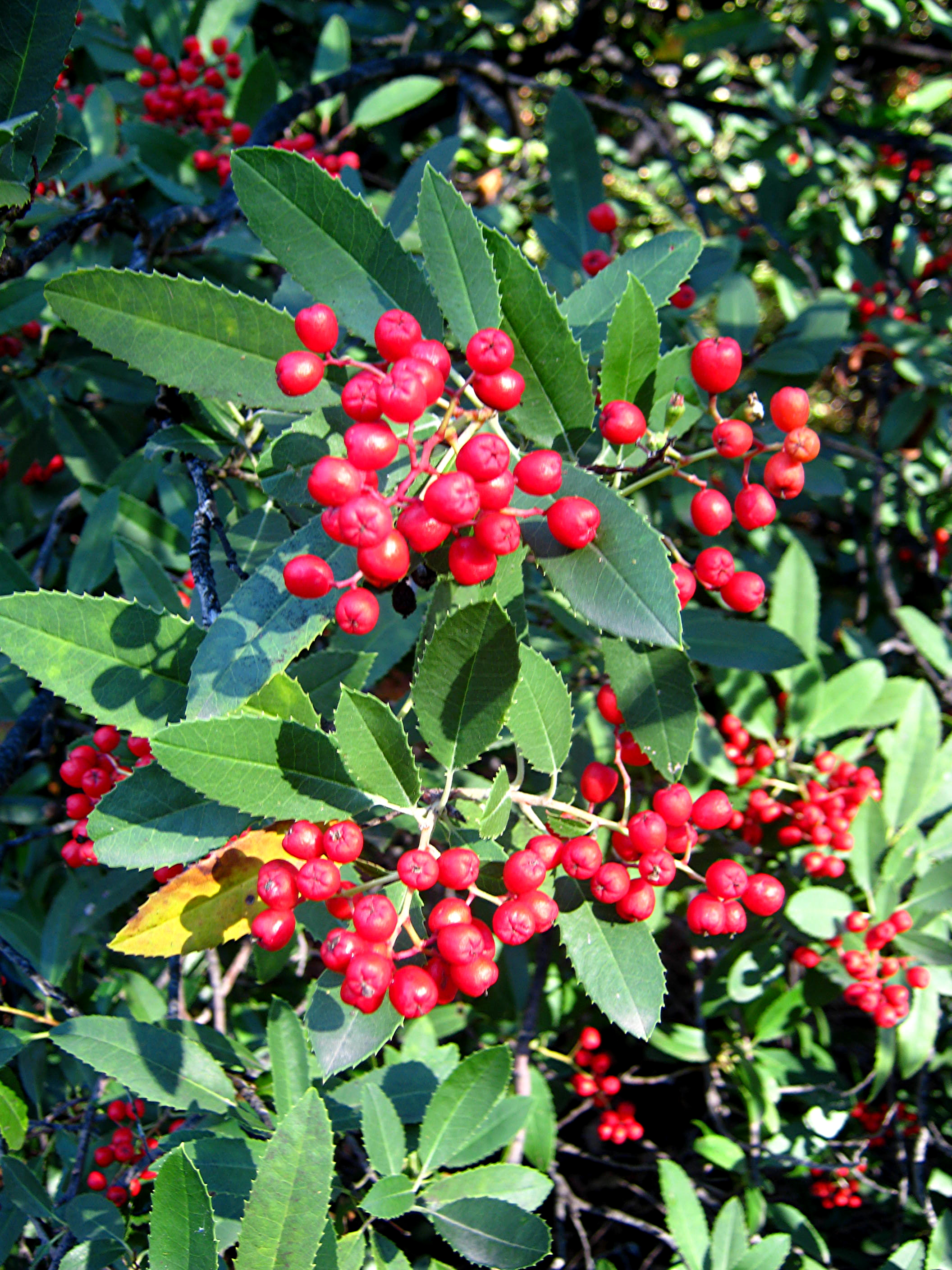
* Heteromeles arbutifolia

Toyon

Grows 2 to 3 feet a year, eventually more than ten feet tall. Flowers are very attractive to beneficial insects. Beautiful shiny red fruit hangs on into winter, attracts birds. There is a yellow-berried variety called Putah Gold, introduced by the Arboretum. This California native is best unirrigated.


* Lavatera maritima

Tree mallow

Also sold as L. bicolor. Fast grower. Gawky growth habit--shear it occasionally, or prune it back severely in the spring or fall. Flowers are light pink with dark rose veins. Blooms all summer.


* Rhamnus alaternus

Italian buckthorn

Fast-growing, upright, with dark shiny green, dense foliage. Flowers attract beneficial insects; small berries (you don't see them) attract songbirds. Great for a quick hedge for privacy. Don't overwater. The selected form John Edwards is more resistant to crown rot. Variegata has cream-variegated leaves, is slower growing and smaller.


* Rhamnus californica

Coffeeberry

Slow-growing native cousin of the buckthorn that looks very much like Toyon (Heteromeles), with similar, larger red berries in winter. Variety called Leatherleaf has larger, darker leaves. This California native is best unirrigated.


* Xylosma congestum

Shiny xylosma

One of the toughest landscape shrubs around. Tolerates heat, even reflected off a west wall; drought; shade. Can be trained into a beautiful small tree, clipped as a formal hedge, or trimmed for an informal screen.


Some plants usually grown as trees can be grown and pruned as shrubs.


* Arbutus unedo 'Compacta'

Strawberry tree

Showy flowers and fruit, beautiful bark like madrone. Fruit litter may be a problem, but it is edible and birds like it. Heat and drought tolerant. Grows 1 - 2 feet a year. Easily kept at 6 to 8 feet with one annual pruning.


* Ceanothus 'Ray Hartman'

Wild lilac

This variety grows to 10 - 15 feet or more. Attractive, large shiny leaves. Pretty medium blue flowers in large clusters in spring. Water deeply and very infrequently in summer.


* Citrus hybrids and varieties

Many varieties make excellent patio or container trees, or can be clipped as shrubs. Meyer lemons, kumquats, and satsuma mandarins are naturally dwarf. Minneola tangelo is especially attractive.


* Cotinus coggygria 'Royal Purple'

Purple Smoke tree

Purple leaves and purple flowers make a striking contrast with grey or glossy-leaved plants. Very tolerant of drought and heat. Gets iron chlorosis if irrigated heavily. Deciduous.


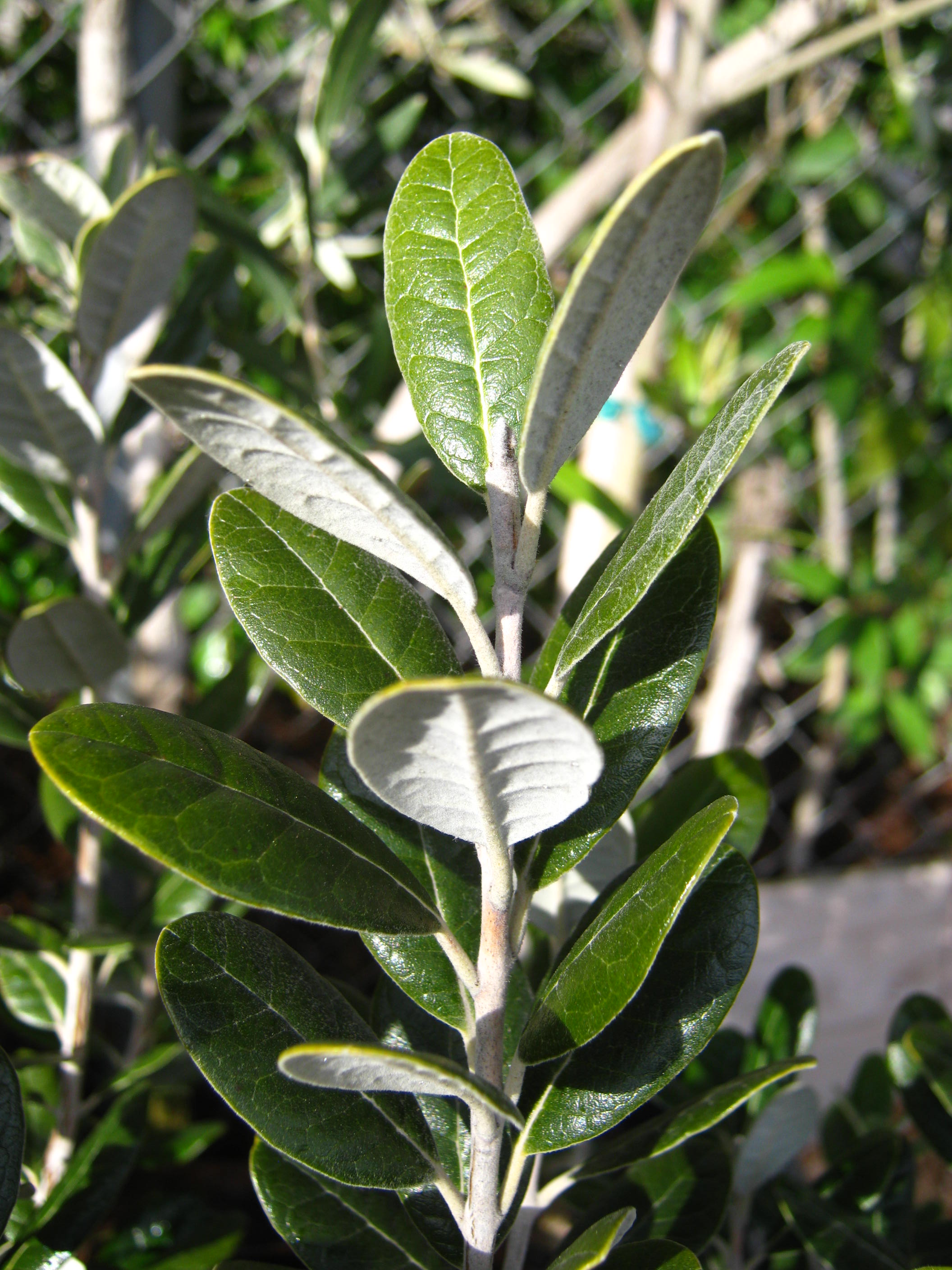
* Feijoa sellowiana

Pineapple guava

Plant named varieties if you want reliable fruit production. Edible flowers! Very drought tolerant. Fuzzy grey-green leaves make a nice contrast with red-leaved or shiny-leaved shrubs.


* Junipers:

Juniperus chinensis 'Torulosa' (also called 'Kaizuka')

Hollywood juniper

Striking, contorted upright growing juniper with dark green foliage. Excellent specimen plant. Very tough, drought-tolerant.


Juniperus scopulorum 'Gray Gleam'

Gray Gleam juniper

Other varieties of this species (Cologreen, Pyramidalis, Blue Haven) have similar growth habits. These are all pyramidal-shaped, upright growers useful in formal plantings. Wichita Blue is more cone-shaped. Very tough, drought-tolerant.


Juniperus virginiana 'Skyrocket'

Skyrocket juniper

Upright column like an Italian cypress. Useful for a formal effect in smaller gardens. Very tough, drought-tolerant.


* Laurus nobilis

Grecian Bay laurel

The bay leaf used in cooking. Very versatile garden plant. Large shrub, eventually growing to 30 feet +, but very upright habit and ease of pruning make it manageable. Will grow in total shade to full sun. Drought tolerant. Very easy to keep in a pot for years.


* Punica granatum

Pomegranates

All pomegranates tolerate heat, wind, drought, poor soil. Great choice for west exposure. Fruiting forms yield large crops here with no effort on your part. Fruitless forms with showy flowers are available and are equally tough.


* Vitex agnus-castus

Chaste tree

Light blue flowers; white form also available. Fast-growing large shrub or small tree with light green palmate leaves. Tolerates heat, drought; will grow in partial shade.


Previous (October 2011) article: Easy Steps to Reduced Water Use


Here are some lists of drought-tolerant plants
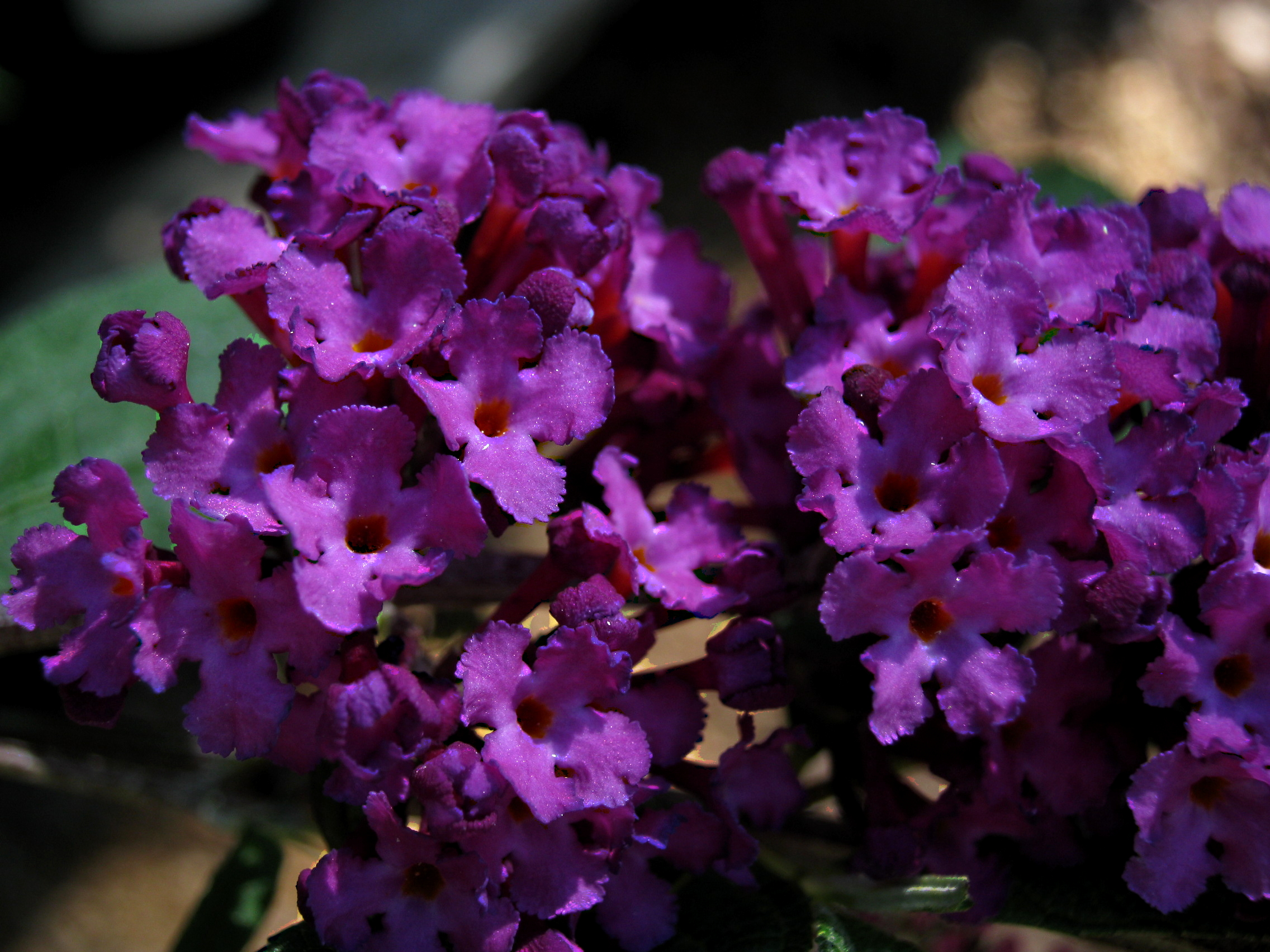


Buddleia davidii and hybrids

Butterfly bush


Buddleia hybrids have become very popular for their long season of bloom and attraction to hummingbirds as well as butterflies. Most have a somewhat open habit and benefit from light pruning for greater density. Shown here is the variety Royal Red.


Callistemon citrinus

Lemon bottlebrush


This is the most commonly grown species of Callistemon. The common name comes from the lemon scent when you bruise the foliage. The bright red flowers appear every two to three months throughout the year, often including the winter months, and attract hummingbirds and bees. Watering too often leads to iron anemia; this plant prefers very infrequent irrigation


Eleagnus ebbingei 'Gilt Edge' has creamy-margined leaves on an upright shrub to 8 to 10 feet or taller. Edible fruit is popular with birds.


Feijoa sellowiana, Pineapple guava, has leaves that are green above, grey below. Flowers and fruit are edible.


Grevilleas are Australian shrubs with needle-like foliage and interesting, showy flowers over a long season. Hummingbirds are very attracted to Grevilleas. Shown here is the variety Scarlet Sprite.


Heteromeles arbutifolia, our native Toyon, is aptly called Christmas berry for the red fruit in wintertime. A yellow variant, Putah Gold, can be seen in the UCD Arboretum. Toyons grow at a moderate rate to ten feet or more. The flowers attract beneficial insects, and the berries attract songbirds.


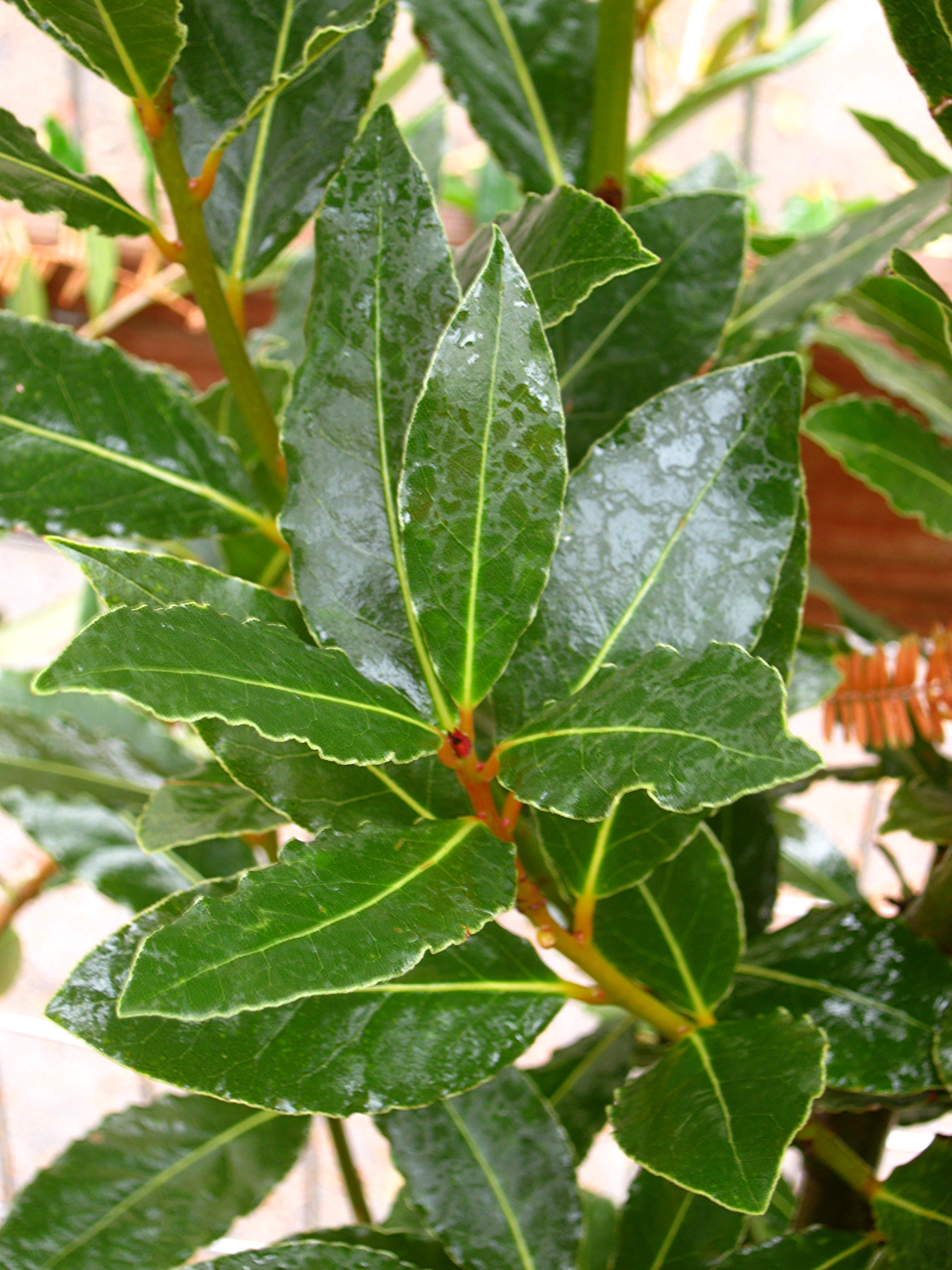
Laurus nobilis, Grecian bay laurel, has shiny leaves that are so iconic that similar leaves on other plants are called 'laurel-leaf'. Crush the leaves to get the familiar pungent bay scent; this is the culinary bay.


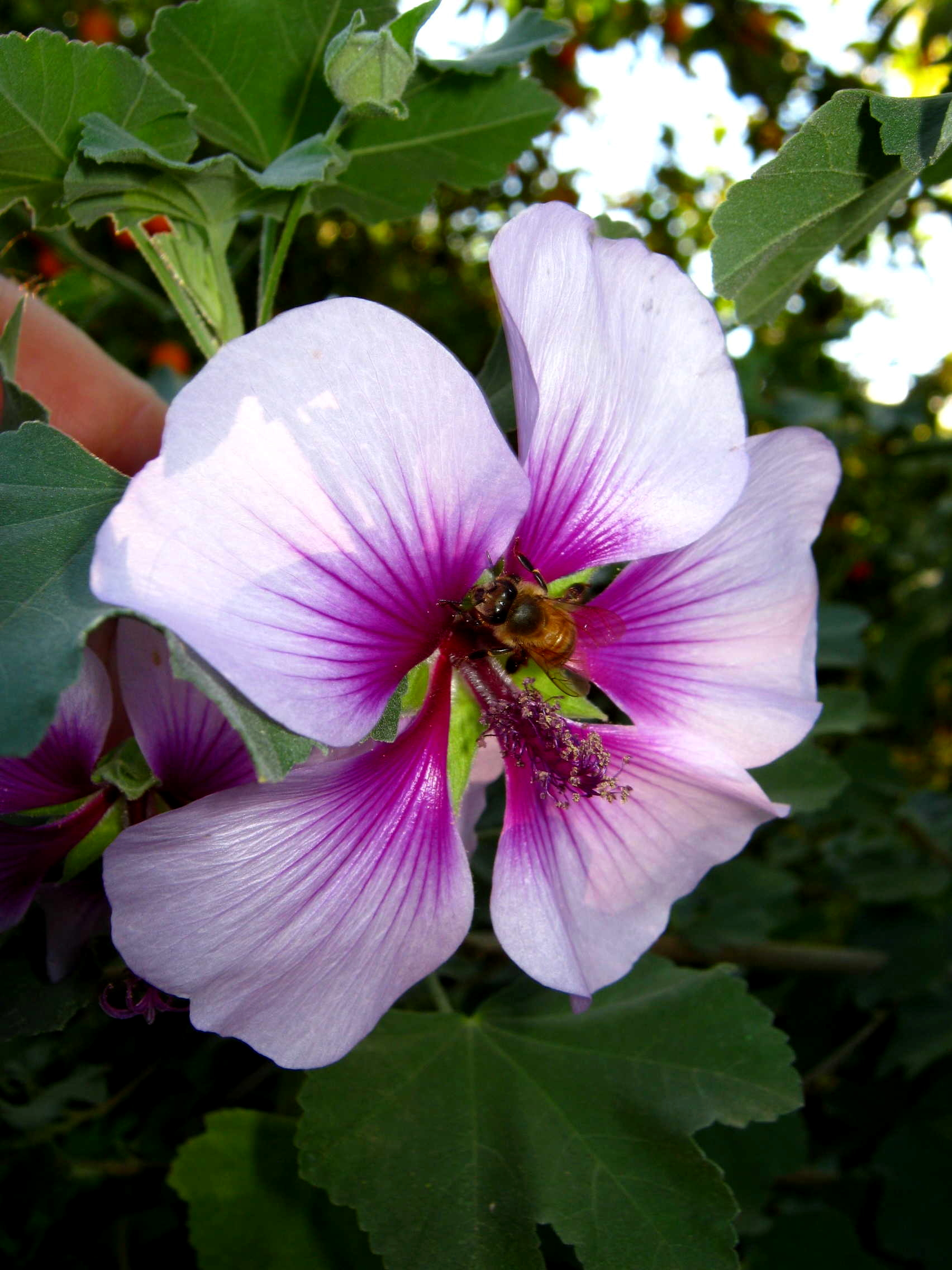
Lavatera bicolor, Bush mallow, is a hibiscus relative that is cold-hardy and drought-tolerant. Showy pink-lavender blooms over a very long season.


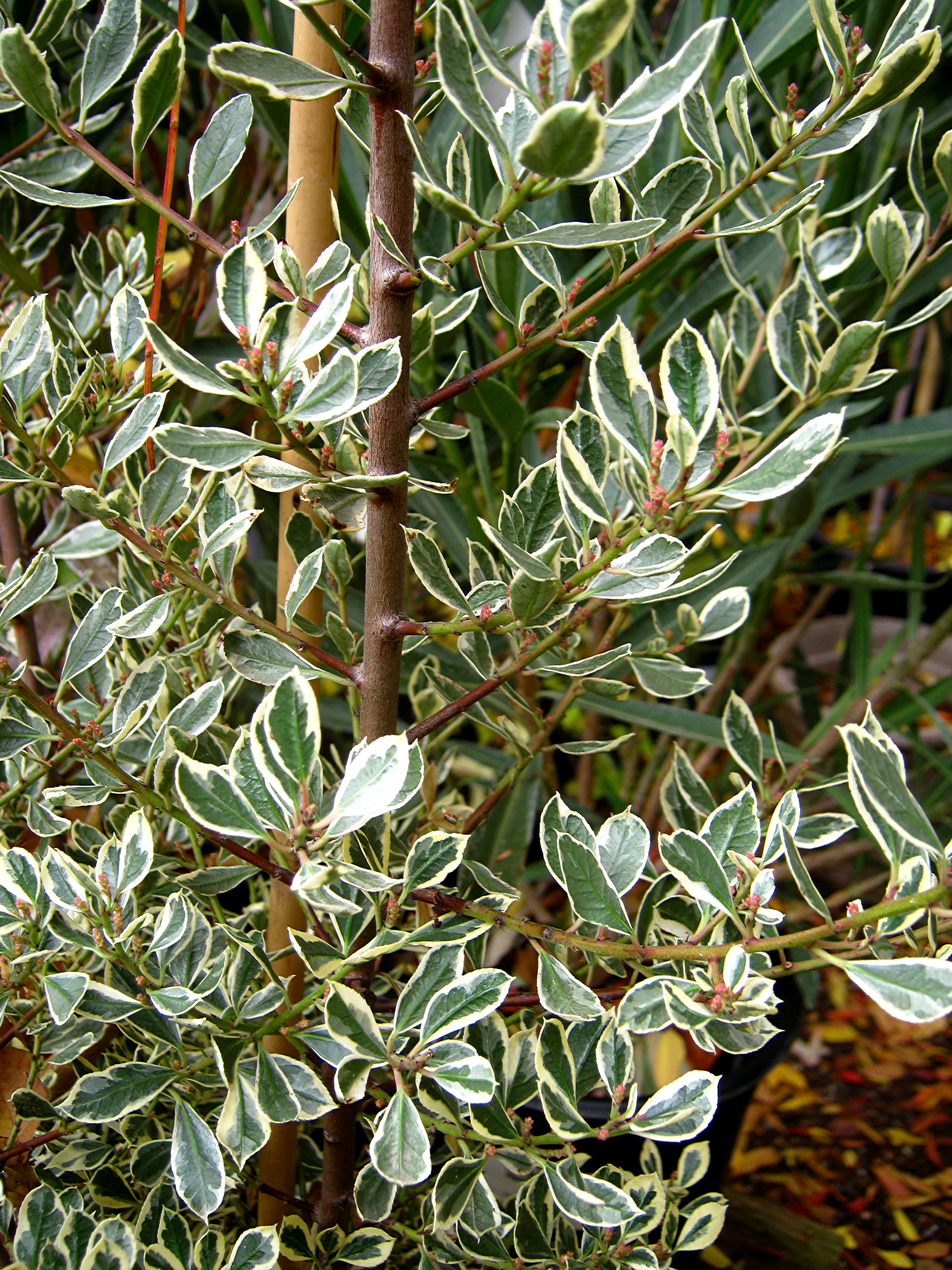
Rhamnus alaternus 'Variegata', the variegated Italian buckthorn, has an upright growth habit. Songbirds like the tiny fruit.


Xylosma congestum

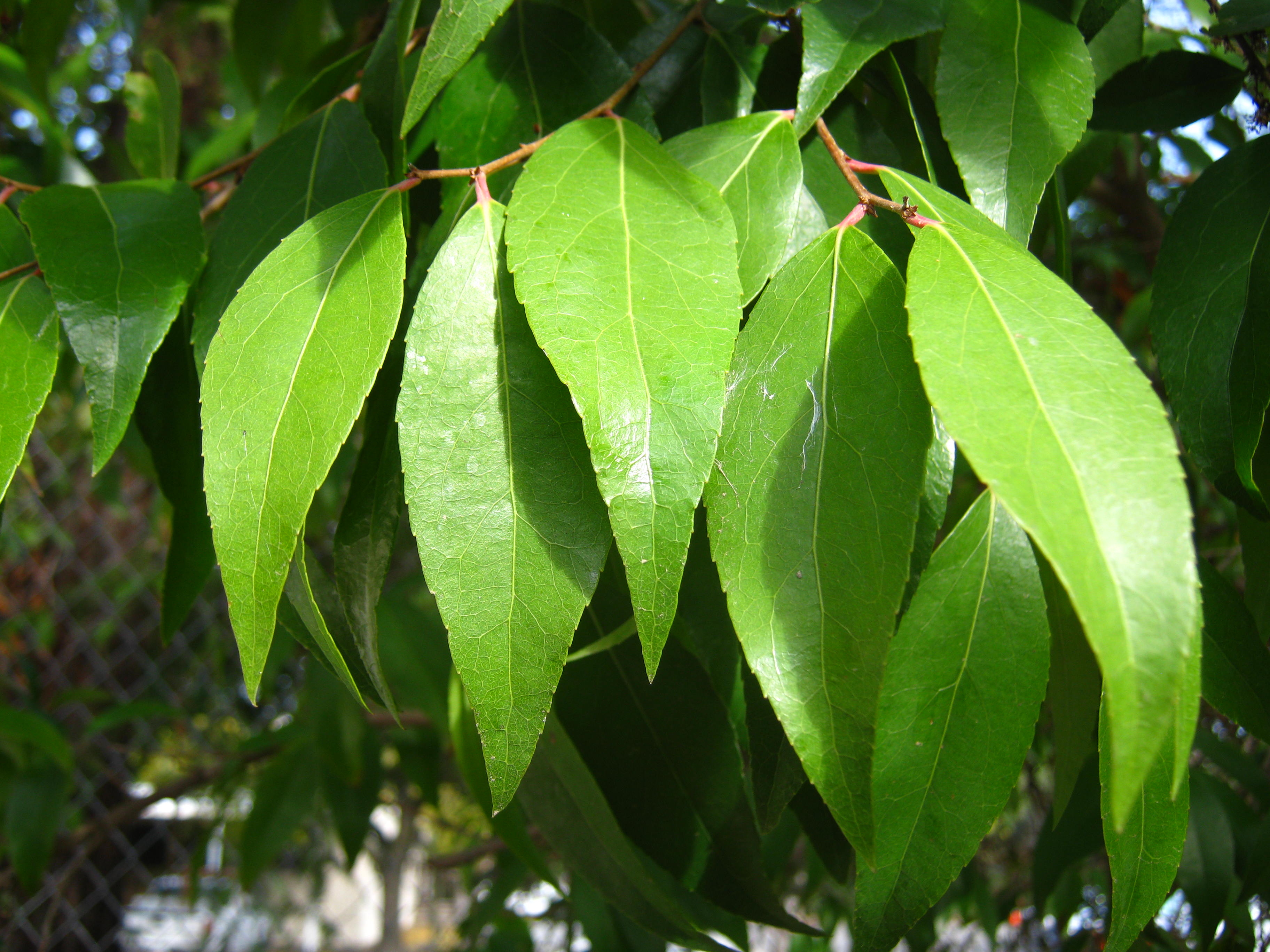
Shiny xylosma is one of the toughest, most useful evergreen shrubs around. Extremely tolerant of heat and drought, ok with some shade, it can be clipped as a hedge or even trained as a small tree. Variety Compacta is denser, has thorns.

Saturday, November 5, 2011

Easy Steps to Water Conservation

Easy Water Conservation.


Water rates are in the news, and we are getting more interest in lower-water landscaping. It is estimated that 80% of residential water use is outside, with a very large percentage of that due to the lawn.
There are a number of easy ways to reduce your landscape water use.


First is to water correctly.


Water deeply, and as infrequently as possible for the types of plants you have chosen. For example, nothing needs water more often than twice a week during the summer here. Established shrubs and trees can often be watered once a week or less, if they get a thorough watering each time.
Most people could easily reduce their water use by 20% or more just by watering more deeply but less often.


Second is to zone your plants by water need.


You may wish to have a tropical oasis or fern grotto, so put those plants together in one area. You might want a lawn area. Your shrubs and trees don't need to be watered as often as those other types of plants.


Third is to reduce lawn area if possible.


Your lawn, properly watered, uses about 1000 gallons per 1000 square feet each week. And many people apply much more water than needed. Some turf species are more tolerant of infrequent watering, but in nearly any case the lawn is the highest water user in the landscape.

"Form follows function," Louis Sullivan said. Let your landscape form follow the actual use patterns of your family. Lawns are for kids and dogs, and are usually unneeded in front. Put lawn where you will use it, not just where you'll look at it.


Fourth is to choose plants that use less water.


For this article I'll focus on ground covering plants that can replace your lawn and use less water. First is the botanical name, then the common name if there is one. Landscape designers can choose from among Mediterranean plants, natives of South Africa and Australia, California natives, and more.


Herbaceous (soft) ground covers


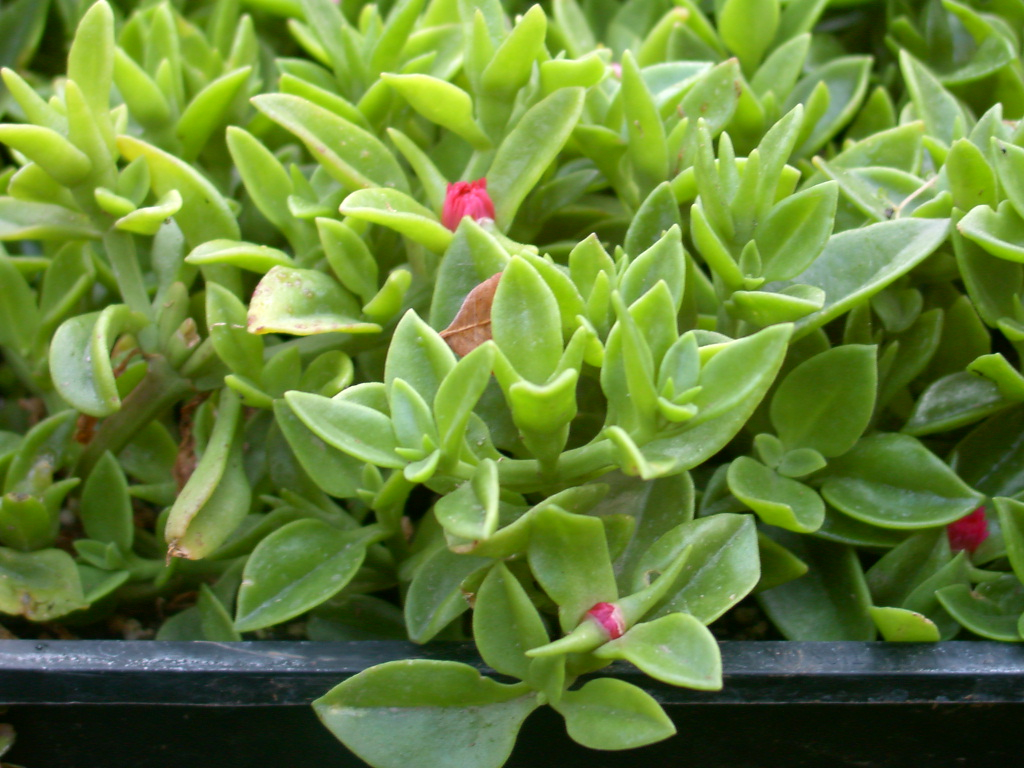
* Aptenia cordifolia

Red apples

Popular succulent with red flowers. Rampant! Blooms freely, smothers weeds. Bees love it. Frost turns leaves to mush, but it quickly resprouts in spring.


* Dymondia margaretae

Very tough, low-growing ground cover for dry areas. Little yellow flowers. Some die-out if overwatered. May be damaged in cold winters, but recovers. Excellent between step stones.


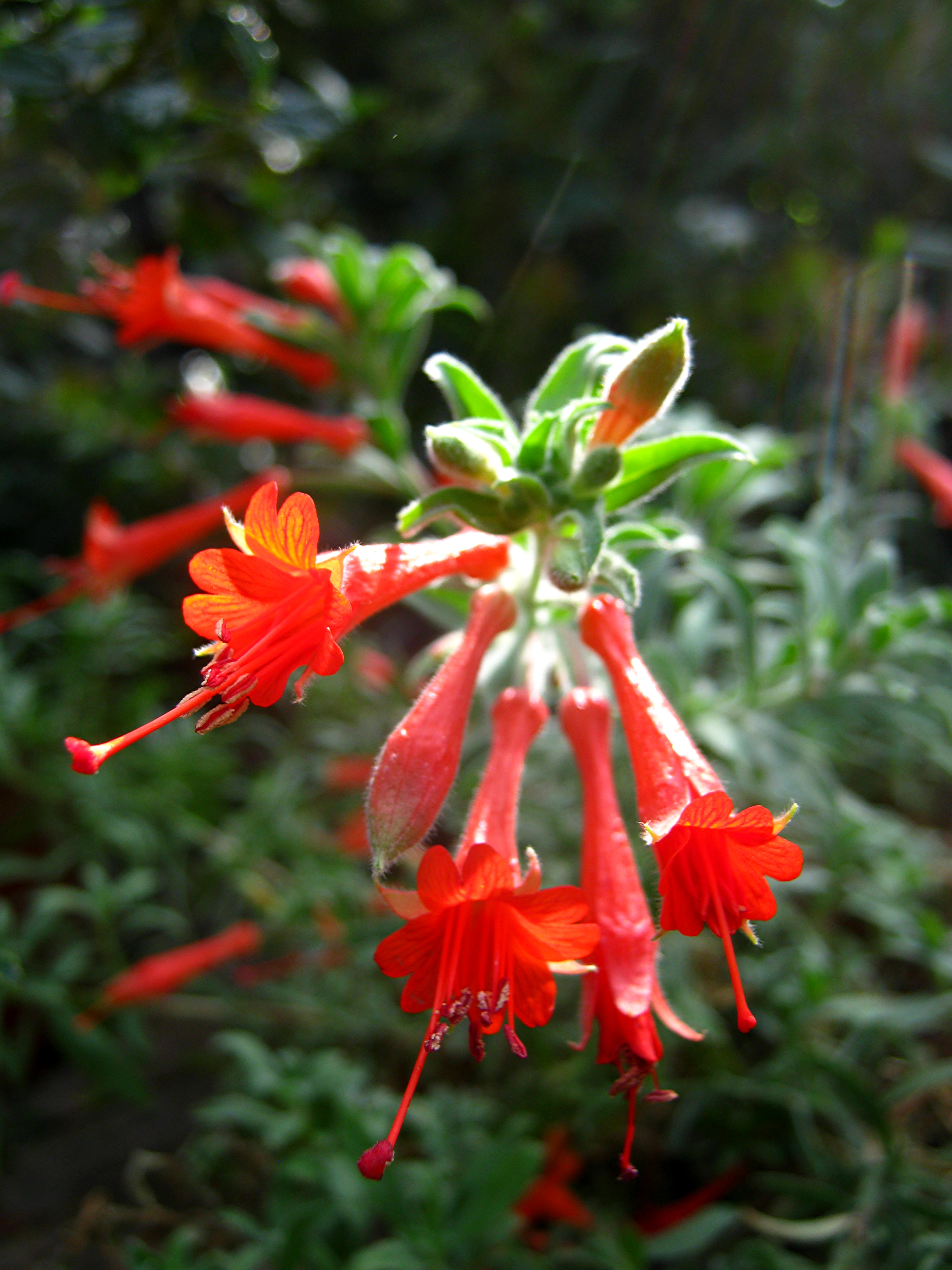
* Epilobium species (formerly Zauschneria)

California fuchsia

Several species and varieties, ranging from 6" to 2'+. Bright orange-red flowers in late summer through fall attract hummingbirds. Tolerate drought or infrequent watering. Will grow in very light shade or full sun. Cut back when they look rough in the winter.


* Festuca ovina glauca

Blue or Grey fescue

Little tufts of silver grass foliage to about a foot tall. Single plants make a clump. Planted on 6 to 12 inch centers, makes an informal grey meadow.


* Gazania hybrids

G. leucoleana forms spread, have silver foliage, yellow or orange flowers. Clumping types have showier flowers, but don't cover ground as thoroughly--better in perennial borders.


* Lantana sellowiana

Trailing Lantana

Lavender flowers all summer and fall; there is a less-common white form. Grows to a foot tall, with each plant spreading 6 - 10'. Very tolerant of heat and drought.

Cut back in spring to remove frost damage. Also sold as L. montevidensis.


* Rosmarinus officinalis

Rosemary

There are selected forms with spreading habit, and others that are upright. They vary in height (1 - 2 foot +), depth of blue flower color. All can be used in cooking.


* Sedum confusum

Golden sedum

Dense, slow-growing succulent with shiny yellow-green leaves and showy yellow flowers. Great for edging; mix with grasses, use in pots, around stepstones. Takes sun or moderate shade, drought or average watering.


* Sedum spurium

Dragon's Blood sedum

Very low succulent grown for attractive reddish-bronze leaves. Tolerates sun or some shade; average watering or drought. Color intensifies in winter. 'Tricolor' has leaves that are white, pink, and green.


* Zoysia tenuifolia

Korean grass

Very dense, interestingly lumpy grass ground cover with needle-fine leaves. Dormant (brown) in winter. Very tough.


Vines that are planted as ground covers.


These are especially drought tolerant.


* Sollya heterophylla (fusiformis)

Australian bluebell creeper

Small, with dense, tiny, shiny leaves. Can be used as a ground cover. Grows slowly to about 6' tall when supported; 1 - 2' as a ground cover. Nodding blue flowers in summer; 'Alba' has white flowers. 'Boddy's Choice' is a very slow-growing type grown as a shrub or ground cover. Quite shade or sun tolerant, will grow under Eucalyptus trees.


* Trachelospermum asiaticum

Asian jasmine

Nearly always grown as a ground cover. Hardly ever flowers; grown for shiny leaves and exceptional durability. Can be tied up as a vine, but doesn't twine.


* Trachelospermum jasminoides

Star jasmine

Super fragrant flowers in May and June. Tolerates heat, cold, sun, shade, poor soil, drought or watering.


Shrubby ground covers


There are many woody plants that spread across the ground, making a shrubby ground cover. These tend to be two to three feet high.


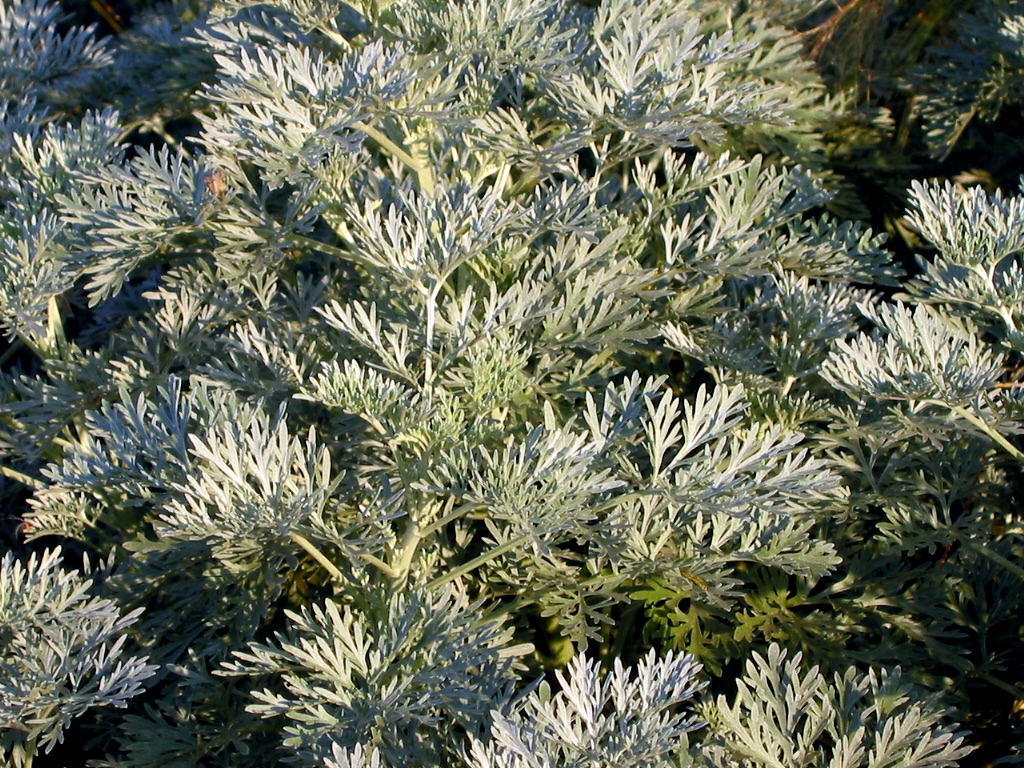
* Artemisia 'Powis Castle'

Vigorous spreader with silver, ferny foliage. Extremely tolerant of heat, drought; ok in partial shade. Leaves have a strong medicinal scent. Completely shades out weeds. Can cover quite an area!


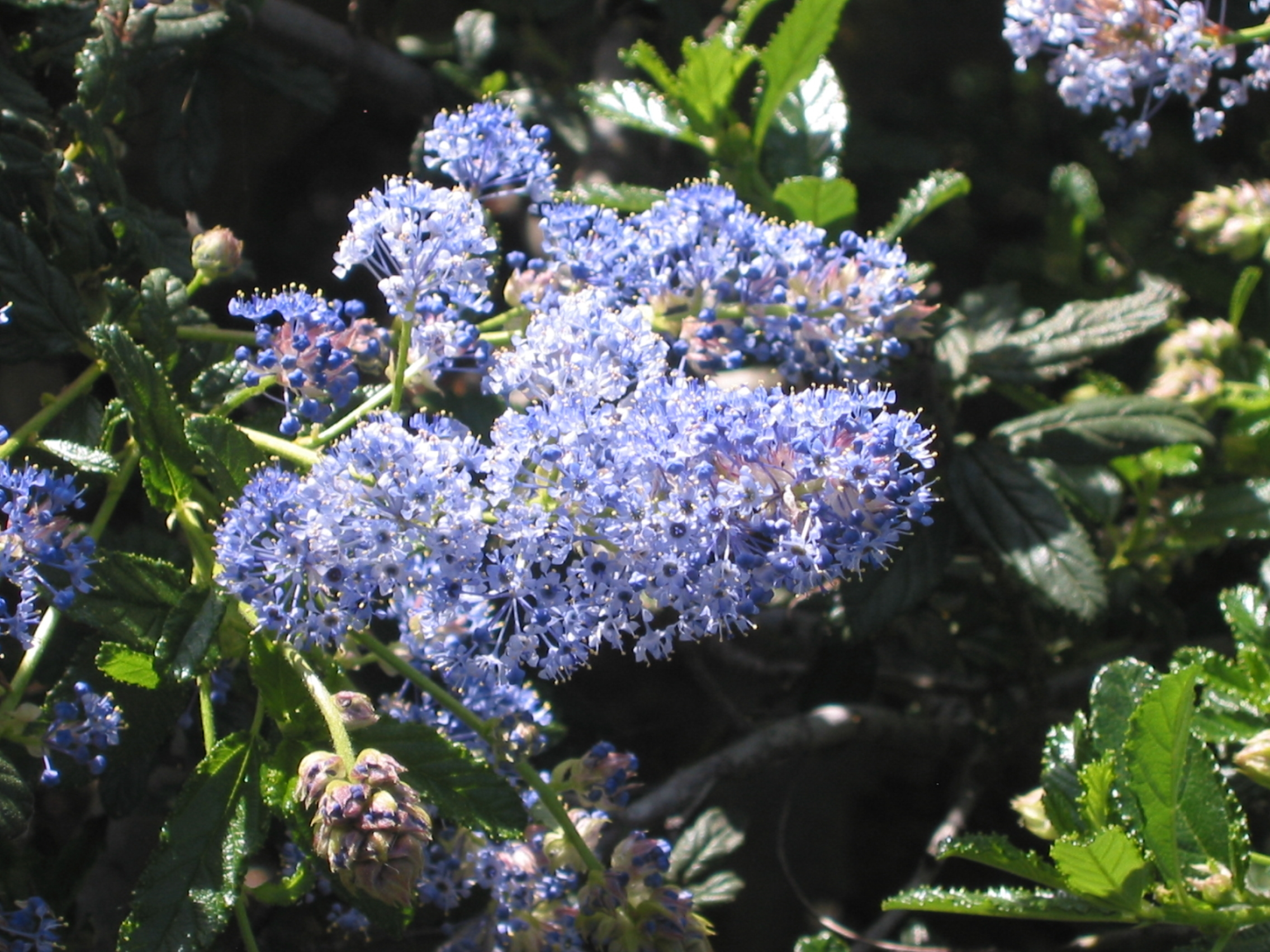
* Ceanothus species

Wild lilac

Several low spreading varieties are used as ground covers. Attractive shiny leaves; pretty blue flowers in spring. Ground cover forms range from a few inches to a few feet tall, spreading several feet. Don't plant where they'll have to be pruned. Water deeply and very infrequently in summer. California native.


* Euonymus fortunei 'Emerald Gaiety'

Variegated Wintercreeper

Low grower creeps along the ground, or can be clipped as a shrub. Very tough, tolerant of shade or sun. Flowers aren't noticeable. White portions turn pretty pink color in winter.


* Mahonia repens

Creeping mahonia

Shiny leaves, yellow flowers, shade tolerant. Slow to get going, but persistent and tough.


* Ribes viburnifolium

Catalina perfume, Evergreen currant

Will grow in considerable shade. Spreads steadily to make an attractive ground cover. Fragrant foliage. Very small light pink flowers in winter attract hummingbirds; red berries attract songbirds. California native.


How to do it.


You will need to kill out your grass somehow first. You can spray with an herbicide, or cover the area with black plastic for several weeks. Get your turf species identified since some grasses can be persistent and troublesome, especially bermudagrass. The plants listed don't need any special soil preparation. Rototilling will make planting easier. But you can just dig individual holes for the small plants.


Watering of the new plantings can be done with your lawn sprinklers, but you will water far less often. Or you can convert your system to drip irrigation. You may want to ask a landscape contractor for help if you do that.


Unplanted areas can be covered with a thick mulch to retain moisture and prevent weeds. Any bark or compost product can be used. Local rock yards can deliver bulk quantities at a reasonable price.
You need to do a little math to order the right amount of mulch. For two inches of mulch on 100 square feet, you need 16.7 cubic feet (100 divided by 6 = 16.67 cubic feet). There are 27 cubic feet in a cubic yard.


Green is good, but green lawns are high water users. So reducing your water consumption often begins right in the front yard, by choosing water-thrifty plants.

Some choices:


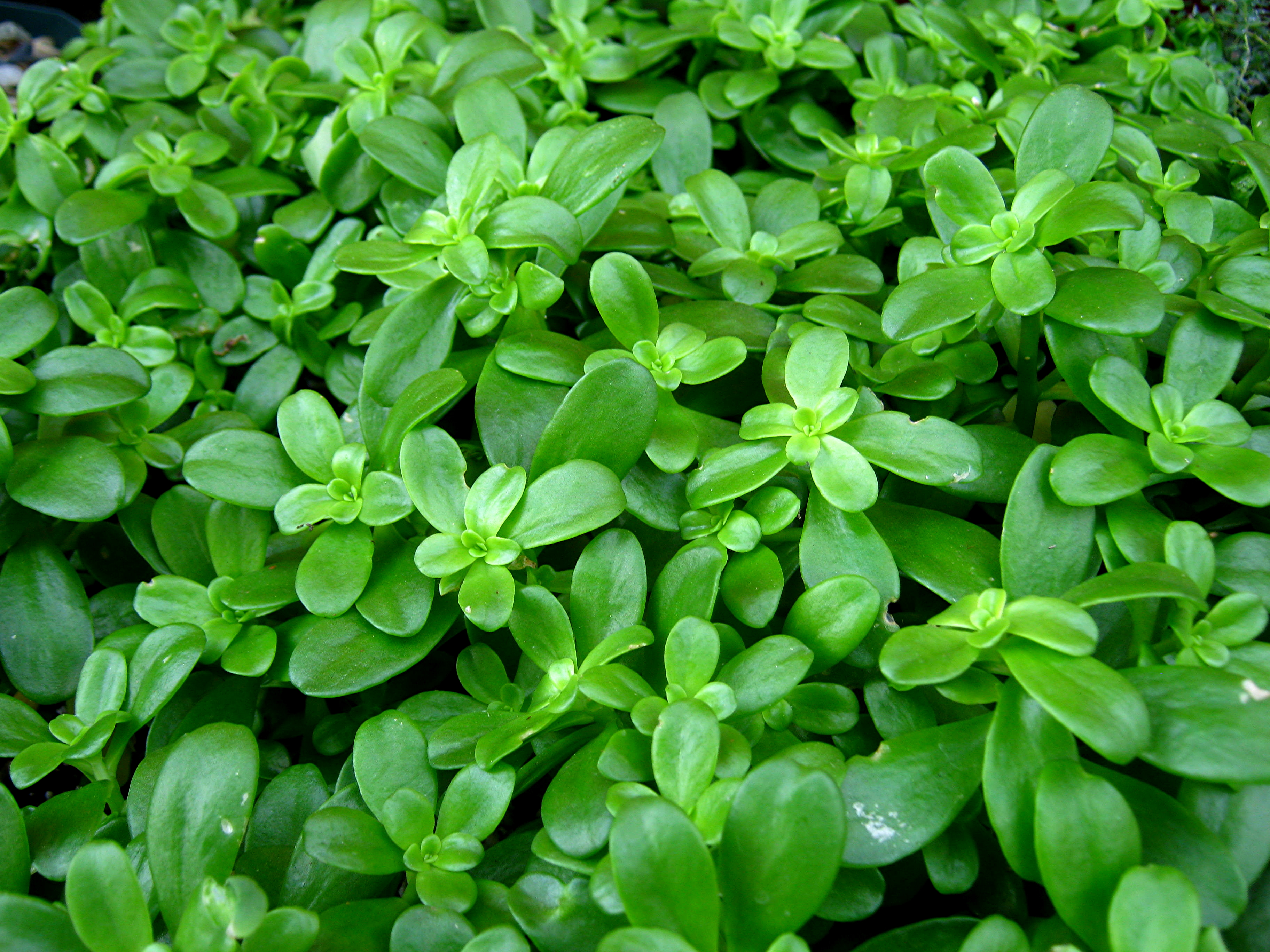
Aptenia cordifolia, commonly called Red Apples, is a fast-spreading succulent ground cover that smothers weeds. The red summer-long blossoms attract bees. It is best planted in spring or summer, as winter cold often causes top damage. But it recovers even from severe freezes.


Artemisia Powis Castle is a hybrid sagebrush. Tolerant of sun, drought, reflected heat, poor soil. It is a spreading shrub that suppresses weed growth. A single plant can spread six to eight feet or more.


Ceanothus is our native wild or mountain lilac. Forms of the shrub range from trees to a number of cultivars with low, spreading growth habit. The latter can be used as ground covers in very dry landscape plantings. Caution: Ceanothus need good drainage and cannot tolerate regular landscape irrigation.


A very tight-growing ground cover in the daisy family, Dymondia margaretae hugs the ground with silvery foliage. The small flowers are yellow. It can take light traffic and is suitable around step stones


Formerly Zauschneria, now Epilobium, commonly called California fuchsia. The late summer and fall flowers are orange-red and highly attractive to hummingbirds. Spreads steadily, though not invasively. Once established it needs little or no summer water.


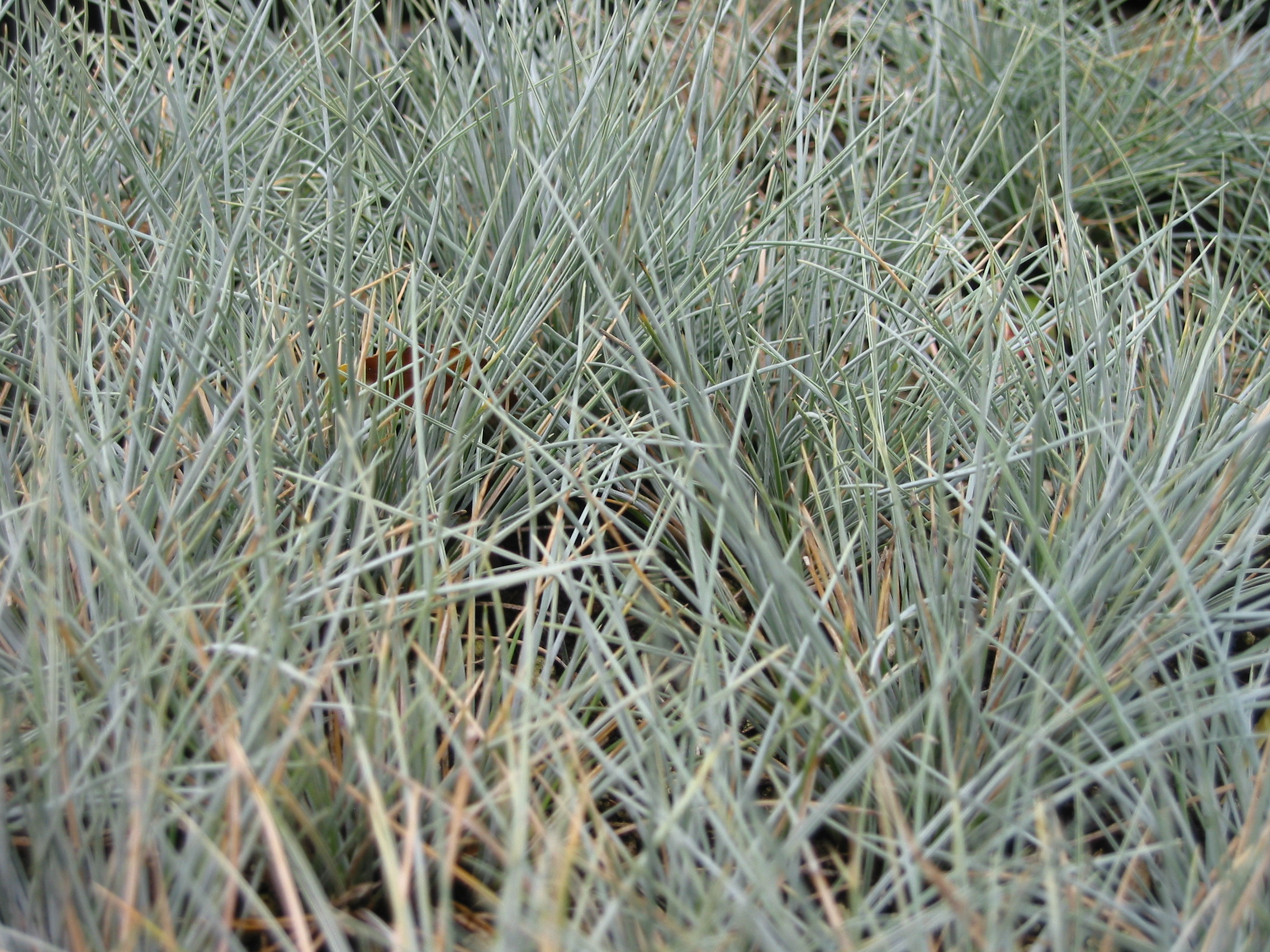
There are many ornamental grasses that can tolerate, or even prefer, much less frequent irrigation that turfgrass species. Most grow in clumps, so they aren't lawn substitutes. But they can make attractive informal groundcovers. Shown here is Festuca ovina glauca, the blue or grey fescue. Planted close together, the plants look like an informal tall lawn or meadow.


There are trailing and clumping types of gazanias. The clumpers have very showy flowers over a long period, but don't spread enough to considered ground covers. Shown here in a hot, barely irrigated bed, these plants are several years old and blossom from October through May. The low spreading types have silver foliage and hug the ground.


Succulent ground covers can tolerate long periods without water, and Sedums (commonly called stonecrops) are very cold tolerant as well. Sedum confusum, the Golden sedum, can tolerate shade as well as full sun. Golden yellow flowers in spring.


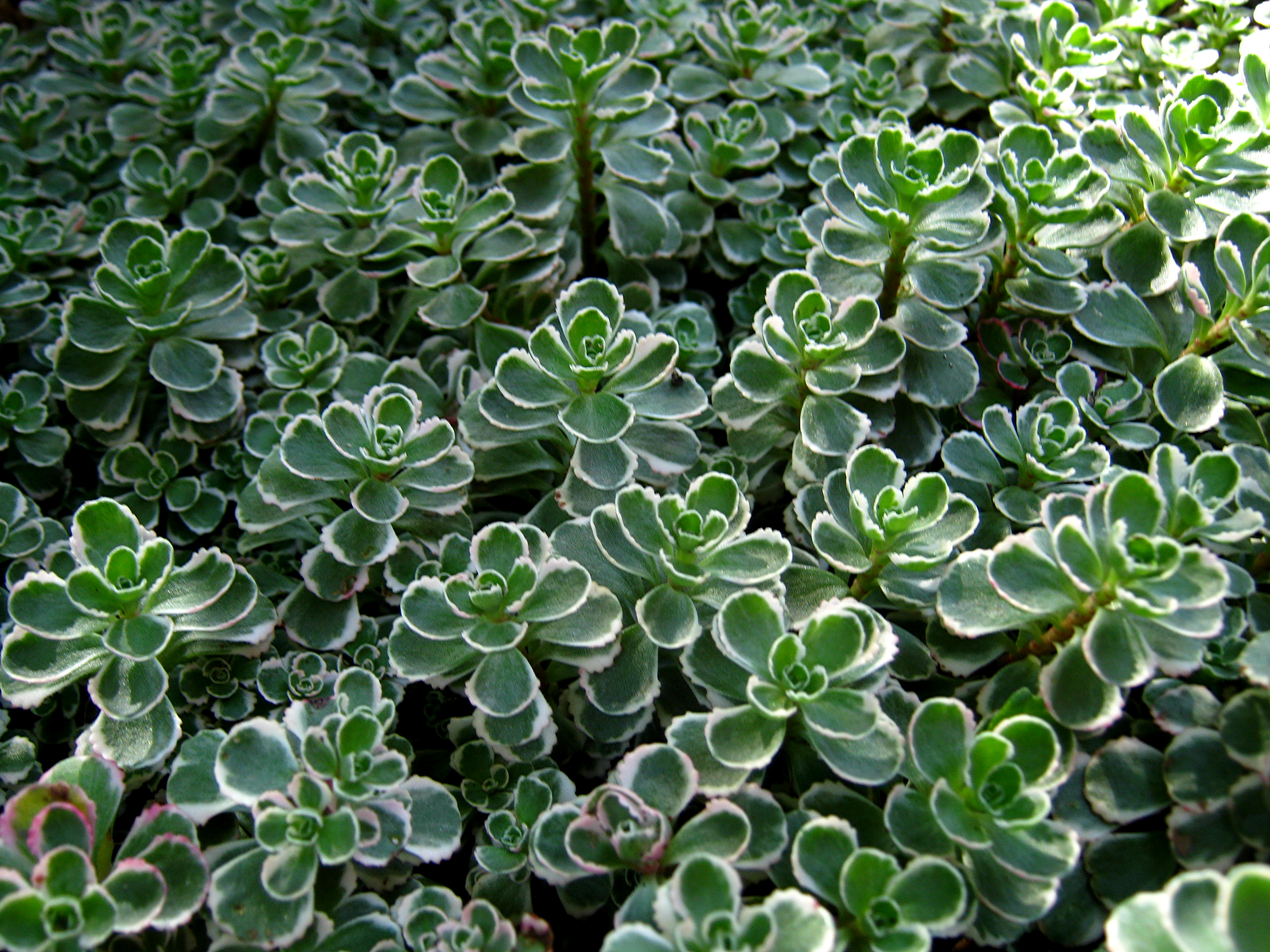
Another sedum is the Dragon's Blood, named for the winter color of the foliage. Shown here is a variegated version: Sedum spurium 'Tricolor'.


Wednesday, October 19, 2011

Bulbs!


From the Davis Enterprise, October 28, 2004

Click here for a newer article.


Bulbs have got to be the easiest things we plant in the garden, with the highest bloom:effort ratio. Dig a hole, stick 'em in, cover with soil, and water. The rains come along and do the rest. A few weeks later, up they come--growing and blooming without any more work by you.


Some technical terms.


'Bulb' is a generic term for modified, swollen stems. A true bulb has a set of overlapping, fleshy leaves, usually surrounded by dry, papery skin that protects it from drying. Cut a true bulb in half and it'll look somewhat like an onion on the inside (it'll also be useless after you do this!). Corms, rhizomes, and tubers are other modified stems that are sold as 'bulbs'. The primary function of each is to store food and some water, and each has one or more growing points to start new plants.


Bulbs are perennials, meaning they bloom again after the first season. Some repeat for a few years; others spread for many. Most are cold hardy. Subtropical types (paperwhites, freesias) need winter protection in colder climates, which is important to know if you are sending them as gifts.


How do you plant them?


It's so easy, even a child can do it. In fact, since it's down at the ground level and we are old and stiff, it might be better if a child did it. And bulb planting is a great thing to do with kids; it's nearly impossible to make a mistake.


--Dig a hole a little more than twice as deep as the bulb is tall--a 3" daffodil goes into a 6" hole. I generally dig holes wide enough for several bulbs, since a solitary bulb looks pretty lonely the first season, and plant them 3 - 4 inches apart. Exceptions: iris rhizomes are planted only half-buried. Amaryllis should have their necks exposed.


It's not necessary to mix compost in the soil, but the bulbs will grow and increase more quickly if you do. I've done plenty of bulb planting in soil that was too muddy to mix anything into. They'll be fine.


--Sprinkle some fertilizer in the bottom of the hole. It should have some nitrogen and a fairly high amount of phosphorous (those are the first two numbers on the label). Bone meal is popular due to the high phosphorous content, but it is very, very slow acting. Commercial bulb foods are better (specialty vegetable or flower foods are fine, too).


--Set the bulbs a few inches apart. The point goes up (this may seem basic, but it's pretty important!). Some bulbs don't have an obvious point, so look for the scarred area where roots used to be and put that side down. If you really can't figure it out, put it on what appears to be the side. Ranunculus are planted 'prongs down'.


--Cover with soil and water to settle the soil. That's it! Winter rains will take care of the rest.


It is ok to plant low-growing annual winter flowers right on top of the bulbs: pansies, violas, sweet alyssum, Cyclamen, and dwarf snapdragons all make excellent companions. Low ground covers are also great. The bulbs will grow right up through them to make a spring bouquet.


When to plant?


Anytime between September and early January. Tulips and Hyacinths shouldn't be planted until the soil has cooled, meaning after the end of October. If you find the bag of bulbs in your garage in January or February (we get these calls every year…), plant them. They'll still grow and bloom, albeit a little later than normal, and they'll be back on cycle the next year.


Bulb plants continue to grow for several weeks after they bloom, storing energy for the following year. If you cut off the foliage, you weaken the bulb. So let them die down naturally, though you can tie or braid the foliage if you want to look fastidious.


There's no need to dig up bulbs for the following year. If they've been in the ground for several years and are blooming less and less, it may be time to divide them. Or they may be getting too much shade. In either case, just after (or as) they die down is a good time to dig them. Replant them right away, or store them in the garage until fall.


It used to be recommended to put tulips and hyacinths in the refrigerator for 4 - 6 weeks before planting, but this is unnecessary. Just wait until the soil is cool. Pre-chilling WILL make them break dormancy and bloom all at the same time, so if you want your tulips to flower uniformly go ahead. Do NOT put them in the freezer (we get calls….). That kills them.


Some bulbs are planted in the spring for summer bloom--Dahlias, Gladiolus, and others. We plant those from February into the summer, depending on the type.


Which to grow?


Daffodils and narcissus


are the easiest of the bigger-flowered bulbs. At a minimum, they'll repeat their bloom for a few years. Some varieties will multiply, giving more flowers every year.


A note about the names: all are members of the genus Narcissus. Those with a single large flower (usually with a trumpet) are called daffodils. Those with small flowers in clusters are called narcissus. The fragrant ones with pure white blooms in early winter are paperwhites, a type of narcissus; there is a yellow form and another called the Chinese sacred lily in this category. Europeans call the whole group 'jonquils', but we use that term for a particular, small, fragrant narcissus. Confusing, eh?


Some good daffodil choices:


  • February Gold (short, very early dwarf trumpet; spreads freely)

  • Fortune (orange/yellow, spreads vigorously)

  • Flower Record (white with orange cup)

  • Ice Follies (white with pale yellow large cup; spreads vigorously)

  • Mt. Hood (ivory white)

  • Salome (pink, sort of)

  • Spellbinder (yellow with white trumpet--striking!)


Good narcissus choices:


  • Cheerfulness

  • Geranium

  • Pheasant Eye

  • Thalia

  • Yellow Cheerfulness

  • Miniatures: Baby Moon

  • Tete-a-Tete (one of the best!)


'King Alfred' was once a variety of large, yellow trumpet daffodil. It is now a generic name for that type; Unsurpassable and Early Splendor are newer, more vigorous varieties that will repeat and increase somewhat.


Irises


are very easy--both the large-flowered bearded types (grown from rhizomes) and the Dutch irises grown from bulbs. Not generally the most attractive garden plants, but worth the space for fragrance and cutting. There are also cute miniature types which bloom very early, and other species which can grow standing in water. A diverse group.


Tulips, hyacinths, and crocus


will bloom very nicely the first spring. The trick to getting them to bloom in subsequent years is to plant them where they won't get watered in the summer. Tulips with minimal summer water will repeat, though the flowers will be smaller, and hyacinths will increase. These latter have powerful fragrance reminiscent of Grandma's perfume. Giant Dutch crocus tend to peter out after a couple of years, but the species crocus will increase and bloom -- as early as late January here.


Some species of tulips come from Mediterranean climates similar to ours and will naturalize happily here. Tulipa chrysantha, T. clusiana, and others have miniature flowers on short stems. A half-dozen bulbs will increase to 2 - 3 dozen plants within just a few years. Grape hyacinths share the common name but are an entirely different plant (Muscari). These have short, purple flowers and spread very, very freely. The saffron of commerce is Crocus sativus--like some Mediterranean species, it blooms in the fall, and is easy to grow and increase here (coming as it does from Greece, a climate similar to ours).


'Minor' bulbs.


Many of these (i.e., small bulbs and flowers) spread to the point of being almost annoying. Cheap, easy, and prolific. Most can tolerate some shade, will spread through flower borders and even into lawns.


Some old favorites just don't get enough winter chilling to bloom again, including Lily-of-the-valley and Snowdrops (Galanthus). Freesias are popular for fragrance, and very successful. The old-fashioned yellow and white forms are most fragrant.


Good 'minor' bulbs for this area:


  • Allium (ornamental onions)

  • Brodiaea

  • Freesia

  • Hyacinthoides (Wood hyacinth)

  • Ipheion (Spring starflower)

  • Leucojum (Snowflake)


There's no hurry on getting bulbs planted after you buy them. They do their thing with little input from us. They announce the spring with colorful bursts in every hue. These little storage units have everything they need, lying dormant through winter cold or summer drought, ready to expand and grow when conditions are to their liking. What a great adaptation the bulb is--for us!

Saturday, September 24, 2011

A Zen Garden In Davis


Written for the Davis Enterprise, August 25, 2011

Click on any image for a larger version


-----


---


-----


---


-----


---


-----


---


---


-----


---


-----


The first clue that this isn't a traditional California landscape is the branch of the Japanese maple peeking out behind the front gate. The drain channels filled with smooth pebbles and elegant "rain chains" are the next signs of some non-Western influences. Small plantings on the side as you walk around the house use gravel and interesting foliage plants.


Crilly Butler and his family live in a house on a quiet cul-de-sac in one of the newer subdivisions of east Davis. Crilly has visited Japan frequently and considers it his second home, and from the time they purchased the bare lot in 1996 they knew they wanted a zen garden. He invited me to view and photograph the garden this spring.


There are several styles of Japanese gardens. Karesansui is the waterless type, generally using limited amounts of plant material, moss (if possible), raked gravel to symbolize water, and groups of rock and stones. Lanterns and pavilions are often included in Japanese gardens of various types. Bamboo, both in plantings and used in construction material, is an important component. Among the many symbolic meanings for bamboo, I found humility, strength, readiness, resilience, simplicity, and more.


To the first-time visitor to a zen garden, it will seem bare. There are rarely flowering plants, and the seasonal changes are subtle. But the lack of abundance focuses the viewer's attention on those simple changes: the flush of new growth on the Japanese maples, the spectacular but fleeting bloom of the wisteria, the seasonal growth of moss on the boulders. In a more complex garden, these would be less individually notable.


From a design standpoint, I was curious how the garden would integrate in a California-style house (at least the exterior) and landscape, including some typical uses such as vegetables and roses. From a horticultural standpoint, my key question was: how did you confine the running bamboo?


Crilly answered my specific questions via email after my visit. As to my design question, it was clear that the zen garden is the strong visual element and that it was carefully designed to fill the key views from the house and patio. The roses and vegetable garden are in an appropriately sunny location off to the east side, just out of view from the house. The bamboo barrier is shown and described below. Note that it would be possible to use non-running bamboo varieties to avoid the confinement issue. Most clumpers, though, have very dense growth habit and might not provide the "see-through" effect that runners provide.


What was your motivation or inspiration for planting a zen garden?


I used to live in Japan, where I studied the martial art Aikido. I met and married my Japanese wife there 28 years ago. I've always loved my "second country", and deeply admire its aesthetic sense. We patterned our Zen garden after our favorite one, found at the famous Kyoto temple Ryoanji.

Did it replace an existing landscape?


We designed and built our Japanese/Western hybrid home on an empty lot, so we were able to plan our landscaping from scratch. Our Zen garden simply replaced barren ground. I think it's quite an improvement!

What year was the project begun, and when was it completed?


We began designing this garden in our minds as soon as we purchased our lot in 1996. After completing the Western rose and herb garden on the east side of our backyard, we started grading for the Zen garden in 2004, though we didn't actually began work on it until 2008. We finished building the border around it, and laying the gravel, in 2009.

Who helped with your design and installation?


My wife and I designed it ourselves, based, as I mentioned, on the garden at Ryoanji. You have to place the rocks just right, so they look as they should from every part of the yard, no matter what the angle. We used orange road construction cones to represent the three "islands", and over the course of 3-4 weeks, kept moving them around slightly until we were satisfied with their placement. My friend Steve Scott carried the large rocks into the yard in a sling attached to one of his small earth-movers, and helped us position them precisely. Other than that, my son Nicholas and I did all the work ourselves.

Tell us about selecting and installing the rocks.


We looked for just the right rocks for quite some time, but couldn't find any that looked like those at Ryoanji. Then we finally stumbled upon some petrified wood boulders at a quarry east of Sacramento. They were unexpectedly perfect!

Where did you buy your bamboo? Why did you select that species (Temple bamboo, Semiarundinaria fastuosa)?


Steve Scott, who's quite a bamboo aficionado, suggested the Temple Bamboo because of its very erect, tall and beautiful culms. We drove his truck to Bamboo Sourcery in Sebastopol, which is an amazing place. They had over three hundred varieties of bamboo there at the time. We planted them about two feet apart in an L-shape along most of our back fence, with the leg extending out about ten feet along the west side of our yard.


Because this species is quite a runner, I trenched around the planting area four feet deep and six inches wide, which I filled with rebar and concrete to keep the bamboo contained. There's nothing worse than seeing your bamboo growing up through the bottom of your neighbor's swimming pool, and I take being a good neighbor very seriously!

Just to verify: your barrier is a concrete trench 4 feet deep, six inches wide, with concrete rebar at 1 foot intervals. Watering is via drip soakers. How often do you run them? What other maintenance do you do?


I ran schedule 80 pvc underground to one end of the bamboo and installed a drip system using three separate soaker hoses winding through the base of the culms end-to-end. It runs for about 20 minutes three times per week in summer, and much less during the other three seasons.


Since bamboo takes in a lot of its moisture through its leaves, I also soak it down top to bottom with a hose periodically, especially when the humidity has been very low for a while. I fertilize every spring with a good lawn fertilizer mixed with FST, since the concrete probably raises the pH of the soil quite a bit. Every winter I thin out the older culms to make room for new growth. I leave the fallen leaves to decompose, rather than removing them, because of their high silica content, which growing bamboo loves.


Some further notes:


A very important part of this barrier system is the maintenance gap between the hedge and the fence. Rhizomes can grow right over a barrier and root, and can readily grow under a fence. Rhizome growth occurs mostly in the spring, so one seasonal walk (sidle, really) behind the hedge to check for escapees will be sufficient. Barriers can be made from very thick polypropylene (60 ml is best). This installation is much more attractive, in my opinion.


Although a zen garden can use considerably less water overall than a more traditional landscape, due simply to the large area without plants, those that are used tend to be high water users. Bamboo and Japanese maples look best if they are not drought stressed.


Japanese maples have some special preferences here. They prefer acid soil with abundant organic material, so turn in lots of planting compost and soil sulfur at the time of planting. While they can take morning sun, Japanese maples will burn in afternoon sun. Finally, true moss is seasonal in our dry, hot climate. Various ground covers can be used as substitutes.


Crilly Butler is a Senior Information Systems Analyst for the California Department of Fish and Game. He also owns the Davis-based Web development company, Develomation.


Steve Scott (http://stevestrees.com/) is a landscape contractor who specializes in moving large field-dug trees.


Thursday, August 25, 2011

We get questions...

In the flower garden:


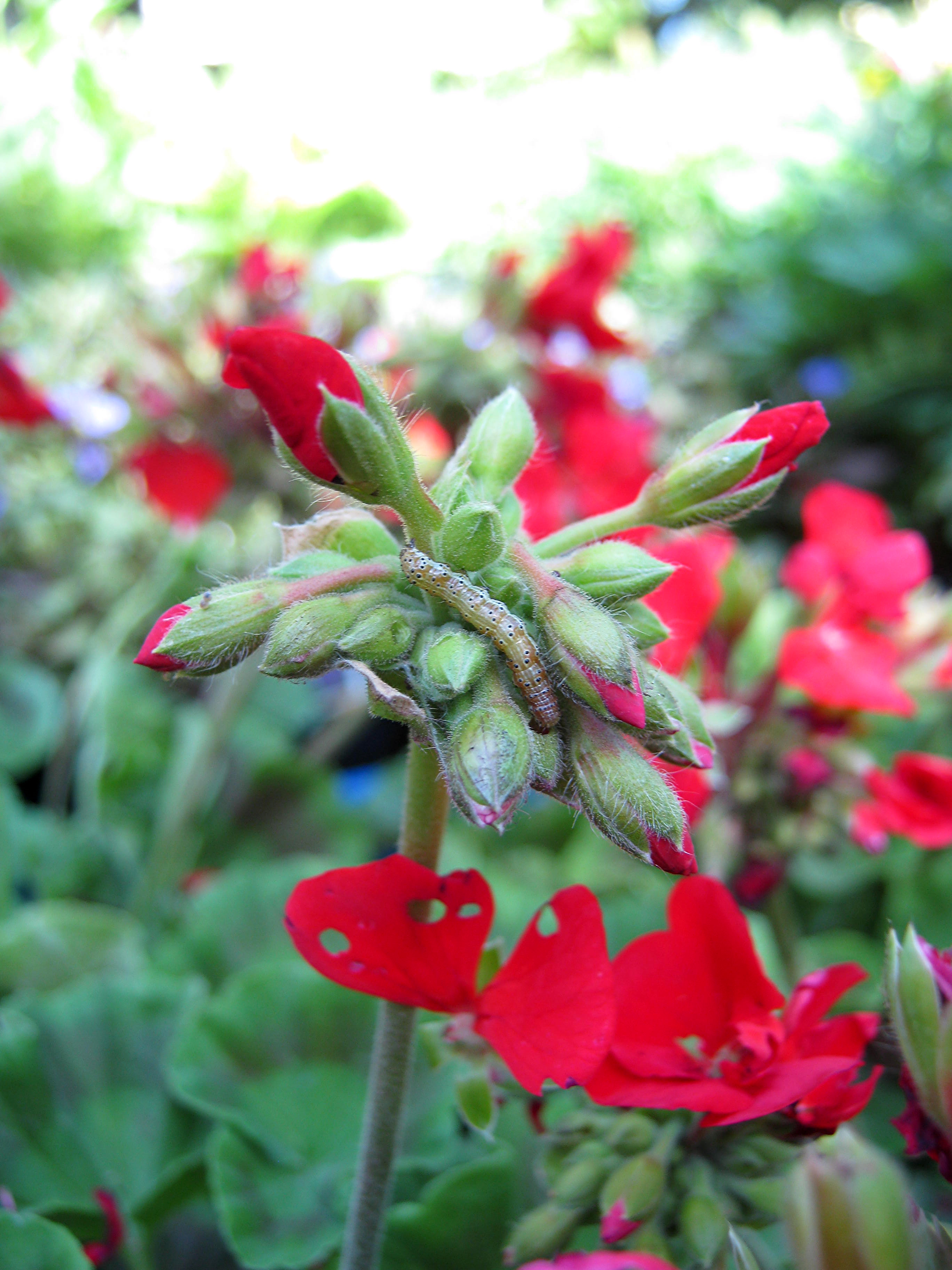
geranium budworm


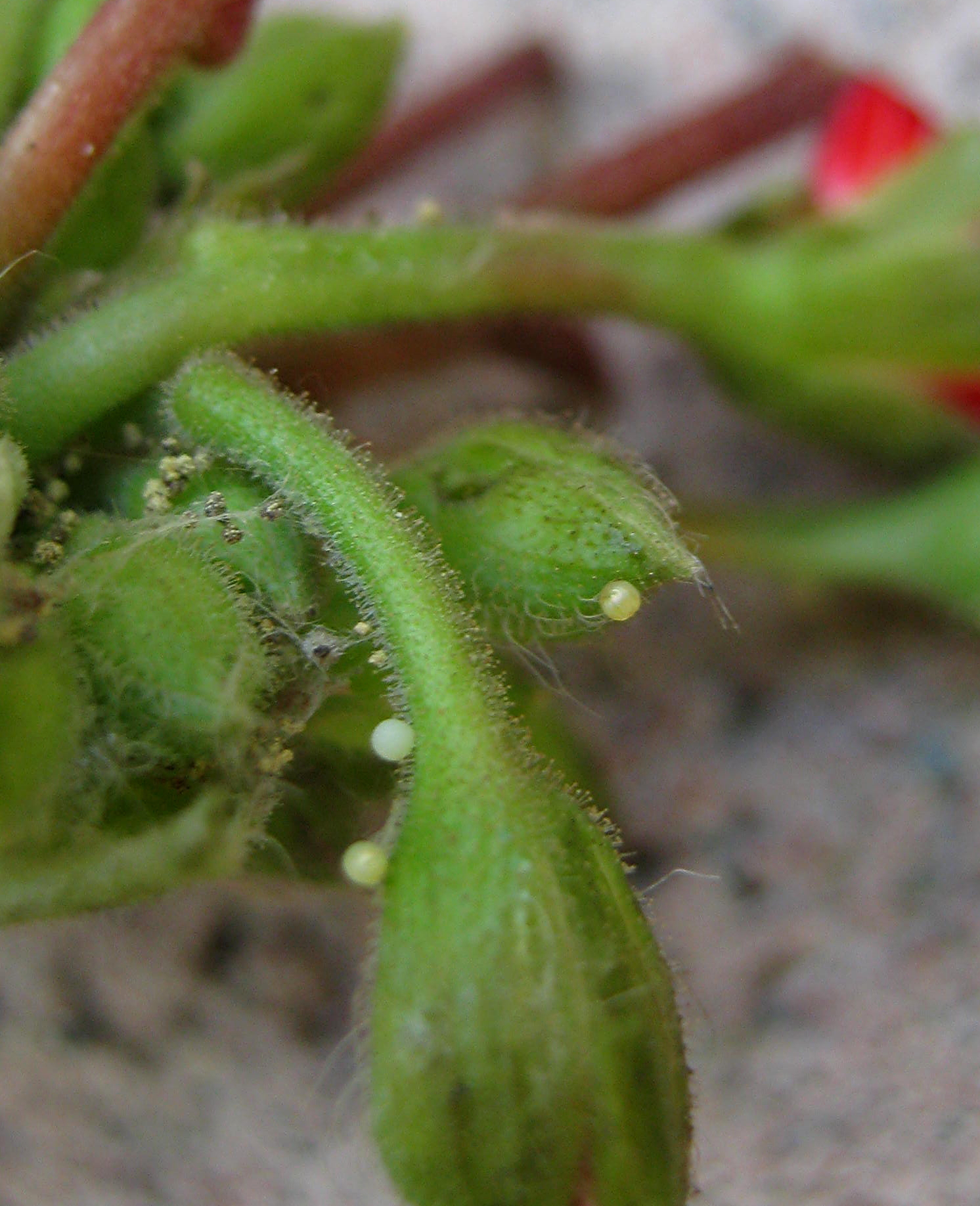
eggs of geranium budworm

Something is eating the flowers of my geraniums and petunias!


Geranium budworm is a caterpillar, the larva of a moth, which eats flower buds, petals, and leaves of common geraniums, petunias, callibrachoas, and related plants. It is hard to spot because it turns the color of what it is eating. Most people notice holes in the petals, and then the absence of flowers. Geranium budworm has a broad host range, and is also known as Tobacco budworm and Tomato fruitworm (not to be confused with tomato hornworm, which is more properly called Tobacco hornworm!).


Caterpillars can be controlled with an organic spray made from Bacillus thuringiensis (aka "BT"). The insect must feed on the material, so you have to tolerate some damage before you get control. The adults keep laying eggs all summer, so you have to spray about every week. Consider planting something that doesn't get budworm instead, such as ivy geranium.


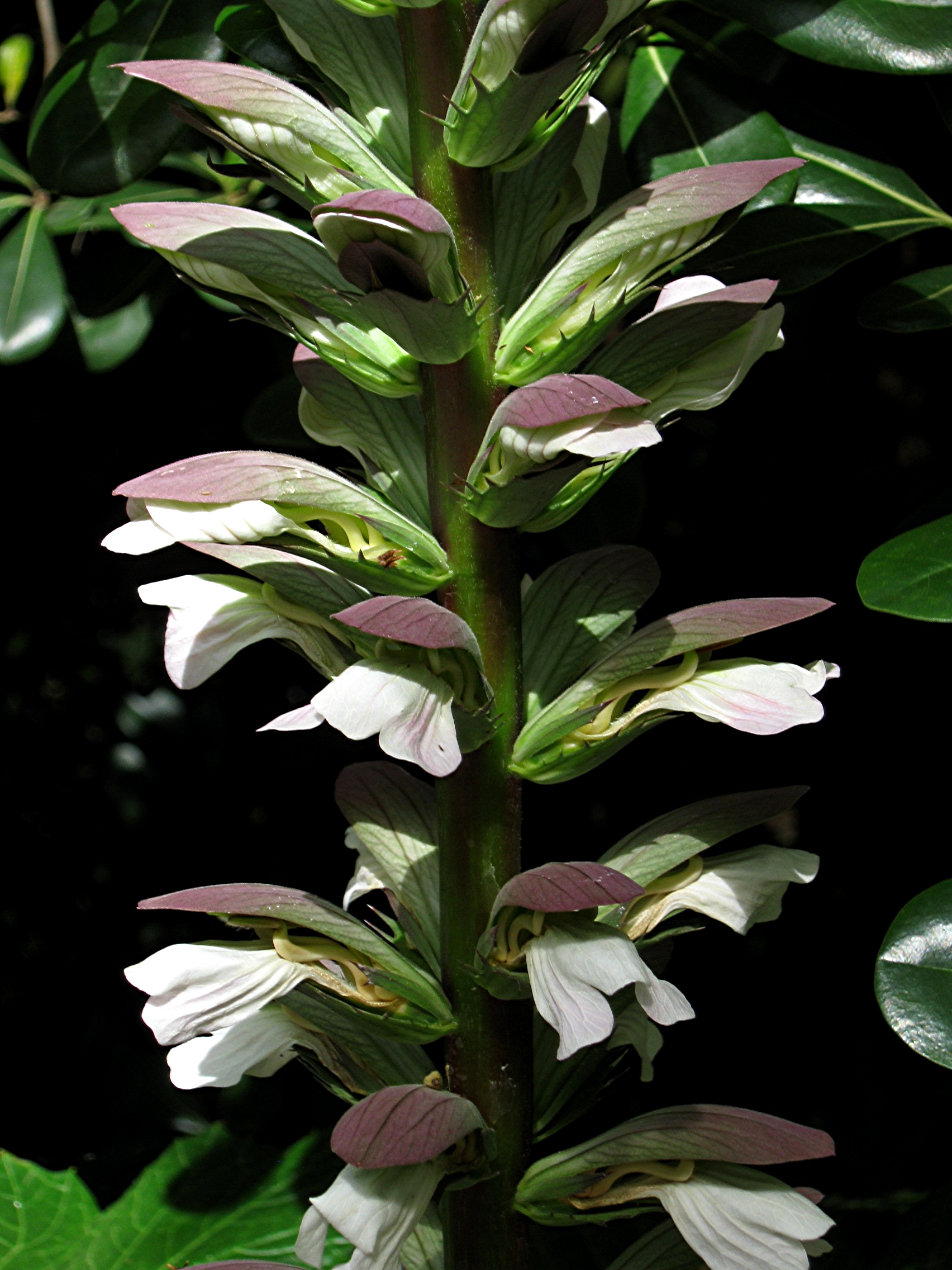
Why is my Acanthus dying? It just finished flowering.


Acanthus mollis flowers

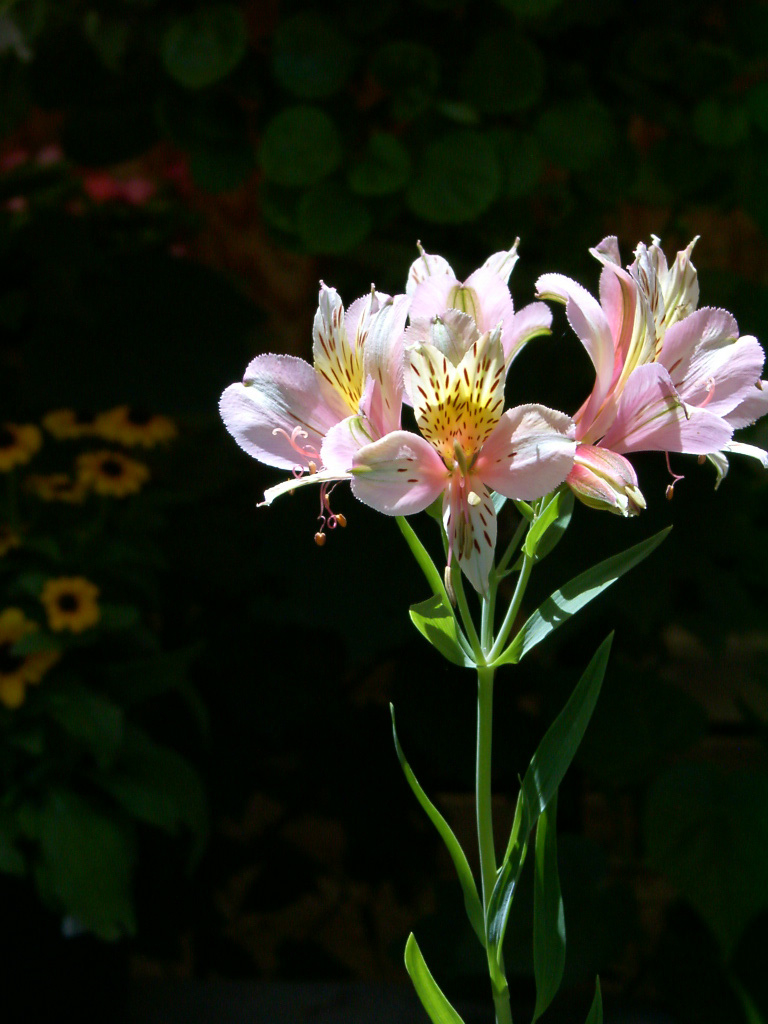
We get the same question about Alstroemeria. Both species are growing from a rhizome, and as with many bulb-like plants they have a short dormancy after the bloom. It is normal, but disconcerting. It's a good opportunity to cut the plant back. It will resprout right away.


Alstroemeria

Peruvian lily


In the orchard:


My citrus tree dropped most of the fruit right after it flowered!


Citrus produce an abundance of flowers, but the amount of fruit a tree can sustain is determined by the size and vigor of the tree. Many small fruit drop. This natural thinning is handy, because we don't have to worry about citrus trees over-producing and breaking the branches. Other fruit trees such as peaches and plums often set far more fruit than they 'should' and end up collapsing unless fruit is removed early in the season.


Why do my stone fruits have hardly any fruit this year?


We had 14 days of rain during the bloom period. Bees are finicky. High moisture caused fungus to blight the petals of apricots and plums. It's just been a tough year overall for fruit trees.


Figs are spoiling as they ripen: ok on the outside, yucky on the inside.


Figs set two crops in our area: the breba (spring) crop, and the fall crop. Figs are very soft and vulnerable to rot organisms if moisture is high, and this year we had over an inch of rain in the last week of June, which was very bad timing for the ripening breba crop. Hail damage in June allowed rot to set in. The fall crop, which is better and larger and arrives during reliably dry weather, should be fine.


Something is eating all the plums off my tree before they ripen!


Something is eating my young melons as they ripen!

Something is eating my oranges!


Management of tree rats and tree squirrels is very challenging. They move rapidly through the garden, damaging specific crops, and then move on. Basic animal management strategies usually involve:

removing habitat;

installing barriers;

applying repellents;

baits and traps.

Think like a rat. You are jumpy, want to keep moving and get some food without taking too much time about it because when you are out in the open you are vulnerable to predators. Prune to make the area more open. Slow them down with netting over and around the crop. Make noise somehow (wind chimes in the trees?). They may just go to your neighbor's yard.


One possible solution: a customer suggested sandwich bags to keep rats/squirrels away from pomegranates. You slip the developing fruit into a #4 sandwich bag and staple it closed.

In the landscape:


Newly seeded lawn areas suddenly died out after the rain in early June.


Seedling fungus diseases cause rapid die-off in warm weather, which is one of the reasons we get better results re-seeding lawns in the fall when nights are cooler and fungus isn't active. Rake out the area and add some more seed when weather cools off.


Problems with a redwood tree (Sequoia sempervirens): needles browning and dropping; needles scorched on surface; needles gray in appearance; no new growth.


Coast redwood needles

Most problems with Sequoia are related to watering. It is usually a problem with duration (not long enough), frequency (too often), or distribution (not enough emitters or sprinklers).
In this case, the tree was being watered with bubblers spaced at intervals around the drip line, PVC pipe with holes was installed vertically to promote deep watering. The bubblers were near the pipes so water flowed rapidly down. No spray or surface drippers.


It is normal for the older needles of coast redwood to turn brown and drop in late spring and more lightly throughout the year. The scorched needles and lack of new growth are signs that the tree is not happy. Here the problem wasn't lack of water, it was the distribution. Redwoods have many surface roots, so water needs to be distributed across the surface under the tree. Adding some mini-sprinklers to the system, or occasionally setting a sprinkler to augment the system, should restore the vigor.


Redwoods are never drought-tolerant trees, preferring evenly-distributed water every week or so throughout the summer.


Curled, distorted leaves on bay laurel.


A psyllid insect arrived in California's Bay Area a decade or so ago, and sometimes shows up here in the Valley. It is an aphid-like insect that sucks the leaves, and the leaf edges curl around it. If you carefully unroll the leaf edge you will find the culprits. Psyllids only harm the new growth, for a rather short period in the spring, and the damage is cosmetic. Bay trees that are pruned lightly are less affected, as the psyllid can't damage thicker mature leaves. Prune bay laurel seasonally for size control, if at all, and avoid shearing them.


My neighbor has planted "horsetail bamboo" and it is spreading into my yard. Can I sue him?


You can sue anybody. The question is whether you would prevail in court. Most judges aren't horticultural experts. I can tell you that horsetail (Equisetum species) is very invasive. It is NOT a bamboo, but has a growth habit similar to running bamboos: rhizomes spread quickly through moist soil into nearby beds and lawns. Herbicides won't kill it. Digging it out is difficult because it breaks and resprouts. A rhizome barrier will contain it until it goes over or under; barriers for spreading plants must be monitored seasonally.

People like the look of horsetail as an accent plant. Offer to buy your neighbor an ornamental grass, a phormium, or iris, and help to dig out the offending invader. In extreme cases a physical barrier (sold by bamboo supply specialists) and heavy-duty landscape fabric can hold it back.


General and wacky:


Do you have a product to control frogs? They're keeping me awake at night.


A set of earplugs is less than $10.


How do I kill the bees that are all around my shrub?


Don't kill bees!


What happened to all the ants?!?


They drowned. At least, that is my assumption. We normally get lots of questions about how to control ants as summer begins. This year, hardly any. The soil was saturated in December, again in March, and cold rainy weather continued into May and June.


They'll be back. Trust me on this.


What is the deal with olives? Fruitless? Sterile? Huh? I want one that won't make a mess.


There are self-sterile olives which can be cross-pollinated by other varieties, but which consequently set much smaller crops than self-fertile types. Olive pollen is very tiny, light, and wind-blown for a mile or more. So it isn't unusual for a “fruitless” type to set some crops of fruit. One variety called Swan Hill is self-sterile for both male and female flowers, so it is incapable of setting fruit. The patent on that variety has finally worn off, so it has become more readily available as other growers begin propagating it.


1. Why can't I find Scottish broom anywhere?

2. I was browsing your website and noticed that St. John's wort can't be sold in Yolo and was wondering why. I have some seeds of another Hypericum (punctatum) and want to know if I should worry about planting them or not, since it seems like a similar species.


Scotch broom (Cytisus scoparius) and St. Johnswort (Hypericum perforatum, aka Klamathweed) are both invasive species in the true sense of the word: non-native plants which reseed out into wild areas, displacing native vegetation, and possibly causing economic harm to farmland or rangeland. Scotch broom has become so familiar as an invasive that most wholesalers have stopped growing it; most have even stopped growing related broom species!


St. Johnswort is restricted from sale in Yolo County. Local agricultural commissioners have discretion about how they prevent the spread of invasive weeds that are listed on the state's official list. Our ag commissioner has decided to prohibit retail sales of Klamathweed. The restriction is specific and does not apply to other species of Hypericum.

A cautionary note:


A customer walked in waving a pest sample on a branch from an apple tree, from the Bay Area. Oh, my. We are in a quarantine district for Light Brown Apple Moth (LBAM), which is fully established in the Bay Area. There have been a few finds in Yolo County, though not in nurseries. Thank goodness. According to nursery folks in the Bay Area, a find prompts closure of the nursery, the whole place has to be sprayed, and then re-inspection is required before they can re-open.

Please don't bring plant materials into Yolo County from anywhere in the Bay Area other than from nurseries that have been certified as free of LBAM. Nothing from Aunt Minnie's backyard, please! That is how pests spread.


For more information about Light Brown Apple Moth, visit the state agriculture department web site: www.cdfa.ca.gov/LBAM

Saturday, July 16, 2011

Hi Don,

I was browsing your website and noticed that St. John's wort can't be sold in Yolo and was wondering why. I have some seeds of another Hypericum (punctatum) and want to know if I should worry about planting them or not, since it seems like a similar species.

Thanks!


H. perforatum is considered a noxious weed threatening rangeland in California, and sale in Yolo County is forbidden by the County Agricultural Commissioner. Management of weeds in that category is at the discretion of each county's ag commissioner, so other counties may allow them. You are not restricted from growing a different species; there are many other species of Hypericum that can be sold (and are not considered invasive). For example, H. perforatum and H. canariense are on the invasive plants database. Your species is not.
Here is a reference link: cal-ipc.org

Here is an article about true invasives and mere garden thug
Don

Tuesday, June 21, 2011

Common Landscape Errors

or ... It Isn't The Plant's Fault!


Written for the Davis Enterprise, June 23, 2011


Many landscape problems arise from the lack of nexus between landscape designers and landscape managers. In other words, it is the wrong plant, installed incorrectly, or managed improperly. If it's too big, someone is going to want to prune it. If it is in the lawn, they'll want to (appropriately) keep the grass away. If it isn't standing upright, they'll want to pull it up straight.
Here are some of the most common errors I see.
(For an illustrated version of this article, click here)

Mulch too close to the tree.


Mulch is very beneficial to the soil, but needs to be applied carefully. Moisture trapped around the bark of a tree or shrub leads to infection by Phytophthora. The result is crown rot: sudden death of the plant in hot weather. This disease requires warm, moist conditions to infect a plant. Mulch should always be several inches away from the trunk of any woody plant, especially in the summer.

Watering too often.


The single most common landscape mistake: watering too often, and not deeply enough. See crown rot, above. Constant moisture around the crown of a plant leads to attack by rot organisms. You can't just set the sprinkler timer and fail to adjust it for changing weather patterns. Water as slowly, deeply, and infrequently as possible.

Almost nothing needs water daily. The only exception might be plants that are rootbound in containers, and newly planted seedlings for the first week or so.

Staking too close, too tight, and too long.


Trees need to move in the breeze in order for their trunks to strengthen. They should not bang into the stakes. Usually we use two lodgepole stakes, pounded securely into the ground several inches east and west of the trunk (because our prevailing winds are from the north and south). A flexible tie is used in a figure-8 pattern, on each stake, at the point of the bend. The patented Redi-Stake™ is a single-stake technique that is used by the city and some arborists. This metal pole and rubber -tie system holds the tree securely and safely.

As soon as the tree can stand upright, the stakes should be removed, usually within one growing season. Ties should be checked monthly. Materials that could cut into the bark, such as wire, should not be used for tying up trees.

Wrong pruning tools.


Young men, hear me! Hatchets and axes are not pruning tools! Chain saws should only be used by trained professionals. Hedge shears are specialized tools used only for removing tender new growth.

Use a pruning saw or loppers. Pruning cuts should be clean to allow prompt development of callus as the tree naturally covers the wound. Ragged cuts invite pest and disease problems.

Note: pruning paint is no longer recommended to cover pruning wounds. The black paints absorb heat and increase damage. Whitewash on newly-exposed bark may be appropriate in some cases. Most often we simply let the wound heal naturally.

Topping trees.


Size control of trees might be necessary if a tree is planted under wires or overhangs, in which case poor tree selection is the issue. Public utilities must clear branches from wires, and do so with little consideration for the health or appearance of the tree. Our local utilities, PG&E and SMUD, have excellent resources available for choosing trees to plant under their wires.

If a tree must be kept lower than its natural size, proper training when it is young can be done to select permanent branches that have safe angles and good position along the trunk. Shortening a tree that is already too tall can be done by licensed, certified arborists who will "drop-crotch" the tree, cutting taller branches down to a point where an existing branch is already growing.

Plant professionals will not lop off ("top") all the growth above a certain point, as it results in rank, poorly-attached limbs that become unsafe. If someone proposes this for your trees, get a second opinion.

Wrong plant, wrong place.


Surface roots

Surface roots are part of the genetic makeup of certain species. Riparian trees that naturally would grow along streams and rivers have shallow roots that rapidly colonize newly deposited soil after floods. Willows, poplars, cottonwoods, and alders are unsuitable landscape trees because of their extensive, aggressive roots. White birches can be a problem in lawns, though the surface roots may be acceptable in landscaped, mulched areas.

Other species may develop surface roots if they are watered shallowly, but less so if watered deeply and infrequently. Evergreen magnolias and Chinese tallow trees are examples. Even sycamores and plane trees can develop surface roots if a constant shallow moisture source is available.

Shrubs under windows

I don't really understand why 10-foot-tall shrubs are planted under windows. There are plenty of low-growing shrubs to choose from. The most common mis-used shrub in this category is Photinia Fraseri, the red-tip shrub that is ubiquitous in California landscapes. A lovely large shrub in its place, it is often misplaced under windows and has to be pruned monthly. Then it looks ugly, and often slowly dies out.


Locally invasive plants, not confined.
Running species of bamboo, mint, ivy, creeping fig (among many others): each may be appropriate in a particular place, in a pot, or with appropriate barriers, but can take over a yard if not constrained. Choose a clumping bamboo; plant your mint in a nice pot; choose another species of vine. Save yourself and the future owner of your yard a lot of trouble.

Misapplication of herbicides.


The results can range from annoying to heart-breaking. Glyphosate sprayed around dormant roses has severely harmed many a rose garden. "Weed and Feed" applied to the lawn can be taken up by roots of nearby trees; the most common damage is to birches, magnolias, and maples. Continual use of pre-emergent herbicides in non-turf areas can lead to anemia as roots are damaged over time. Weed-killers have consequences. Read and follow label directions, and use as little as possible.

Continued use of plants with known pest problems.


Here are three categories.


Trees and shrubs that will die or be disfigured and for which there is no practical remedy. White alder. Leylandi cypress. The pests and diseases that kill them have been known in the horticulture industry for decades. There is really no excuse for the continued sale of these species.


Trees and shrubs with annoying pest problems that don't affect the vigor or health of the tree. Two examples. Honeylocust trees are infested by a gall-forming midge that causes most of the leaflets to drop off from late spring through mid-summer. They grow fine but get sparse and have lots of litter, so they are no longer recommended. Photinia Fraseri gets lacebug in the summer which makes the leaves ugly. It is manageable, but there are many resistant hedge species available.


Plants which will require regular spraying throughout the growing season to prevent damage.

Common garden geraniums, petunias and their calibrachoa cousins (Million Bells TM, etc.), get geranium budworm throughout the summer here. The caterpillar eats flower buds and leaves, and needs to be sprayed every few days throughout the bloom season. Most people aren't willing to do regular spraying in their gardens in order to keep flower blooming. Why not just plant something else?


Indeed: why not plant something else? There are hundreds of plant species to choose from, with low-maintenance options for most situations. With professional advice, you can start with a plant that won't require follow-up care. Watered correctly, it will thrive. Treat plants with respect and they will reward you!


Tree resources from PG&E


© 2011 Don Shor, Redwood Barn Nursery, Inc., 1607 Fifth Street, Davis, Ca 95616

www.redwoodbarn.com

Feel free to copy and distribute this article with attribution to this author.